Andrea Scrima: Saskia, you’ve written a book that invites us into the BDSM community to explore the complicated emotional landscape lying at the heart of its negotiations over consent and—as the title you chose for your book underscores—permission. When the book begins, Echo, the young narrator, is submerged in a fog of emotional blunting following her father’s accidental death; she trusts bodies and the language they engage in more than emotional intimacy. We’re in southern California: the milieu is wealth and privilege, Hollywood beckons, and the narrative is full of gleaming surfaces. Can aspects of Permission be read as a social commentary?

Saskia Vogel: Thank you for that introduction, Andrea! The book certainly came from questions I had about the society I encountered when I moved back to LA after spending most of high school in Sweden and university in London. LA, where I was born and raised, was suddenly new to me. I could legally drink, which meant access to new spaces, and I finally had a driver’s license. I was also carrying years of distance and encounters with new cultures with me. Nothing about LA life was a given anymore. I thought it would feel like free space. However, when I arrived in LA as an adult, in my early twenties, I became aware of a strong current that asked me to conform to certain norms as a woman, for instance in how I presented myself. Dating culture was oddly formal, like we were supposed to demonstrate our skill in performing a script rather than make a connection. Looking back, I might suggest that the kind of abuse of power that was happening in the upper echelons of Hollywood, and I’m thinking of Weinstein here, trickled down into parts of society, creating a dishonest economy of sex and power. Very soon I found a group of friends who were deeply involved in the kink community. Half of myself, shall we say, was in that community, and the other was trying to navigate life outside of that community. There was quite a stark contrast between the BDSM community I knew—informed by mutual respect and consent, articulated boundaries, and an awareness of power dynamics—and my life outside it, which I experienced as far more patriarchal and conventional than my imagination of life in LA had been. Those two worlds left me with questions about the roles available to women in society, about who benefits from the existing power structures, and if there was a way out. I dropped my main character Echo right into the middle of these questions. Read more »
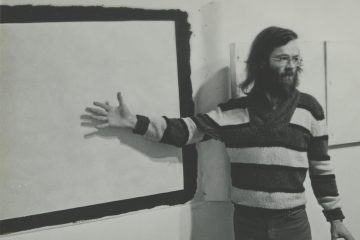 Tony Conrad’s retrospective of objects produced for galleries or institutions, titled Introducing Tony Conrad, is currently on view at the ICA Philadelphia. “Introducing” because so many people are still unfamiliar with his work. His works were predicated on both the amount of time they took to make and the patience that they required of their audience, which no doubt contributed to his lack of popularity. Conrad, the prodigal Harvard grad, spent his career working through aesthetic problems like an eccentric scientist. This can be gathered from his exhaustive lectures, teaching, and writings on sound and film. Formally, however, the works often look like a child made them. Not in a cynical way denoting lack of care, but in an earnestly amateur approach to object making. Because the works are less concerned with looking skillfully produced and more concerned with what a durational existence might impart onto things, the audience is left with big-picture questions like, what does it mean for an artwork to still be in progress after the artist’s death?
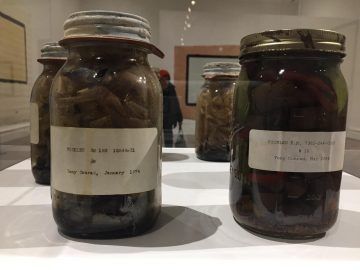 This is best captured in Conrad’s most well-known artworks, the “infinite duration” Yellow Movies, which were painted yellow squares on paper. The idea was that they would darken and yellow with age over the course of their lifespan, thus constituting an ever-changing work, or “movie” (and for Conrad, the longest durational movie ever, putting Warhol’s Empire (1964) to shame). These works and others in the show capture his fascination with time and what it entails. The objects on view in the retrospective are largely the byproducts of experiments. Conrad, an accomplished experimental musician and filmmaker known for his vexing compositions, took his cue from thorough research into a topic, investigating the variety of forms it could take. For instance, one of the first things visitors see are a selection of handmade instruments using unorthodox materials, like a guitar made from a child’s racquet, or violin affixed to a stationary scrap-wood apparatus. Another instance is Conrad’s pickled film, which he shot and then cured in a vinegar solution in Ball jars, riffing on how film is developed in an alchemical solution.
 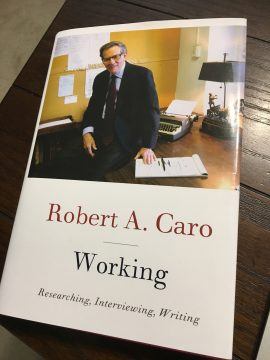 Robert Caro might well go down in history as the greatest American biographer of all time. Through two monumental biographies, one of Robert Moses – perhaps the most powerful man in New York City’s history – and the other an epic multivolume treatment of the life and times of Lyndon Johnson – perhaps the president who wielded the greatest political power of any in American history – Caro has illuminated what power and especially political power is all about, and the lengths men will go to acquire and hold on to it. Part deep psychological profiles, part grand portraits of their times, Caro has made the men and the places and times indelible. His treatment of individuals, while as complete as any that can be found, is in some sense only a lens through which one understands the world at large, but because he is such an uncontested master of his trade, he makes the man indistinguishable from the time and place, so that understanding Robert Moses through “The Power Broker” effectively means understanding New York City in the first half of the 20th century, and understanding Lyndon Johnson through “The Years of Lyndon Johnson” effectively means understanding America in the mid 20th century.



 The spring ephemeral wildflowers of the Midwest are generally not large or showy. In a relatively short time during one of the less promising parts of the year, these perennial plants must put out leaves and flowers and reproduce, all before disappearing until the next spring. Still, they light up the woods for me every year despite their relatively modest circumstances.

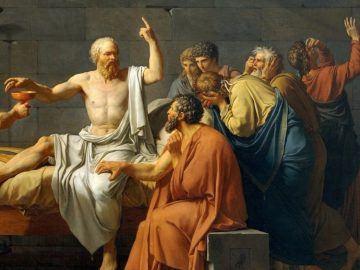 When Socrates’ students enter his cell, in subdued spirits, their mentor has just been released from his shackles. After having his wife and baby sent away, Socrates spends some time sitting up on the bed, rubbing his leg, cheerfully remarking on how it feels much better now, after the pain.

 I’ve always liked stories that depended on mistaken identity, a very old theme in general. Having a degree in mathematical logic, I was also drawn to the subject on a more theoretical level, on which lies Gettier’s Paradox.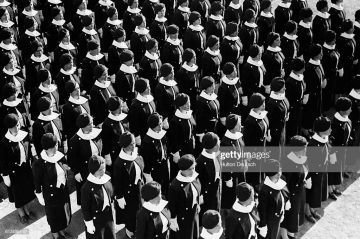
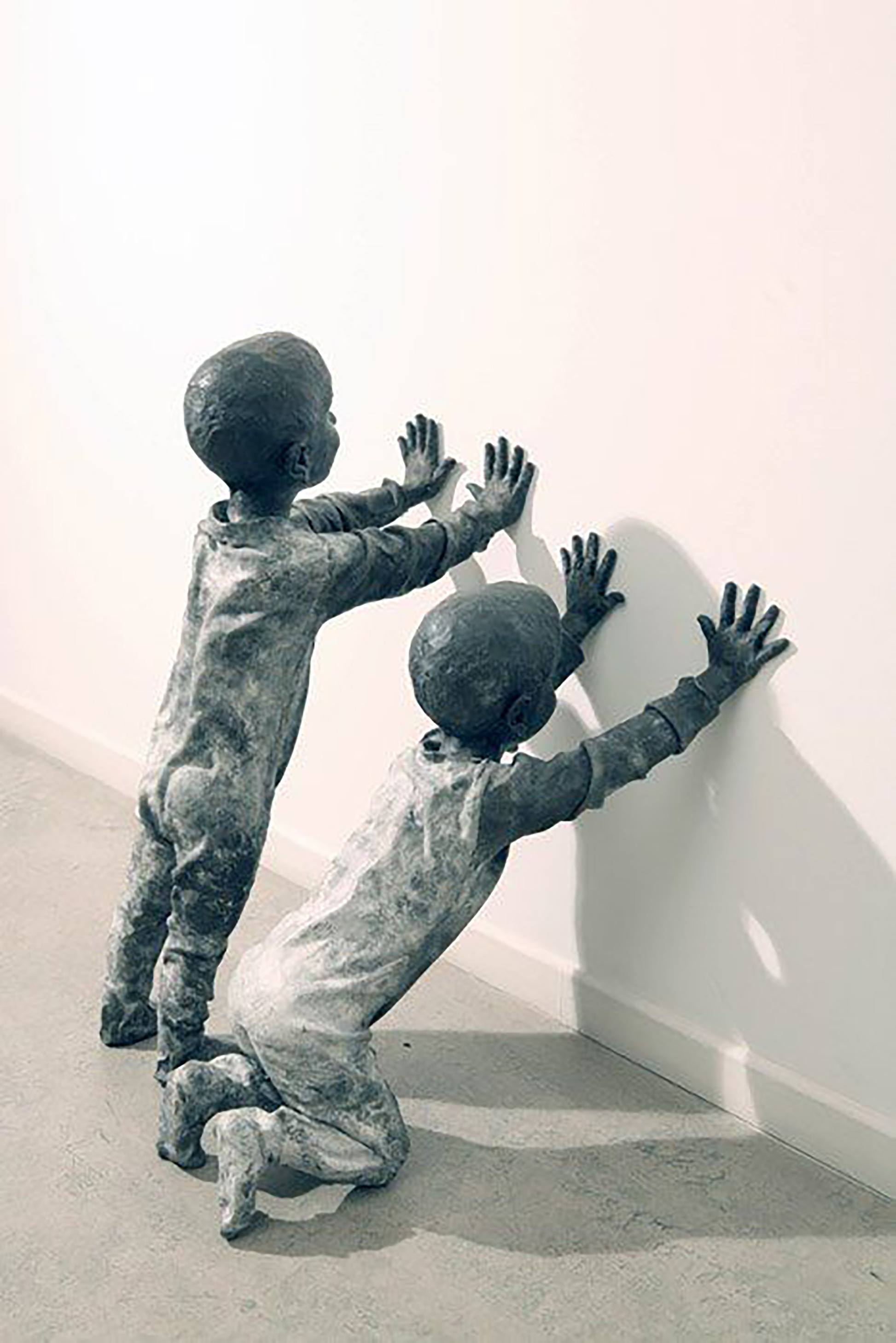
 Movies, music and novels portray a particular ideal of romantic love almost relentlessly. Love is something that happens to you, something you fall into even against your will or better judgement. It is something to be experienced as good in itself and joyfully submitted to, not something that should be questioned.