by Dave Maier

“Realism” is a word with many senses. In politics, it’s synonymous with pragmatism in being the alternative to idealism, which it considers naive. In science, realists oppose instrumentalism and (extreme forms of) empiricism, positing a reality behind the phenomena of empirical investigation. In philosophy as well, one can be a realist about this or that by resisting the reduction of that or this phenomenon to other things thought more ontologically basic.
Mainly, though, philosophical realism is metaphysical realism, an ontological commitment to a basic reality irreducible to, and independent of, mind, belief, language, social conventions, empirical observations – whatever you got. On this side of the pond, realism has generally been considered the default position, but analytic philosophy was born in linguistic analysis and a robust strain of empiricism, so various sorts of antirealism have remained popular here as well.
On the Continent, however, things are different. Analytic philosophy was a revolt against a post-Hegelian tradition which remained dominant in Europe, and in the last third of the previous century, when postmodernism ruled supreme, continental realists hardly dared even show their faces in public. At least, that’s the story now being related by a new breed of continental realist. Now that postmodernism is yesterday’s (or last week’s) news, realism is popping up all over.
If postmodernism was nonsense on stilts, then a return to common sense can only be good. But analytic antirealists, at least, aren’t just dimwits or charlatans, and we shouldn’t simply identify substantive philosophical claims, however intuitive, with mere sanity; and continental realism, it turns out, comes in a bewildering variety of forms. Before sounding the hosannas, and awarding the palm to realism at last, we owe this new development a closer look. Read more »





 r a train and someone passed through begging for change. I’ve lived in New York City long enough that I don’t just start taking my wallet out and going through it in crowded public spaces, but beyond that, I don’t have change. I normally don’t carry cash. If I have cash on me its for one of two reasons, either someone has paid me back for something in cash (which in these days of Venmo is increasingly unlikely) or I have a hair or nail appointment where they like their tips in cash. So even if I have cash, it’s bigger bills and certainly no coins. And I’m sure I’m not unusual. I pay for things with credit cards. I pay other people using Apple Pay or Venmo. I mentioned this thought to someone who told me that they had seen someone begging in New York with details of their Venmo account. On the one hand, there seems to be a certain chutzpah to that, after all, if you have a bank account to receive the money in and some kind of smart phone to access it, is your situation as dire as you’re making out? On the other hand, it’s pretty smart. Of course, there are serious privacy issues involved in giving money to a random stranger through an app like Venmo, it’s not private, so I probably wouldn’t do that either, but it’s an interesting idea, if it could be made more anonymous and secure. Apparently, at least in China,
 It has been a little over a week since the redacted Mueller Report was released, and so many words have been spilled that there could be a drought by summer if the umbrage reservoirs are not refilled. Can we just retire the word “closure”?
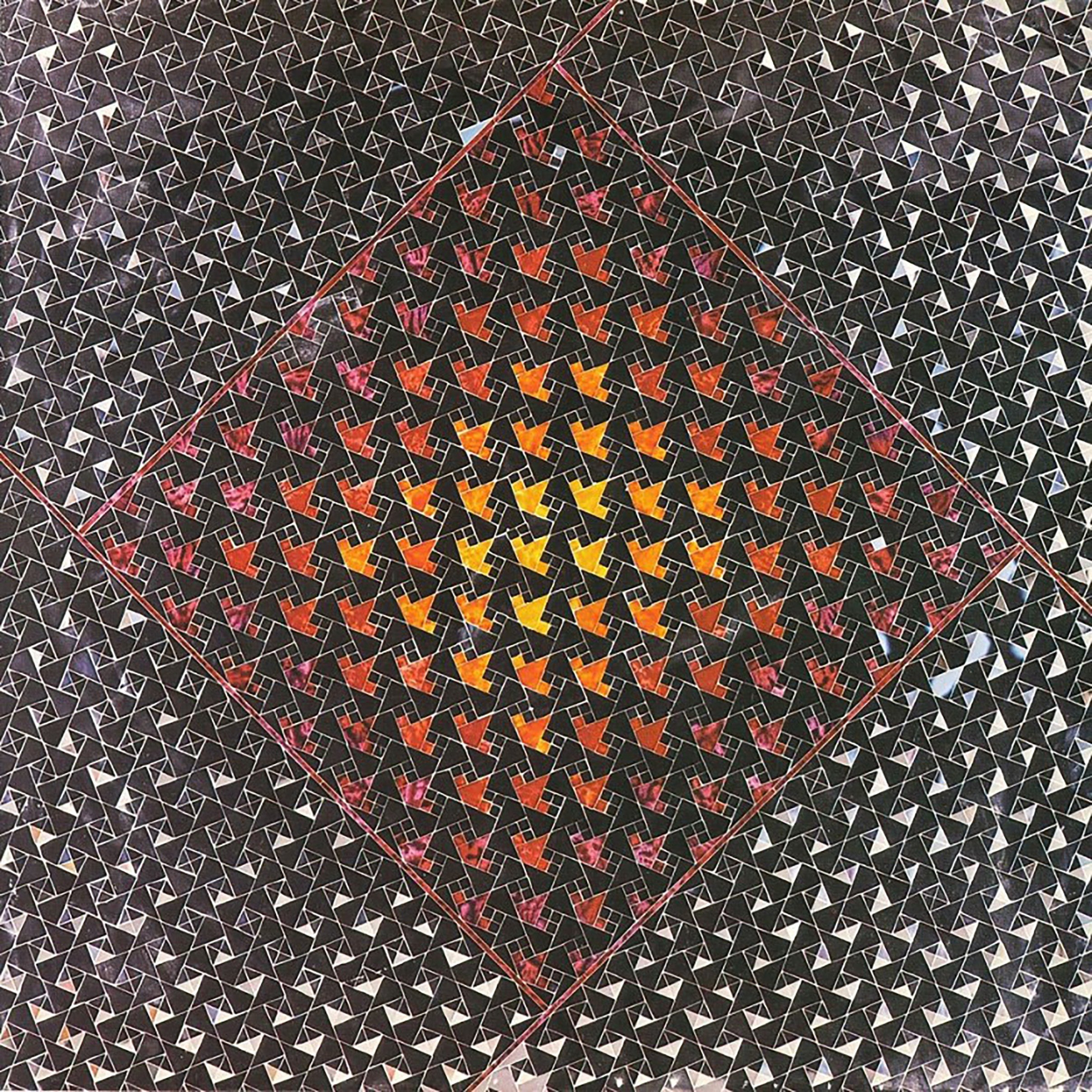
 The attic of Notre Dame cathedral, with its tangled, centuries-old dark wooden beams, was affectionately known as the ‘forest’. The fire that originated up there last week made me think of an early Anselm Kiefer painting Quaternity, (1973), three small fires burning on the floor of a wooden attic and a snake writhing toward them, vestiges of the artist’s Catholic upbringing in the form of the Father, the Son, the Holy Ghost and the Devil. Metaphor meets reality in the sacred attics of stored mythologies.
 Last time
 It’s rather like changing fonts. Not many would say a change of font will make a parking ticket sting less (although Comic Sans might make it sting more). As endless internet discussions rage about the meaning and content of the Mueller report, altogether too few dissect Robert Mueller’s choice of fonts [1].
 A brief scan across global politics generates concerns as to what is actually going on in the politics of many states. Authoritarian regimes have always been with us, and will probably be with us for some time to come. Of greater concern is the emergence of political leaders in liberal democracies who espouse a politics which resonates with the past: a politics of nationalism, and nativism, and the inward-looking thinking that is associated with those ideologies. This trend, in what I would call a ‘regressive politics’, is in opposition to the process of globalisation.