by Ashutosh Jogalekar
 On a whim I decided to visit the gently sloping hill where the universe announced itself in 1964, not with a bang but with ambient, annoying noise. It’s the static you saw when you turned on your TV, or at least used to back when analog TVs were a thing. But today there was no noise except for the occasional chirping of birds, the lone car driving off in the distance and a gentle breeze flowing through the trees. A recent trace of rain had brought verdant green colors to the grass. A deer darted into the undergrowth in the distance.
The town of Holmdel, New Jersey is about thirty miles east of Princeton. In 1964, the venerable Bell Telephone Laboratories had an installation there, on top of this gently sloping hill called Crawford Hill. It was a horn antenna, about as big as a small house, designed to bounce off signals from a communications satellite called Echo which the lab had built a few years ago. Tending to the care and feeding of this piece of electronics and machinery were Arno Penzias – a working-class refuge from Nazism who had grown up in the Garment District of New York – and Robert Wilson; one was a big picture thinker who enjoyed grand puzzles and the other an electronics whiz who could get into the weeds of circuits, mirrors and cables. The duo had been hired to work on ultra-sensitive microwave receivers for radio astronomy.
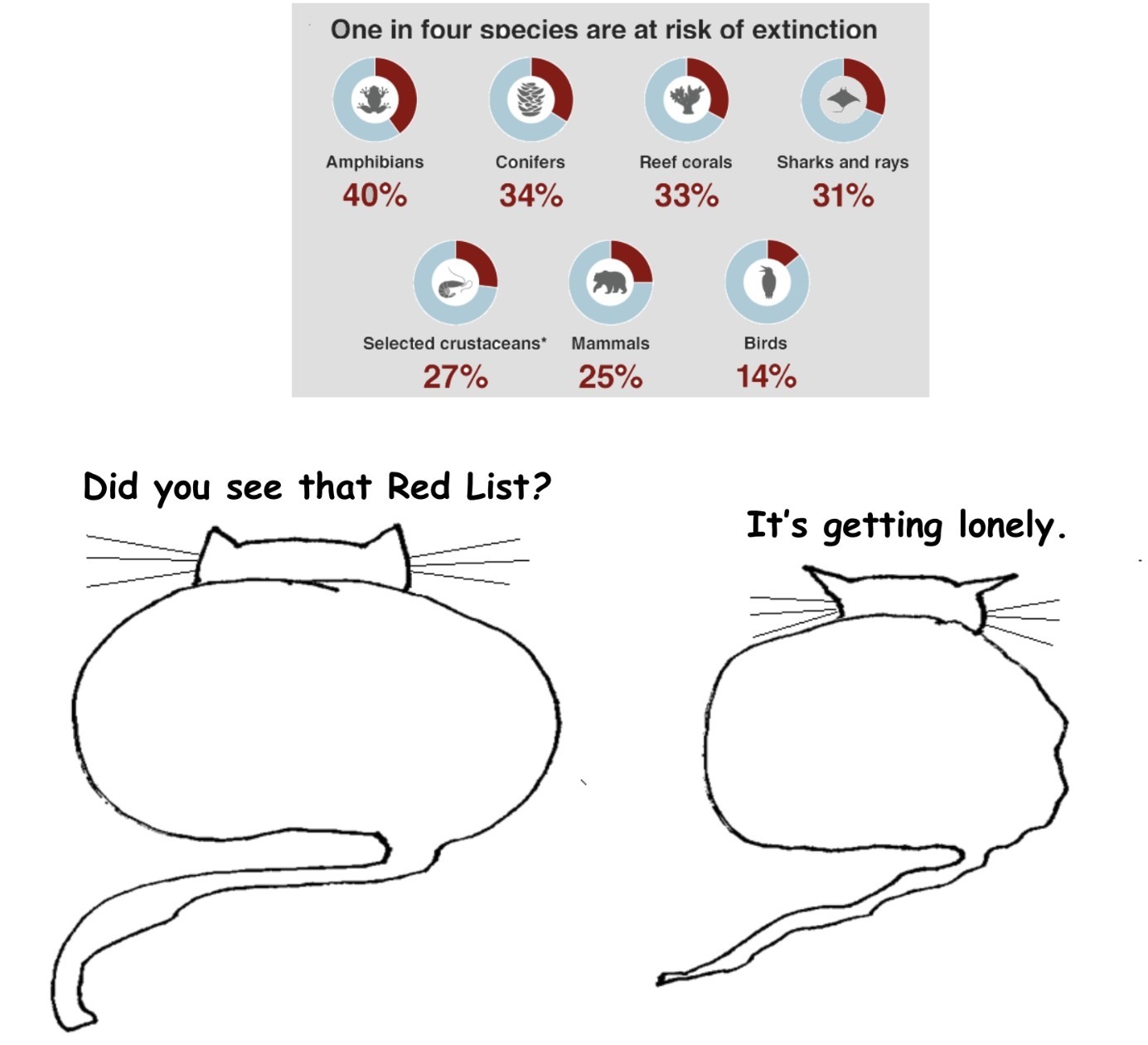
In a now famous comedy of errors, instead of simply contributing to incremental advances in radio astronomy, Penzias and Wilson ended up observing ripples from the universe’s birth – the cosmic microwave background radiation – by accident. It was a comedy of errors because others had either theorized that such a signal would exist without having the experimental know-how or, like Penzias and Wilson, were unknowingly building equipment to detect it without knowing the theoretical background. Penzias and Wilson puzzled over the ambient noise they were observing in the antenna that seemed to come from all directions, and it was only after clearing away every possible earthly source of noise including pigeon droppings, and after a conversation with a fellow Bell Labs scientist who in turn had had a chance conversation with a Princeton theoretical physicist named Robert Dicke, that Penzias and Wilson realized that they might have hit on something bigger. Dicke himself had already theorized the existence of such whispers from the past and had started building his own antenna with his student Jim Peebles; after Penzias and Wilson contacted him, he realized he and Peebles had been scooped by a few weeks or months. In 1978 Penzias and Wilson won the Nobel Prize; Dicke was among a string of theorists and experimentalists who got left out. As it turned out, Penzias and Wilson’s Nobel Prize marked the high point of what was one of the greatest, quintessentially American research institutions in history. Read more »
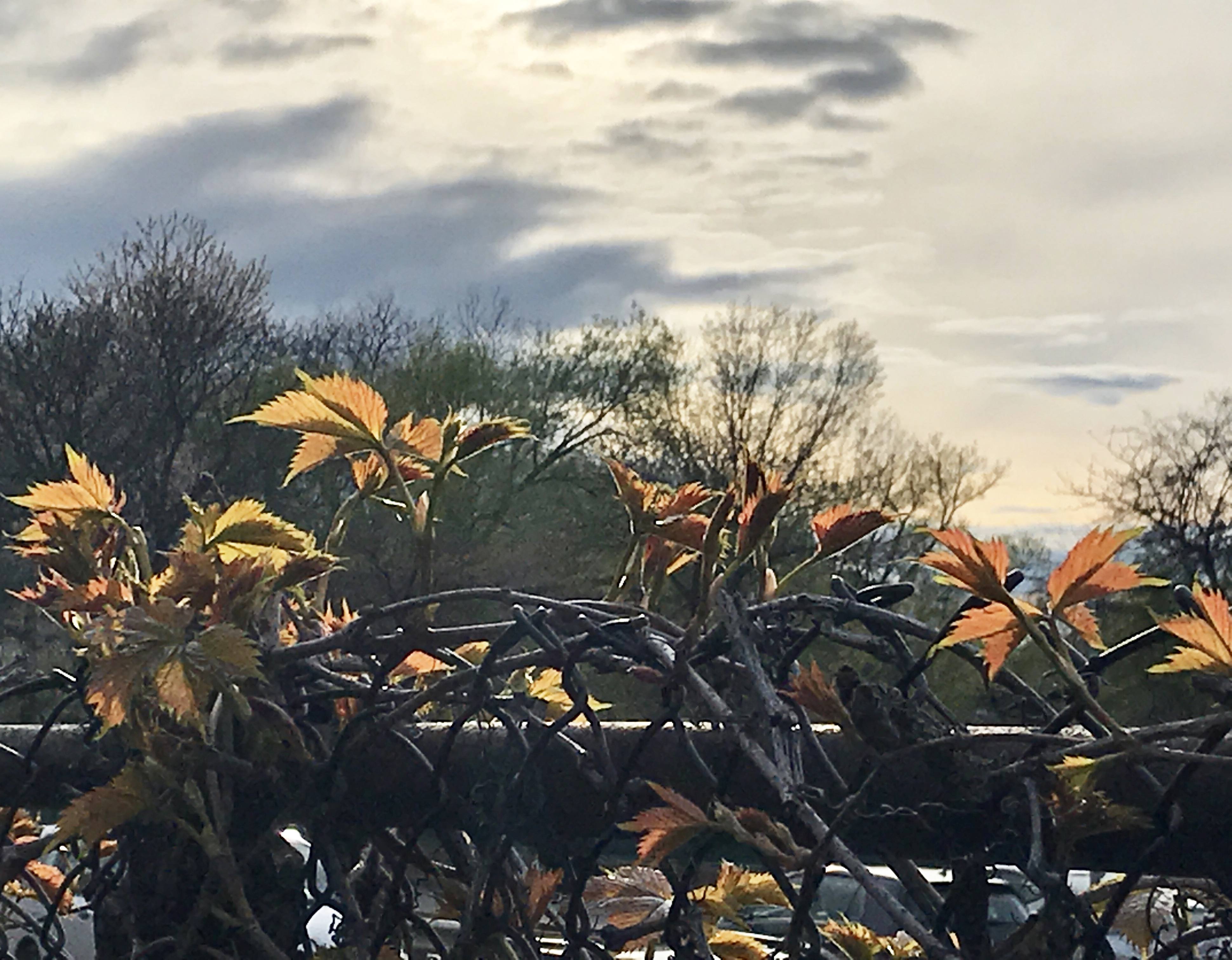 Sughra Raza. Enlightened, April, 2019.
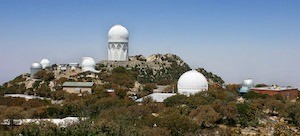 When I returned to school after my first marriage ended, I had to decide what to study. I’d been working toward a degree in history when I dropped out of a community college to get married, but I’d always been drawn to astronomy. One of the reasons I chose astronomy over history, or any other option, was that I felt that astronomy contained many of the other things I was interested in. To put it another way, I thought that if I didn’t study astronomy, I would regret it, but if I did study it, I wouldn’t necessarily lose touch with the other things I was interested in because they were all part of astronomy, in one way or another.

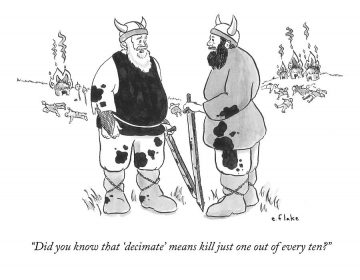 If you took Latin, then you probably have a larger vocabulary than the average bear, and you are more likely to have strong opinions on some words you vaguely remember based on Latin roots (cognates). For example, folks are more commonly using “decimate” to mean destroy or devastate, and it annoys the living materia feculis out of me. Decimate originally meant to kill every 10th person, based on the Latin word for 10 (decem), which is so oddly and satisfyingly specific. “Devastate” and “destroy” are already well known and used, so why do they need another alliterative ally in little weirdo “decimate”?

 Soon after President Obama moved into the White House, Mrs. Obama set up her vegetable garden. She planted tubers like carrots and turnips, leafy veggies such as spinach and kale, and herbs—thyme, sage, mint, and whatnot. But she did not plant beets. Why? I was quite perplexed and tried to find out the reason. I called the White House but did not get a satisfactory answer. “What the hell are you talking about?” said someone who picked up the phone. Maybe her children do not like them, said my child who was not overly fond of the vegetable. Not like beets? How is that possible? Of all the tuberous veggies available to man, the beet in my view is one of the best and the most poetic.