by Andrea Scrima
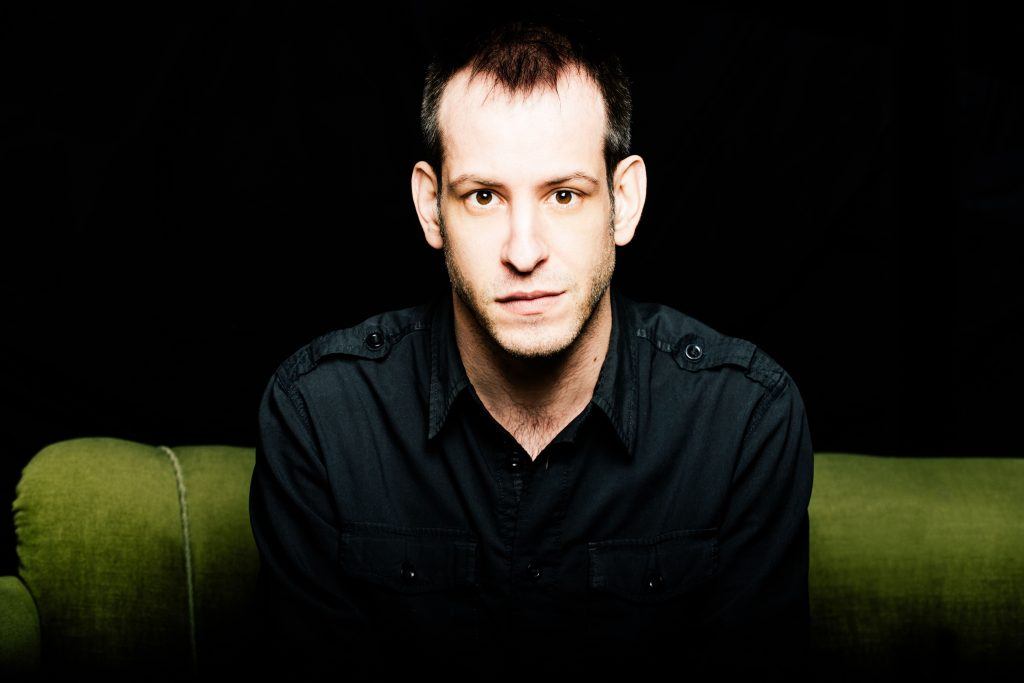 Ryan Ruby is a novelist, translator, critic, and poet who lives, as I do, in Berlin. Back in the summer of 2018, I attended an event at TOP, an art space in Neukölln, where along with journalist Ben Mauk and translator Anne Posten, his colleagues at the Berlin Writers’ Workshop, he was reading from work in progress. Ryan read from a project he called Context Collapse, which, if I remember correctly, he described as a “poem containing the history of poetry.” But to my ears, it sounded more like an academic paper than a poem, with jargon imported from disciplines such as media theory, economics, and literary criticism. It even contained statistics, citations from previous scholarship, and explanatory footnotes, written in blank verse, which were printed out, shuffled up, and distributed to the audience. Throughout the reading, Ryan would hold up a number on a sheet of paper corresponding to the footnote in the text, and a voice from the audience would read it aloud, creating a spatialized, polyvocal sonic environment as well as, to be perfectly honest, a feeling of information overload. Later, I asked him to send me the excerpt, so I could delve deeper into what he had written at a slower pace than readings typically afford—and I’ve been looking forward to seeing the finished project ever since. And now that it is, I am publishing the first suite of excerpts from Context Collapse at Statorec, where I am editor-in-chief.
Andrea Scrima: Ryan, I wonder if it wouldn’t be a good idea to start with a little context. Tell us about the overall sweep of your poem, and how, since you mainly work in prose, you began writing it.
Ryan Ruby: Thank you for this very kind introduction, Andrea! That was a particularly memorable evening for me too, as my partner was nine months pregnant at the time, and I was worried that we’d have to rush to the hospital in the middle of the reading. But you remember quite well: a poem containing the history of poetry, with a tip of the hat to Ezra Pound, of course, who described The Cantos as “a poem containing history.” Read more »



 The case for men’s rights follows straightforwardly from the feminist critique of the structural injustice of gender rules and roles. Yes, these rules are wrong because they oppress women. But they are also wrong because they oppress men, whether by causing physical, emotional and moral suffering or callously neglecting them. Unfortunately the feminist movement has tended to neglect this, assuming that if women are the losers from a patriarchal social order, then men must be the winners.


 Some months ago, on a sunny Sunday afternoon, I went to my bank’s ATM in the main market close to where I live in the Defence Housing Authority, Lahore’s latest fancy suburb, which is organized and managed by the military.
 The wine community is often accused of being snobby and elitist. The language used to describe wine is one source of this innuendo. Although most people have become accustomed to the fruit descriptors used in wine reviews, when wine writers wax poetic by describing wines as “graphite mixed with pâte de fruit”, even
 I first heard Motörhead in 1988. I was a DJ at
 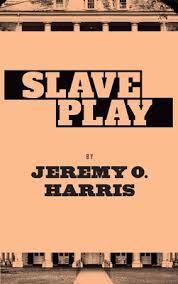 Jeremy Harris is a dark and stormy cocktail of Dave Chappelle, Augusto Boal, Boots Riley, and James Baldwin. The dark comedic energy that drives Slave Play, Harris’s provocative Broadway show about racism, sex, kinky fetishism, white supremacy, interracial relationships, slavery, the Antebellum South, post-colonialism, and psycho-sexual drama therapy, is the sort that makes you cry while laughing, tremble with anxiety, giggle from embarrassment, and question the sources of your own laughter. Slave Play riffs darkly on how black and white people in America live intimately together yet are essentially apart. Carrying the historical burdens of slavery and white supremacy into the 21st century, Harris shines a dark therapeutic light onto areas of our racial relations that are vibrating with pain and festering with pleasure.