Özden Özer, M.D. is a Hematopathologist at Marmara Leukemia Lymphoma Pathology Laboratory in Istanbul, Turkey. Dr. Özer had her medical training at Marmara University Faculty of Medicine Medical School and pathology training at Northwestern University School of Medicine, McGaw Medical Center, as well as at the University of Chicago where she trained under Drs. Janet Rowley and James Vardiman. Dr. Özer published numerous articles describing her findings in national and international medical journals.
Azra Raza, author of The First Cell: And the Human Costs of Pursuing Cancer to the Last, oncologist and professor of medicine at Columbia University, and 3QD editor, decided to speak to more than 20 leading cancer investigators and ask each of them the same five questions listed below. She videotaped the interviews and over the next months we will be posting them here one at a time each Monday. Please keep in mind that Azra and the rest of us at 3QD neither endorse nor oppose any of the answers given by the researchers as part of this project. Their views are their own. One can browse all previous interviews here.
1. We were treating acute myeloid leukemia (AML) with 7+3 (7 days of the drug cytosine arabinoside and 3 days of daunomycin) in 1977. We are still doing the same in 2019. What is the best way forward to change it by 2028?
2. There are 3.5 million papers on cancer, 135,000 in 2017 alone. There is a staggering disconnect between great scientific insights and translation to improved therapy. What are we doing wrong?
3. The fact that children respond to the same treatment better than adults seems to suggest that the cancer biology is different and also that the host is different. Since most cancers increase with age, even having good therapy may not matter as the host is decrepit. Solution?
4. You have great knowledge and experience in the field. If you were given limitless resources to plan a cure for cancer, what will you do?
5. Offering patients with advanced stage non-curable cancer, palliative but toxic treatments is a service or disservice in the current therapeutic landscape?

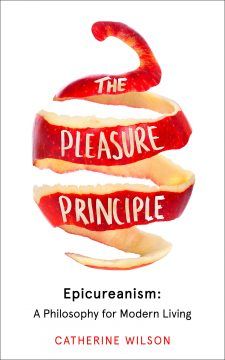 If you, like me, have read premodern philosophers not just for antiquarian interest but also as possible sources of wisdom, you will probably have felt a certain awkwardness. Looking for guidance or assistance in ordering our own beliefs, attitudes and actions, we inevitably run into the problem that the great thinkers of the past knew nothing about what our world would look like.

 Being a horrible person is all the rage these days. This is, after all, the Age of Trump. But blaming him for it is kinda like blaming raccoons for getting into your garbage after you left the lid off your can. You had to spend a week accumulating all that waste, put it into one huge pile, and then leave it outside over night, unguarded and vulnerable. A lot of time and energy went into creating these delectable circumstances, and now raccoons just bein’ raccoons.
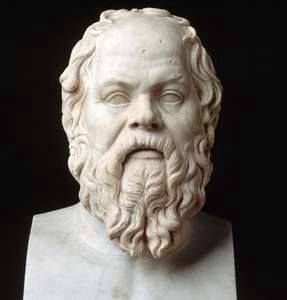 Socrates, snub-nosed, wall-eyed, paunchy, squat,


 Over the past week, Pakistan has been consumed by the Aurat (Women’s) March, which was held today, March 8, International Women’s Day, in all the major cities of the country. The march’s aim is to highlight the continued discrimination, inequality, and harassment suffered by women. There are some people against it who argue that the march should not be allowed, but the Islamabad High Court has rejected the petition that asked for its cancellation. So the march happened.
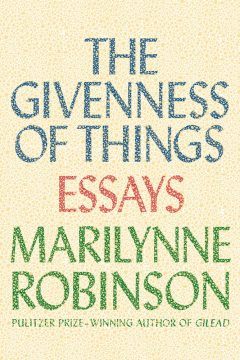 During a recent visit to Paris, I squeezed through the crowded bookshelves of the famous Shakespeare and Company bookstore, a stone’s throw from Notre Dame, whose charred heights sat masked in scaffolding just across the Seine. It has become something of a Parisian tourist hotspot, mostly because of its association with our favorite Modernist expat writers, immortalized and gilded in a cosmopolitan, angsty, and glamorous mystique through the canonization of their works and, some might argue, the award-winning Woody Allen film Midnight in Paris.

 Research by linguists