
by Joan Harvey
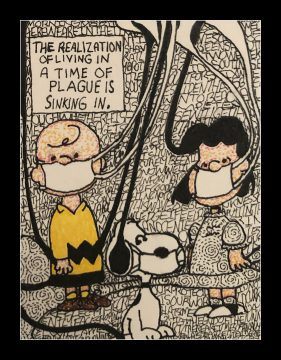
It’s a foggy gray day and the stock market is in free fall. Last week, because I’m one of those careless people who doesn’t pay too much attention to these things, I decided to go against my grain and try to educate myself a little more about the new plague. It is, anyhow, almost impossible not to think about. A short time ago it all seemed very abstract; there were only a few cases in America, and only two in Colorado. Today, although now there are only eight cases in Colorado (whoops, now nine, wait, now 17, today 33, now 77), everything looks grim. With the spread of the virus my thinking and behavior have had to keep evolving daily. And writing about this changing scenario begins to feel like trying to catch a greased pig. One day we’re behaving normally, scoffing at people in a shopping frenzy; the next week the WHO declares a pandemic and we realize we’ve seen nothing like this in our lifetime.
In an old issue of Cabinet Magazine from Fall/Winter 2003 (for some unknown reason stored on my computer), I come across an article by David Serlin, with the clever title, SARS Poetica. While SARS was far less dangerous, I’m still struck by how much in common that virus from almost 20 years ago has with our current bug: infection originating in China from the human consumption of exotic animals–in that case civet cats, in this case probably bats but possibly pangolins or possibly something else; the Chinese government in both cases concealing information about the epidemic; the photos of empty public spaces; the lost business revenue. Serlin points out that the economic losses by business were identified as the tragic victims of the virus, far more than were the actual human victims. Read more »
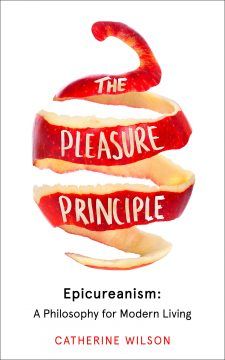 If you, like me, have read premodern philosophers not just for antiquarian interest but also as possible sources of wisdom, you will probably have felt a certain awkwardness. Looking for guidance or assistance in ordering our own beliefs, attitudes and actions, we inevitably run into the problem that the great thinkers of the past knew nothing about what our world would look like.

 Being a horrible person is all the rage these days. This is, after all, the Age of Trump. But blaming him for it is kinda like blaming raccoons for getting into your garbage after you left the lid off your can. You had to spend a week accumulating all that waste, put it into one huge pile, and then leave it outside over night, unguarded and vulnerable. A lot of time and energy went into creating these delectable circumstances, and now raccoons just bein’ raccoons.
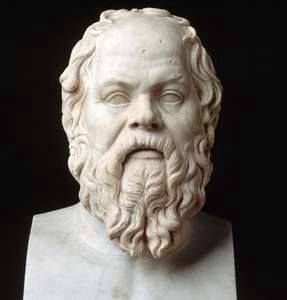 Socrates, snub-nosed, wall-eyed, paunchy, squat,


 Over the past week, Pakistan has been consumed by the Aurat (Women’s) March, which was held today, March 8, International Women’s Day, in all the major cities of the country. The march’s aim is to highlight the continued discrimination, inequality, and harassment suffered by women. There are some people against it who argue that the march should not be allowed, but the Islamabad High Court has rejected the petition that asked for its cancellation. So the march happened.
 During a recent visit to Paris, I squeezed through the crowded bookshelves of the famous Shakespeare and Company bookstore, a stone’s throw from Notre Dame, whose charred heights sat masked in scaffolding just across the Seine. It has become something of a Parisian tourist hotspot, mostly because of its association with our favorite Modernist expat writers, immortalized and gilded in a cosmopolitan, angsty, and glamorous mystique through the canonization of their works and, some might argue, the award-winning Woody Allen film Midnight in Paris.
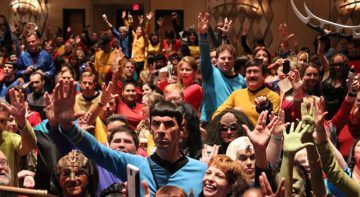
 Research by linguists