
by Eric J. Weiner
Turning and turning in the widening gyre
The falcon cannot hear the falconer;
Things fall apart; the centre cannot hold…
“The Second Coming” William Butler Yeats
 The overwhelming majority of pre-service and in-service teachers I have worked with over the past two decades believe that they should, first and foremost, love, care, and nurture their students. Everything else associated with what is euphemistically called “best practice,” they believe, will follow. When pushed to describe what loving, caring and nurturing their students actually looks like within and beyond the classroom and school—in theory and practice—many of them have trouble getting beyond superficial appeals to “multiple intelligences,” “diversity,” “safe spaces,” and “culturally responsive pedagogy.” Focused primarily on making their students feel safe and emotionally supported, they’ve reduced their pedagogical responsibilities to a metaphorical big hug. Stir in a tablespoon of standardized ideological content, blend with a half cup of research-based strategies, add a pinch of job training/college prep, stir in a few high-stakes tests and, voilà, the neoliberal agenda for public education is rationalized and set.
This perspective on teaching and learning, however good-intentioned it might be, does a great disservice to children in need of more than a pedagogical big hug and the promises of opportunity that it implies. Extending my discussion from last month about the struggle for moral clarity at the southern border, educating other people’s children—whether they are refugees languishing on the border, impoverished children of color concentrated in violent and barren (ex)urban wastelands, or generationally poor white children of the rural interior lost in the din of 21st century identity politics—demands that teachers reject the neoliberal agenda and address the real injustices that these children suffer on a daily basis. Read more »
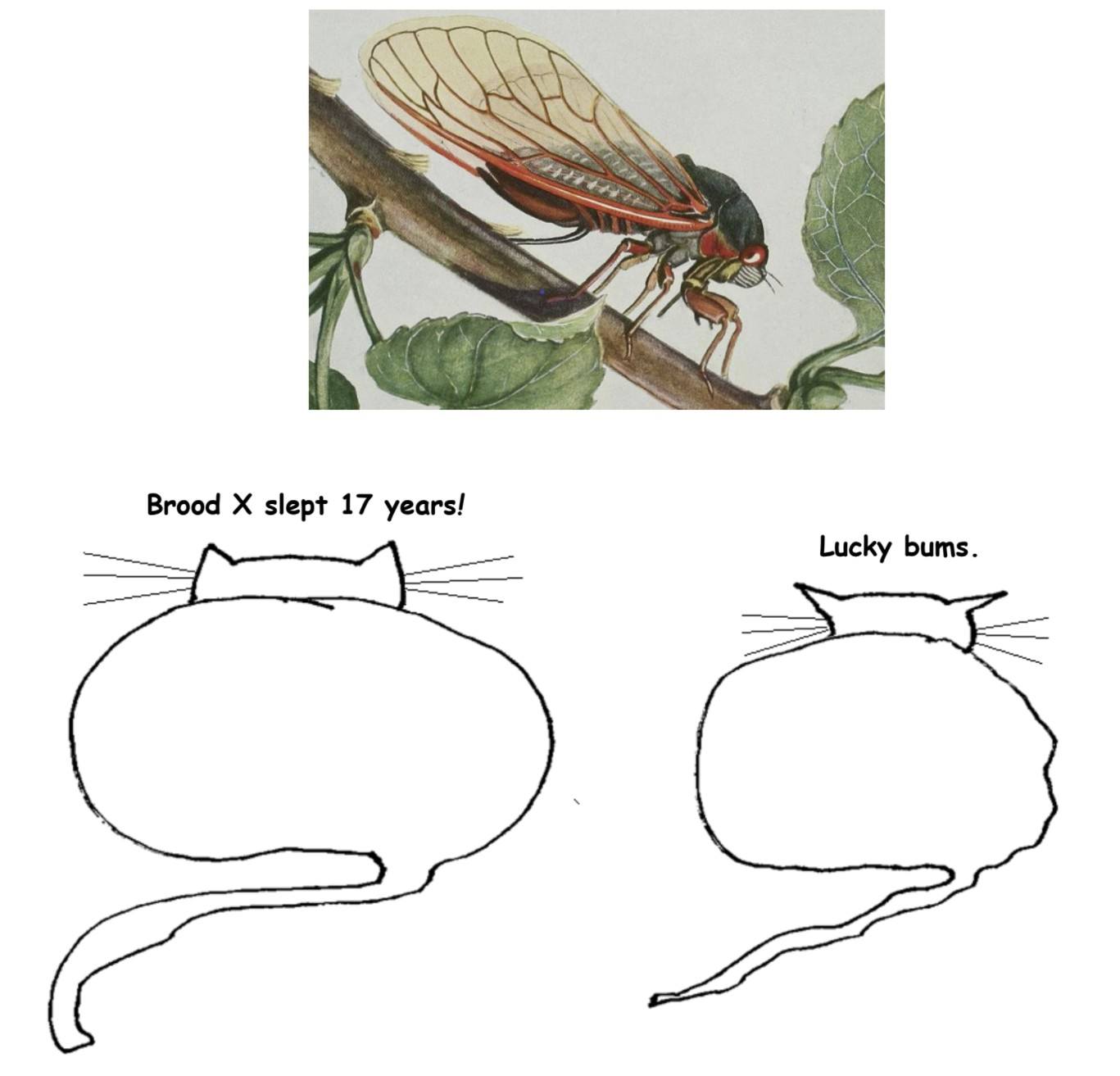
 3QD editor Abbas was desperate. After more than a year of pandemic life, much of it spent in a state of semi-lockdown, he and his partner had run out of shows to watch. So he did what any abject and forlorn person in his situation would do: he solicited recommendations via social media. I then did what any person who has spent the last year watching far too much TV and thinks far too much of his own opinion would do: I emailed him scores of streaming titles, replete with very brief descriptions.

 Aye Chan Zin, a 22 year old competitive cyclist, once raced from Yangon to Mandalay and back. He fell and lost both incisors to gold teeth.

 For the past year or so there have been a considerable number of cases of teachers or authors or journalists who have been threatened with sanctions, had sanctions imposed, or lost their positions, because of articles they wrote or statements they made as part of their occupations. Many of these cases involved the appearance of the N-word in their speech or written work. Here are some of them.
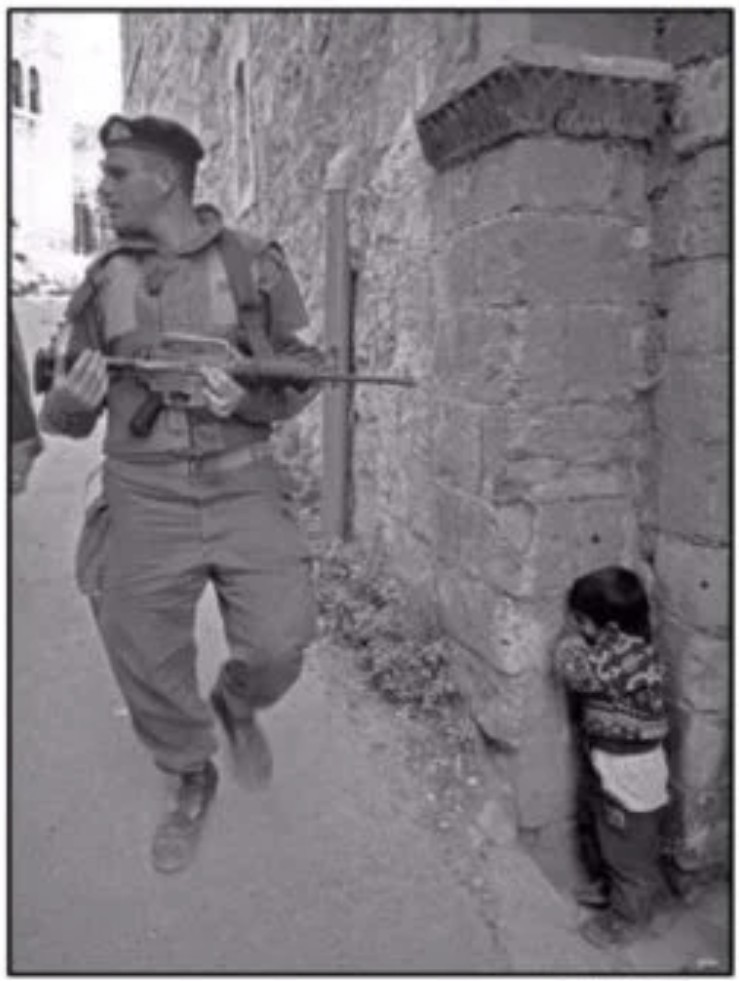 Please, See My Innocence
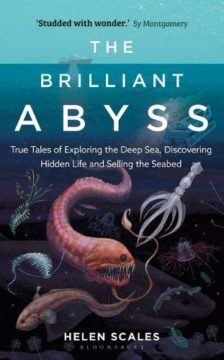 Marine biologist Helen Scales’ book, The Brilliant Abyss: True Tales of Exploring the Deep Sea, Discovering Hidden Life and Selling the Seabed is a triumph. The four major sections in the book, ‘Explore’, ‘Depend’, ‘Exploit’ and ‘Preserve’ are indicators of the breadth of issues addressed in the book: the variety of life forms in the different levels of the oceans; the significance of the oceans to life on the planet; the various ways in which human activity exploits the oceans resources, and concludes with her ideas about how to prevent the ocean from becoming just another area of resources of the planet for exploitation by human beings.
 Sughra Raza. River Magic. May, 2021.
 Small poetry presses are the gold dust of the publishing world, glittering yet easy to miss. And of enduring cumulative value.
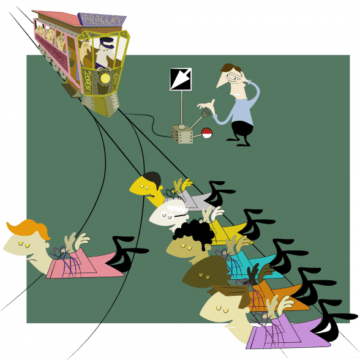 The first part of the original trolley problem goes like this. A runaway trolley is careening towards five people tied to the tracks. There’s a lever in front of you that could divert it onto a second set of tracks. Unfortunately, there is also a person tied to those tracks. You can either do nothing and let five people die or throw the switch and kill one person – but save the five. What do you do?

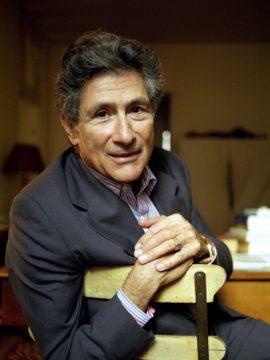

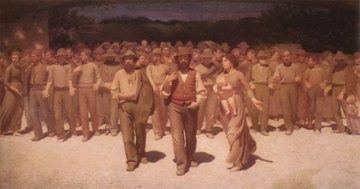 How should people on the ‘progressive’ side of politics view patriotism? That question continues to vex those who would connect with what they suppose are the feelings of the bulk of the population. The answer will vary a good deal according to which country we are considering – the French left, for instance, has a very different relationship to la patrie to that of the US or the UK. In the case of the former, the side cast as traitors has historically been seen as the right. In the USA, at least in the second half of the 20th century it has been very different: those who protested against the Vietnam war were cast as the anti patriots. And today, we still hear that the left ‘hates our country’. The accusation is a damaging one, and has been wielded with glee by conservatives whenever they have the chance. So there is a tricky task for the left, it seems: to be seen as with and not against the mass of people in their identification with the nation and its history, without abandoning an internationalist perspective that rises above the narrow nationalism of the conservative.