
by Akim Reinhardt
 During the 1990s, the impossibility of a black president was so ingrained in American culture that some people, including many African Americans, jokingly referred to President Bill Clinton as the first “black president.” The threshold Clinton had passed to achieve this honorary moniker? He seemed comfortable around black people. That’s all it took.
Because an actual black president was so inconceivable that a white president finally treating African Americans as regular people seemed as close as America would get any time soon.
In 1998, Nobel Laureate Toni Morrison brought Clinton’s unofficial title to national attention with a New Yorker essay aimed at discrediting the impeachment proceedings against him. One of Morrison’s rhetorical devices was to check off all the boxes in which Clinton displayed “almost every trope of blackness,” including being raised in a working class, single-parent household, and loving fast food.
By 2003, the idea of a black president was still outlandish enough that it served as common comedic fodder. Chris Rock starred in the film Head of State, a fantasy comedy in which Chicago Alderman Mays Gilliam becomes a fluke president. And Dave Chappelle portrayed an unabashedly African American version of President George Bush in a Chapelle Show sketch. The skit’s running joke was how outrageous and “unpresidential” it would be to have a black chief executive. Read more »
 I serve as the family cook as well as the family DJ, so no dinner party preparation is complete without a small stack of CDs waiting for guests to arrive. When the doorbell rings and my wife Alma walks to the front door to greet our earliest guests, I idle the burners on the stove and hurry to the living room stereo, where I press Play for the first CD. A song should already be in progress before the exchange of Hellos, because music, like furniture, is a form of home decoration, filling and defining silence the way a couch or chair fills and defines space. The music must be dialed low, just enough for a home to express quiet domestic welcome. I like to think that I’m long past my ancient feckless undergraduate days of booming a song through an open window.
 Perhaps imprudently, your humble blogger continues to toil in the philosophy mines for blogging material, even in this stressful time. And there will be such postage eventually, of that you can be sure! However, prudence enough remains to prevent him from posting half-baked nonsense; so in the interim, let us return once again to the podcast, and enjoy some fine music while we wait.
 We have argued in


 Sughra Raza. Island Pond Algae, Upstate NY. July 26, 2020.
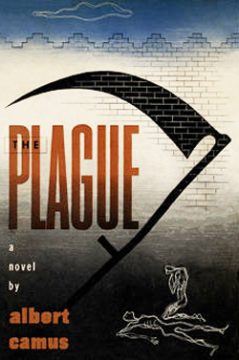


 Nothing focuses minds like grave events that bring about severe disruption to everyday living. Over recent times, two major happenings, one with global and the other with more regional implications, have jolted people out of their complacency and compelled some reflection on unpredictability and uncertainty in life, and what is going on around us.
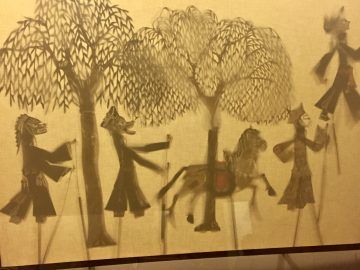 When the Rajah’s barber could no longer keep the secret, he was seen darting by the sparrow in the tamarind, by the flinty owl in the giant oak that was surely a jinn’s abode, by a flock of hill mynahs flying through the buttery light of early spring. What was it that sent him bumbling through the jungle like that? Hours before, he had met the Rajah’s terrible gaze in the mirror when he discovered two sickle-shaped horns under his hair. This secret was as a rock he had swallowed, a rock he needed to expel. He was found panting by the fox of the jungle’s dank center, by a tightly knotted vine clutching a forgotten well. He saw that the well was old and there was bamboo growing in it. He saw it was safe and he screamed his fullest scream into the well: “the-Rajah-has-horns-on-his-head!” The bamboo had been thirsty for a secret and happily soaked it up, but the next day it was cut down by a flute maker who had been in search of just the right bamboo. Soon, all his fine bamboo flutes were sold. Then, all the new flutes of Jaunpur sang out the secret: “the-Rajah-has-horns-on-his-head!” The bamboo had been thirsty for a secret. The hapless barber had poured into it his last song.