Too many books

by Charlie Huenemann
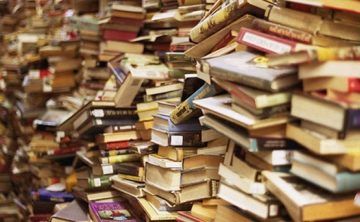
It is commonplace to observe just how marvelous books are. Some person, perhaps from long ago, makes inky marks onto processed pulp from old trees. The ensuing artifact is tossed from hand to hand, carrying its cargo of characters, plots, ideas, and poems across the rough seas of time, until it comes to you. And now you have the chance to share in a tradition of readers stretching back to the author, a transtemporal book club who communicate with one another only by terse comments scratched into the margins of this leather-bound vessel.

But, boy, do they pile up over time! Shelves groan under the weight of old textbooks, exclamatory treatments of hot topics long past their sell-by date, endless reissues of classics, sci-fi paperbacks that disintegrate when opened, and that one book on economics you were supposed to return to somebody five, no, maybe ten years ago. Some, perhaps, have resale value. The rest could be dropped into a charity box to join the massive graveyard of books to be boxed up and never seen again.

The remaining option is to dump them unceremoniously into the recycling bin – but most of us recoil from the suggestion in horror. Why? We venerate books as objects. Some books preserve important ideas that threaten bigots and tyrants, and these are the ones often burned by said barbarians. Holding onto these books is one way to affirm their importance in preserving our fragile civilization. Some of these books are old friends to us, our teachers and soulmates, and so dumping them is unthinkable. “Books” as a common noun typically picks out the ones that mean so much to us, and if we were to announce to our friends that we were dumping out our old books, we might as well have said we were doing so on our way to burn down the Parthenon and slap a mustache on the Mona Lisa. Read more »
“Dapaan” — Folkloric Kashmiri term that starts a tale

by Rafiq Kathwari

Dapaan, Rama saw Sita bathing nude in Sitaharan, a spring near the Line of Control in Kashmir. It was lust at first sight. Dapaan, the demon king Ravana abducted Sita to Sri Lanka to avenge a previous wrong. Rama flew in anger south to Sri Lanka in his glitzy winged chariot. Dapaan, the chariot was Made in Prehistoric India, using indigenous materials. Dapaan, Hanuman, the son of Vayu, god of the wind, steered the chariot. Dapaan, clouds cloaked the chariot to foil discovery by enemy radar. Dapaan, Rama shot a divine arrow which pierced Ravana in the heart and killed him. Dapaan, Rama flew Sita back to Sitaharan where they lived happily until India partitioned herself, tearing apart 15 million souls, the largest migration of people in modern history.

Dapaan, Hindutva has been weaponized to impose mythology upon history to create Greater India — Akhund Baharat, united and undivided Hindu Rashtra from Afghanistan to Myanmar. Dapaan, Kashmir strikes at the heart of this nirvana because of its Muslim majority.

Dapaan, every Summer the army shields thousands of Hindu pilgrims who spread the legs of a virgin glacier in Kashmir to worship Shiva’s icy lingam thawing in a cave — daring an ecological disaster. Dapaan, Hindutva is a pandemic.

Dapaan, Neanderthals of Nagpur are marching in Kashmir to the drumbeat of Hindutva supremythology: gharwapsi, zaminjihad, lovejihad to herald acche din. Dapaan, fascists clasp opposite concepts to serve their own puffery. Dapaan, Kashmiris will be told to hold the scalpel for their own execution to chill the blood of Neanderthals.

Dapaan, prepare for the moment when history throws up a rainbow over the Zabarvan. Rainbows are ephemeral. Preparedness is everything. When they ask, Azadi ka matlab kya? Shout out loud — Jamhooriya, Jamhooriya. Dapaan, poets will be caged because poetry is the fuel of Azadi.

Glossary

  • gharwapsi: return home — (to Kashmir of Hindu myths)
  • zaminjihad: The East India Company sold Kashmir to the Rajput Dogras who enslaved Kashmiris for over 100 years. Sheikh Abdullah, with a swirl of his fountain pen, deemed tillers owners of land they till, freed Kashmiris from serfdom, made peasants landowners, zamindars, earned the honorific, ‘Lion of Kashmir.’ This scared India’s suave socialist prime minister, Pandit Nehru, and his inner circle of prominent and privileged Kashmiri pandits. They exiled the Sheikh for nearly 20 years.
  • Zabarvan: Foothills of the Himalayas that ring the Vale of Kashmir
  • lovejihad: Hindutva drive to wage war at love between young Muslims and Hindus
  • acche din: Good days
  • Azadi: Liberty
  • Azadi ka matlab kya: What does liberty mean?
  • Jamhooriya, Jamhooriya: Democracy, Democracy.

The Game Theory

by Peter Wells

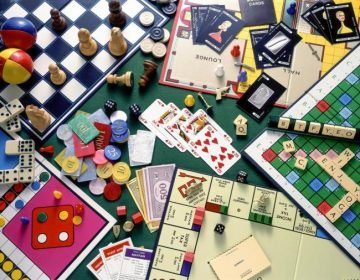
My mother believed that games were good for you. Her faith was unshaken by the occasions when my brothers and I returned from our outdoor games with a grievance between us, or by the times the Monopoly board was overturned in anger during the winter months. She considered that games were a preparation for life. I think she underestimated them.

Games require two complementary faculties that are extremely difficult to maintain in tandem at full strength. The first is the ability to take a game absolutely seriously. While it is in progress, it matters. The rules must be obeyed, but participants are encouraged to use their ingenuity to exploit the rules, as well as every facet of their mental and/or physical ability, in order to win. The aim is not primarily skill development, or increased fitness, or social interaction, it is victory, and victory over an enemy doing their best. As soon as we know our opponents are not trying, the game disintegrates. Children quickly learn to spot when their parents are letting them win, and they don’t like it. They would rather suffer repeated defeats than such condescension.

The second faculty is the ability to keep the game self-contained, and not allow it to spill over into the players’ non-game lives, or be vulnerable to their personal character flaws or relationship issues. If the desire to win causes the participants to cheat, become angry, or bear a grudge after defeat, or even to be triumphalist and scornful in victory, the game is ruined. Because it is, after all, ‘a game.’ Note, I did not say ‘only.’ Read more »

Monday, August 24, 2020

The Many Identities of Kamala Harris

by Raji Jayaraman

Kamala D. Harris

An American parent who named their child “Kamala Devi” in the 1960s is likely to have been either Indian or a hippie. When I first heard Kamala Harris’ name during the 2020 Democratic presidential race, I assumed it was the latter since she was generically described as a “black woman”. What I have since learned is that her mother, Shyamala Gopalan, was an Indian immigrant. I barely understand my own personal life, so I won’t pretend to have any insight into Kamala Harris’s. Maybe she’s close to her Indian family, maybe she’s not. I’ll never know, and frankly neither will you. The only thing I can safely conclude from this information is that Kamala Harris has an Indian side.

As a country of immigrants, Americans are familiar with diversity even if they are not always accepting of it. Diversity across different people is, however, different from diversity within the same person. Americans seem disoriented by individual diversity. My admittedly rudimentary understanding is that they alleviate this unease by reducing the dimensionality of ethnic, racial or cultural identity in a person. The thankfully obsolete one drop rule is an example of this.  Harris’s mother seems to have understood it early on. As Harris explains in a New Yorker profile, her mother “knew that her adopted homeland would see Maya [Kamala’s sister] and me as black girls, and she was determined to make sure we would grow into confident, proud black women.”

We know by now that the description of Harris as a “black woman” is incomplete. The opening paragraph of “Kamala’s story” on her new campaign website describes her as both “Black” and “Indian”, and notes her parents’ immigration to the U.S. from Jamaica and India. Then, in her DNC convention acceptance speech, she gave a shout out to “my uncles, my aunts and my chithis”. Padma Lakshmi, the model-turned-celebrity-chef, explained through tears of joy that chithi meant “auntie” in Tamil. Harris didn’t announce the fact that her mother’s side of the family is Brahmin, but that would have been obvious to any Tamilian looking at Harris’s Indian family photo. So now, on her Indian side alone, we have geography, language, religion and caste in the mix. Sorting all of that out has got to be confusing for anyone. Read more »

Lincoln Was Not A Great President

by Thomas R. Wells

Lincoln consistently scores top or at least top 3 in every ranking of US presidents. This high standing has long puzzled me. After all, this is the leader who presided over a long brutal civil war that killed 620,000 of his own people. For context, as a percentage of the population, that is more American lives than all other presidents put together have managed to expend in all America’s other wars. On the face of it, that is a massive failure of statesmanship. The usual response is that the war was a necessary sacrifice to end the supreme evil of slavery. I do not find this convincing.

I. The civil war was not inevitable: Lincoln caused it by his election and choices

War happens because politics fails. Lincoln’s Republican party was perceived as anti-Southern, as evidenced by its immediate promise to impose import tariffs that would hurt the South’s economy (to the benefit of the industrial North) and long-term commitment to the abolition of slavery. Although not the most radical candidate the Republicans could have nominated (more on which below) Lincoln was thus an extraordinarily divisive presidential candidate who was elected entirely by Northern voters. The Southern states launched their secession as soon as they heard Lincoln had won because they believed he (and his Republican party) intended to pursue an anti-South agenda that would further cement their political marginalisation within the USA. Perhaps reflecting his party’s political ignorance of the South and his administration’s inexperience, Lincoln seems not to have understood this. He therefore dramatically underestimated popular support for secession in the South and assumed a show of force would quickly crush it.

It is reasonable to suppose that if a different party’s candidate had won the 1860 election, secession would not have happened then (or perhaps at all), despite the long-running tensions between South and North. Moreover, it seems likely that a different president could have managed any secession crisis without resorting to war because that president would have had the trust and legitimacy in the South that Lincoln lacked. (For example, one of Congress’s various efforts to resolve the secession crisis by constitutionally protecting slavery might have succeeded.) Or the South could have been allowed to secede, on the same principle that the colonies had claimed in declaring their independence from Britain. The South’s goal was just to leave the USA, and this was perfectly compatible with the continued existence and flourishing of the country that remained (though perhaps not with its pride). It was the South’s choice to declare independence from the USA, but it was the choice of President Lincoln’s government to go to war to force them to stay. Read more »

Monday Poem

Ostinato

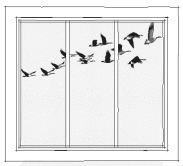
geese flying-windowfirst their concerted honks—
unseen, …………then
as apparitions they rise
from foliage at the foot of the hill
framed in a window sash
they rise to the cackles of crows
already at breakfast in our yard
arrayed upon green, black notes
of an almost endless chord,
ostinato of the articulated
sounds of vees that appear overhead,
levitating geese in glass,
all of a boundless chord drawn-out,
a day in the life
……………………..they vanish
over the window top
truck tires hum on tar
dopplering down around a bend
played out
a last crow lifts off
speaking a
……………………..last word

Jim Culleny
9/5/18

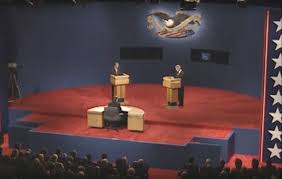
Against Presidential Debates

by Joseph Shieber

As the quadrennial presidential and vice presidential debate season nears once more, we’ll soon see opinion pieces reminding us that debates have at most a very slight impact on the outcome of presidential contests.

Typically, the writers of those pieces frame their discussion as a warning not to place too much importance on the debates. I want to make a different argument about the presidential and vice presidential debates: we would do better to get rid of them altogether.

The crux of my argument against the presidential and vice presidential debates is that they don’t serve any of the audiences who might tune into them.

Those who follow politics already know the candidates’ track records and plans, so — as anyone familiar with the literature on the informativeness of job interviews can tell you — the debate doesn’t provide any salient information, just noise.

And what about those who aren’t informed consumers of political information? Focusing on the effect of debates on uninformed or undecided voters arguably distorts the discussion of the relative merits of the presidential candidates in ways that damage substantive coverage of political issues.

This is because, if they’re even watching the debates at all, uninformed or undecided voters are almost certainly focused on the wrong signals. Appreciating who refrained from perspiring, who wasn’t sighing annoyingly, or who had the snappiest one-line rebuttal doesn’t actually tell voters anything about who would promote policies that best represent those voters’ — and the country’s — interests.

And for the media, debates just provide another excuse to focus on horse race and style over track record and substance. Read more »

Not Even Wrong #2: Random, Run-On Thoughts On Dropping Out

by Jackson Arn

It used to be
the guilty fantasy
of theory bros and voluntary beggars.
When turning points expired or wavered
they’d hold it to their chests at night,
a Molotov they didn’t dare ignite:
Could revolution, usually so plodding,
be brought about by some proud, precise Nothing?

By standing very still
and thinking, could you will
the universe into your orbit?
Rather than Changing
or its hotter cousin, Rearranging,
why not secrete a thin disinterest
and let society struggle to absorb it?
The best part was, it made the change-obsessed
look foolish for their interest
in lobbying, petitions, and the rest—
in lieu of noisy sawing, one sharp swish
to make the engagé seem babyish
and also, one supposes, slay the state,
though even that might be too animate,
too quick to grant the state its dying wish.
Put better: one smart drop of crimson paint
to make the canvas as a whole look faint.

When it came true,
as guilty wishes often do,
the shrieks of celebration shattered glass:
ten million bros in witty dresses
deadpanning in manufactured messes
or scribbling alien Os in fields of grass—
anything at all that had once seemed Nothing
now marked, from skydiver eyes, a happening
alloyed with Nothing, stronger than Nothing alone,
shuddering at so many hertzes
it made dogs moan,

dogs and the unlucky some
born with an ear for pandemonium,
who hear at all hours what they cannot see,
chords rich and fat and spoiled as gravity,
and feel, in bed or in the shower, a gnawing
lust for slow chromatic scales of sawing.

by Jackson Arn

The Demon and the Reverend: How Doubt Unites Us

by Jochen Szangolies

Thomas Bayes and Rational Belief

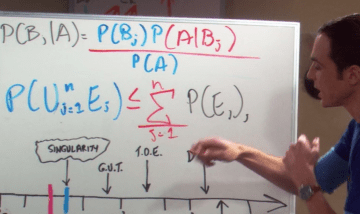
Bayes’ theorem in popular culture: the Big Bang Theory’s Sheldon Cooper trying to estimate his total lifespan

When we are presented with two alternatives, but are uncertain which to choose, a common way to break the deadlock is to throw a coin. That is, we leave the outcome open to chance: we trust that, if the coin is fair, it will not prefer either alternative—thereby itself mirroring our own indecision—yet yield a definite outcome.

This works, essentially, because we trust that a fair coin will show heads as often as it will show tails—more precisely, over sufficiently many trials, the frequency of heads (or tails) will approach 1/2. In this case, this is what’s meant by saying that the coin has a 50% probability of coming up heads.

But probabilities aren’t always that clear cut. For example, what does it mean to say that there’s a 50% chance of rain tomorrow? There is only one tomorrow, so we can’t really mean that over sufficiently many tomorrows, there will be an even ratio of rain/no rain. Moreover, sometimes we will hear—or indeed say—things like ‘I’m 90% certain that Neil Armstrong was the first man on the Moon’.

In such cases, it is more appropriate to think of the quoted probabilities as being something like a degree of belief, rather than related to some kind of ratio of occurrences. That is, probability in such a case quantifies belief in a given hypothesis—with 1 and 0 being the edge cases where we’re completely convinced that it is true or false, respectively.

Beliefs, however, unlike frequencies, are subject to change: the coin will come up heads half the time tomorrow just as well as today, while if I believe that Louis Armstrong was the first man on the moon, and learn that he was, in fact, a famous Jazz musician, I will change my beliefs accordingly (provided I act rationally).

The question of how one should adapt—update, in the most common parlance—one’s beliefs given new data is addressed in the most famous legacy of the Reverend Thomas Bayes, an 18th century Presbyterian minister. As a Nonconformist, dissent and doubt were perhaps baked into Bayes’ background; a student of logic as well as theology, he wrote defenses of both God’s benevolence and Isaac Newton’s formulation of calculus. His most lasting contribution, however, would be a theorem that gives a precisely quantifiable means of how evidence should influence our beliefs. Read more »

Work and time

by Emrys Westacott

The coronavirus pandemic has caused a great of suffering and has disrupted millions of lives. Few people welcome this kind of disruption; but as many have already observed, it can be the occasion for reflection, particularly on aspects of our lives that are called into question, appear in a new light, or that we were taking for granted but whose absence now makes us realize were very precious. For many people, work, which is so central to their lives, is one of the things that has been especially disrupted. The pandemic has affected how they do their job, how they experience it, or whether they even still have a job at all. For those who are working from home rather than commuting to a workplace shared with co-workers, the new situation is likely to bring a new awareness of the relation between work and time. So let us reflect on this.
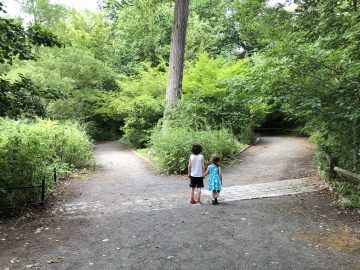
In ‘The Superannuated Man,’ Charles Lamb writes,

that is the only true Time, which a man can properly call his own, that which he has all to himself; the rest, though in some sense he may be said to live it, is other people’s times, not his.

This is a basic and obvious reason that many people resent having to go to work at all. Work takes up time, and time, as many sages have observed, is supremely valuable, irreplaceable, priceless. It is precious because we each know that we are granted only a limited amount of it.

Time is, in the words of Ben Franklin, “the stuff life is made of.” So insofar as work consumes your time, it consumes your life. If your work is what you really want to do, this is not a problem. But if much of the time when you are working–whether you are selling your services to someone else for an agreed number of hours or drudging away at home–you would really prefer to be doing something else, then your working hours represent an enormous sacrifice. You are using up your supply of a decidedly finite, non-renewable resource. Read more »

Choosing for the Children: Parenting in Times of Uncertainty

by Robyn Repko Waller

© Robyn Repko Waller

Lack of choice is frustrating,  but sometimes choice — choosing for others — can be equally daunting

This August parents and guardians of children across the country are facing unenviable decisions about childcare and school in the time of COVID. Carers of school-age kids have been surveyed by the school district, if they are lucky, as to their preferences for the fall term: Would you prefer that Kid to return to face-to-face instruction, attending class with their teacher and friends, all while social distancing in masks? Or would you rather Kid learn remotely, in your home via Zoom class meetings and online apps? Perhaps you prefer to homeschool Kid this year? 

And then comes the long-awaited roll-out of the official school reopening plans: For some, there are disappointingly limited options, only the course of delivery chosen by the district or institution; that or homeschool. But, for some, there are more options: Kid can learn in the classroom, remote, or be homeschooled. It’s up to you, the parent or guardian. You’ve been afforded the gift of freedom of choice (unless those free will skeptics are right about our reality)! 

Now there are numerous ways in which this freedom of choice is problematic — or  perhaps isn’t actually a freedom of choice in the first place. These complicating factors of childcare have been much discussed in recent months: The reality on the ground is that COVID-related childcare changes have exacerbated existing socioeconomic inequalities, especially for those with essential or essentially in-person jobs, single parents, or those without back-up carers. On the one hand, those parents face job loss (and so critical income) if reliable workday care is not available, and on the other, they must send children back to f2f schooling even if they don’t believe it is wise to do so. Learning pods — small groups of children with private instruction — aren’t an option for most considering the cost. In this way, the choices made aren’t from an expansive freedom of choice.  Read more »

The Gait of Water-Nymphs

by Eric Miller

Syrinx

What was it, again, that, by 1877, Thomas H. Huxley decided to call the voice box of a bird? Syrinx. He alludes to a tale from Ovid.

Rough Arcadia’s peremptory god, Pan, bears a name proclaiming an appetite that would have everything. Now he wants sex with Syrinx. The nymph refuses. She sprints as far as the marshy bank of the river Ladon, asks her sisters to rescue her, and (perhaps with their assistance) evasively adopts the shape of a hollow reed. Frustrated of his object—using beeswax as connective matter—Pan confects his typifying pipe from the stems of the calamus plant that Syrinx has become. Unlike Pan, a bird carries its pipe internally. Its wild music pleasingly resembles that of Pan’s instrument, but enfranchised or escaped to an original nymph-like liberty. In a bird, the air resounds independently of human artifice. It is worth listening while the song lasts.

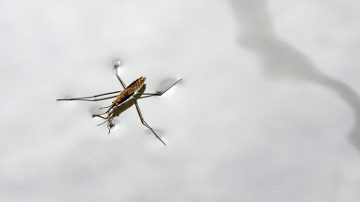
Does the name syrinx conjure not just Ovid, but the reed, also, that shakes in an oboe’s mouthpiece, a chanter’s, a bassoon’s? Located, often, where the trachea branches, equipped with a tympanum on the right side and on the left, a bird’s cartilaginous syrinx can produce two separate voices—the note held by neither a harmonic of the other—as the singer breathes out. Jean Dorst explains that an avian ear responds ten times faster than ours and, further, that the Wood Thrush of North America, in whistling, may alter its pitch—its frequency of vibration—two hundred times per second. I used to hear these thrushes in Toronto. Formerly, they nested near the house where I was raised. Read more »

Review: An Enticing Little Greek Horror Film

by Alexander C. Kafka

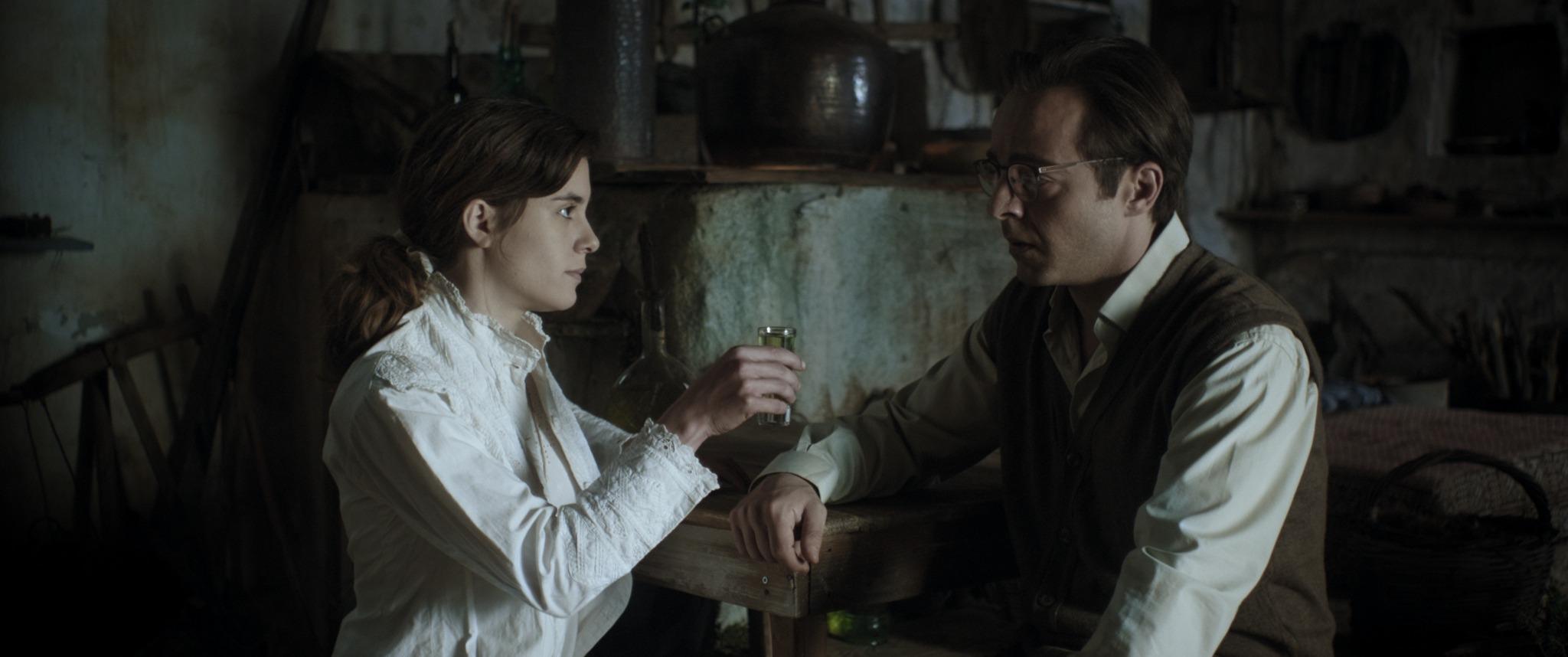
Here’s to your health: Danae (Anastasia Rafaella Konidi) introduces Panos (Prometheus Aleifer) to the not-so-simple life.

“The forest is deep. It’s easy for those unfamiliar with its ways to find themselves lost.”

So says a beguiling young woman, Danae (Anastasia Rafaella Konidi), who lives in a tumble-down cabin in the woods. She says this in caution to Panos (Prometheus Aleifer), a doctor who has just moved to a nearby village. Panos, in a moment of cell-phone distraction, nearly ran her over and has tracked her down to see if she’s OK. 

She’s not. Marring her wholesome beauty is an alarming intermittent skin condition, although it doesn’t seem to bother her very much. And her father, an old, long-bearded flesh-and-bone maniac, molests her. 

Panos wants to go seek help for her. After all, as he tells a villager, “we’re not living in the Middle Ages.” But some women are hard to leave. Very. 

Panos and Danae become, as the film’s title reflects, Entwined.

Danae speaks in a peculiarly old-fashioned, literary manner. Obsessed with keeping her hearth fire lit, she lives primitively and seems not of this time, nor of any specific time really. She dresses in loose white skirts and blouses, cooks simple fare, gathers branches, and listens to an eerie violin tune on an ancient, warped phonograph. She’s hospitable, tender, and has a pantheistic reverence for her surroundings. 

As Danae casts her spell over Panos, so this defiantly minimalistic, low-budget Greek horror fantasy, director Minos Nikolakakis’s first feature, casts its spell over us. 

Its screenplay by John de Holland, who also plays Panos’s half-brother George, is willfully gaunt, though it unmistakably underlines the idea that science can’t explain everything.

Cinematographer Thodoros Mihopoulos brings the woods very much alive — beautiful and more than a bit threatening. Composer Sotiris Debonos’s score combines scratchy strings, neo-baroque themes, and electronic atmospherics. These enhance the resonant tree creaks and bird calls mixed by editor Giorgos Georgopoulos into a hallucinogenic, lulling, primal embrace.

Every now and then we cut away to George, back in civilization and calling repeatedly to see what’s become of Panos. George’s wife assures him that Panos is probably doing just fine. 

After all, what horrible force could involuntarily isolate us so completely in the modern world? Add to the 2019 film’s chilling characteristics its power as premonition. 

“I need light, not prayers,” Panos irritably tells a muttering villager at a patient’s bedside. But as it turns out, the good doctor may need both.

Wine’s Very Own Imitation Game

by Dwight Furrow

I often hear it said that, despite all the stories about family and cultural traditions, winemaking ideologies, and paeans to terroir, what matters is what’s in the glass. If a wine has flavor it’s good. Nothing else matters. And, of course, the whole idea of wine scores reflects the idea that there is single scale of deliciousness that defines wine quality.
For many people who drink wine as a commodity beverage, I suppose the platitude “it’s only what’s in the glass matters” is true. But many of the people who talk this way are wine lovers and connoisseurs. For many of them, there is something self-deceptive about this full focus on what is in the glass. Although flavor surely matters, it is not all that matters, and these stories, traditions, and ideologies are central to genuine wine appreciation.

Burnham and Skilleås, in their book The Aesthetics of Wine, engage in a thought experiment that shows the questionable nature of “it’s only what’s in the glass that matters”. They ask us to imagine a scenario in 2030 in which wine science has advanced to such a point that any wine can be thoroughly analyzed, not only into its constituent chemical components (which we can already do up to a point), but with regard to a wine’s full development as well.

Read more »

Monday, August 17, 2020

What’s Love Got To Do With It?

by Eric J. Weiner

Love takes off the masks that we fear we cannot live without and know we cannot live within. I use the word “love” here not merely in the personal sense but as a state of being, or a state of grace – not in the infantile American sense of being made happy but in the tough and universal sense of quest and daring and growth.—James Baldwin

Real social transformation, real change has to come out of a love of life and a love of the world…—Adrienne Rich

Finally, outrage. Intense, violent, peaceful, burning, painful, heart-wrenching, passionate, empowering, joyful, loving outrage. Finally. We have, for decades, lived with the violence of erasure, silencing, the carceral state, economic pain, hunger, poverty, marginalization, humiliation, colonization, juridical racism, and sexual objectification. Our outrage is collective, multi-ethnic, cross-gendered and includes people from across the economic spectrum. One match does not start a firestorm unless what it touches is primed to burn. But unlike other moments of outrage that have briefly erupted over the years in the face of death and injustice, there seems to be something different this time; our outrage burns with a kind of love not seen or felt since Selma and Stonewall. Every scream against white supremacy, each interlocked arm that refuses to yield, every step we take along roads paved in blood and sweat, each drop of milk poured over eyes burning from pepper spray, every fist raised in solidarity, each time we are afraid but keep fighting is a sign that radical love has returned with a vengeance.
In this time of civil unrest and democratic insurgency, the kind of k-12 and university education we are providing to the nation’s children and young adults is of paramount importance. A democratic education, following Dewey, is the keystone to a functioning democratic society. Public schools are responsible for providing our children and young adults this kind of education. Within schools, teachers-in-relation to their students are the engines of learning and intellectual/emotional development. A teacher who teaches in the service of democracy in the United States, regardless of grade-level and content area knowledge, has three primary objectives: 1) To teach their students how to think critically; 2) To help their students develop habits of mind/body that are consistent with the demands of democratic life; and 3) To protect and nurture their students’ natural curiosity and creativity. In order for them to be able to meet these objectives within our current historical context, we must reassert the importance of what bell hooks calls an “ethic of love” and Paulo Freire called a “pedagogy of love” into the praxis of teaching/learning. Read more »

Cowardice and Joy in Portland, Part 1: Navigating by Tu Fu

by David Oates

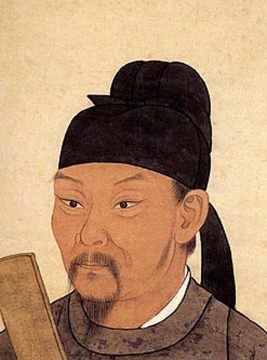
Tu Fu, Chinese Poet

My decision not to go into downtown Portland for the protest demonstration has held up for four weeks now. The Federal provocateurs have finally begun to leave, and the threat of violence has been reduced to comparative insignificance. . . so it seems that if I were to show up now, it would merely underline that I am a craven fair-weather sort of progressive. That die is cast.

What have I been doing instead? Well, same as everybody. Sheltering in place. Cooking dinner. Trying to stay on my path. I’m a writer born in 1950, so I’m past the ditch-digging and hustling part of my life. But my path hasn’t changed.

I read things. I write poems or essays. I think about that next book. I take long walks to mull it over. I come back to our quiet, clean-but-becoming-threadbare home, ascend the stairs to my cluttered study, find the book or page or little stack of half-realized ideas, and make some tiny increment of progress. Two words that fit together. Two ideas. Two sentences. This is my near horizon.

It feels very far indeed from the Federal Courthouse. The anger of Black Lives Matter (which makes sense to me). The anger of Trumps and Trumpies (which seems evil and hard to account for). Just two miles from my house – I’ve walked it often. Across an elm-shaded neighborhood. Over the Hawthorne Bridge. And then there I am, staring at the plinth where the bronze elk ought to be standing. The boarded-up shops. The beaten-brown grass. The sprawl and slash of graffiti covering nearly every surface.

I’ve been there by day, but never at night.

This is my far horizon: discord, the derangement of politics, slogans, lies and delusions, conflict, power plays. Shouting. Orderly protest. State-organized cruelty. Aspiration for democracy. Truncheoning of democracy.

* * *

How to navigate between and among these worlds? Flailingly is my usual answer, as it for most of us. Just muddling along.

But a Chinese poet from the 700s is also, often, my guide: Tu Fu, a minor court official of the Tang era. A wry, thoughtful guy who lived on a houseboat and liked to drink. Read more »

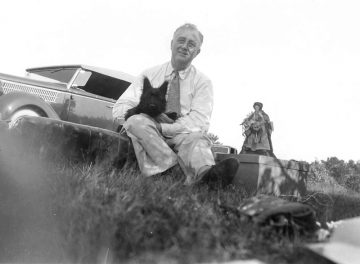
A Joyous Bit of Politics: FDR’s Fala Speech

by Michael Liss

August 8, 1940. Courtesy of the Franklin D. Roosevelt Library website.

It is March of 1944, and Franklin Delano Roosevelt is dying. His physicians, Lieutenant Commander Howard Bruen and Vice-Admiral Ross McIntire, know it, as do a handful of others McIntire brought in. FDR probably knows it as well, no matter how much his doctors may have sugar-coated their findings. He has cardiac insufficiency, arteriosclerosis, congestive heart failure, an enlarged and failing left ventricle, and mitral valve issues. Modern medicine would likely have offered more productive years of life, but, in the era before sophisticated heart surgery, before the development of a heart-lung machine, and with a very limited formulary of drugs, it is just a matter of time, maybe a year at most. 

His decline was obvious. You could see it on his face, in the amount of time he needed to recover from exertion, in the loss of weight. He had undertaken a long sea trip on the USS Baltimore to visit American forces in the Pacific, but spent much of it in his stateroom, resting. An ordinary man of that time would have scaled back, gradually becoming a convalescent. But FDR was no ordinary man, and 1944 no ordinary time. Obviously, the Democratic Party would re-nominate him for an unprecedented fourth term, if he wanted it, but there was deep concern in the family that he would never survive. Eleanor Roosevelt was later quoted as saying, “If Franklin loses, I’ll be personally glad, but worried for the world.” Read more »