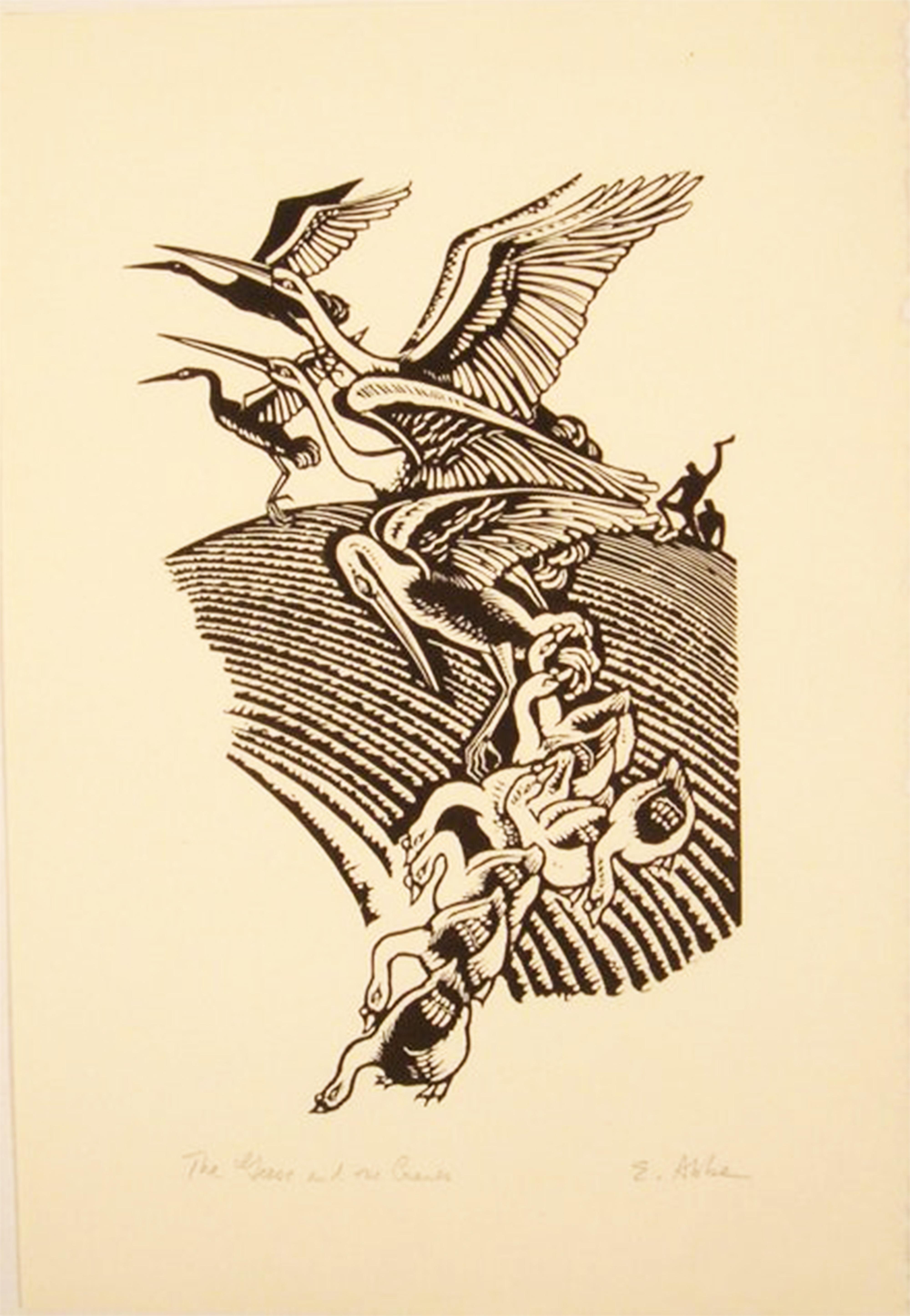
Lorna Simpson. Unanswerable (detail) 2018.
Found photograph, and collage on paper.

by Dave Maier
 If one enters the name “Ellen Page” into the search box at en.wikipedia.org, it redirects to an entry entitled “Elliot Page” (and informs you that it has done this). This is because on December 1, 2020, as the entry itself tells us in the section marked “Personal life,” that person, an accomplished and popular actor nominated for the 2007 Best Actress Oscar for their performance in the film Juno, “came out as transgender on his social media accounts, revealed his pronouns as he/him and they/them, and revealed his new name, Elliot Page.” Naturally this led to a flurry of activity on the interwebs, much of it, not surprisingly, about gender politics. This post, however, will be not be about that, except incidentally; instead, it concerns the much sexier topic of the semantics and metaphysics of naming, and will most likely (you have been warned) finish up with lengthy citations from the relevant sections of Philosophical Investigations.
My immediate reaction, that is, when I heard this, was to wonder whether and in what sense “Ellen Page” is still a referring expression, and who gets to decide this, and on what grounds. Naturally Elliot himself has a unique and in some ways authoritative perspective on this, but a) he’s only one of an entire community of English speakers; and b) if he wants to give us a theory of the reference of proper names he’s entirely welcome to do so, but in that context his own perspective, as in (a), is, I think, less authoritative than on the rather narrower question of what he should now be called, which I grant is up to him.
So I’m thinking about sentences like
1) The star of Juno is Ellen Page.
2) Ellen Page is the star of Juno.
3) The first-billed actor in the credits of season 1 of The Umbrella Academy is Ellen Page.
Are these true? False? Nonsensical? Rude to Elliot but otherwise okay? What do they mean? Did they change their meanings on December 1, 2020? What else might we say about them? Read more »
by Rafaël Newman
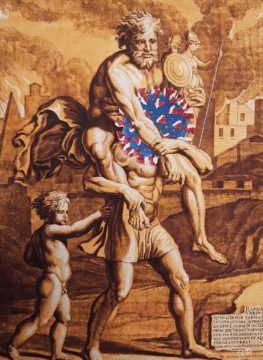 Arma virusque cano: Sing,
O Muse, through me, the wandering
Of something lowly, microscopic,
But found at both Poles, and each Tropic.
An opportunist virus, which
Is banished by mere soap (or bleach),
And yet has billions, masked, in arma,
Awaiting backup from Big Pharma!
Now, whether to the Orient
The creature traces its descent,
Or simply sprang across the barrier
Which cordons beast from human carrier,
And might have done so anywhere
That folk are fond of carnal fare –
Yet from the hellish depths have risen
Those who would make of chance a prison:
Who’ve seized upon a place of birth
In any random plot of earth
To build a fable of malfeasance,
Of trade wars, tariff hikes, and treasons;
Who’ve leveraged the lockdown here
To redirect Our gen’ral fear
Towards a Them there, over yonder:
The fascist’s faithful first responder.
To counter which, we’ve cried, “Unite!
We’ll pledge ourselves to righteous fight
Against the foe that would divide us:
That dreary retrograde King Midas!
An alchemist à contresens
Who makes of merry gold mere dross;
Whose Internationale’s inverted,
Whose harmonies are disconcerted!
We’ll scotch the pestilential scourge
With martial pomp, not fun’ral dirge,
And then, our forces massed together,
We’ll end the plague, and change the weather!” Read more »
by Sarah Firisen
 This Christmas, I stayed in a Marriott in the town where my kids live. Like most people, my business and personal travel has mostly ground to a halt in the last 9 months. So I was pleasantly surprised by the check-in experience the hotel provided me to allow for social distancing. I’m a long-time Marriot member and have their app on my phone. Using it, I was able to check-in ahead of time, and when my room was ready, they sent me a mobile key.
There are a few things to unpack here. Starwood’s, who were bought by Marriot in 2015, had been playing around with mobile keys for years. I remember staying in the W Hotel in London maybe 7 years ago when they first rolled them out with much fanfare. They were a total bust. After a couple of frustrating trips back and forth to the lobby for staff to try to fix mine, I gave up and took the key card. I’m a techie and constant loser of key cards, the concept of doing it on my phone was a powerful draw for me. So, I tried again at a couple of different hotels over the years. I don’t think I ever got a mobile key to work consistently enough to not be incredibly frustrating. But this Christmas, the experience was seamless, because finally, it had to be. Read more »
by Philip Graham
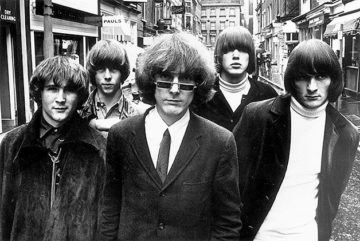 In the early months of 1966, whenever a familiar look of boredom settled in my mother’s eyes at the thought of cooking, I’d suggest, “Why don’t we go out for pizza?”
She always agreed. Our pizzeria of choice was conveniently located on a one-block strip mall less than a mile away, between a pharmacy and a dry cleaner. Sometimes we’d do a two-fer and stop at the laundry first. My beleaguered mother was always pleased to eat a meal she didn’t have to cook, and pick up clothes she didn’t have to wash and dry. I’d learned long ago how to work my way around her moods. In this case I nurtured an ulterior motive.
The pizza never rose above standard New York-style fare, but I always talked it up—“Mmmm, so good!”—all because of the jukebox in the corner. More specifically, because of one record in that jukebox: the single, “Turn! Turn! Turn!” by the Byrds. The hit song didn’t draw me there, however; the B side did: “She Don’t Care about Time,” written by Gene Clark, the band’s most prolific songwriter. Inexplicably, it hadn’t been included on either of the Byrds’ two albums, and this pizza joint offered my only opportunity to hear it. Read more »
by Brooks Riley
by Eric J. Weiner
The delicate balance of mentoring someone is not creating them in your own image, but giving them the opportunity to create themselves. — Steven Spielberg
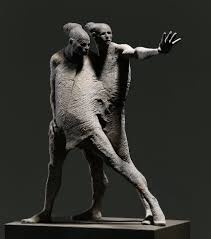
All mentors teach, but not all teachers become mentors. Mentors nurture, guide, teach, support, protect, challenge, help, listen, defend, critique, and unselfishly share their knowledge, time, and skills with their protégés. The mentor is father, mother, friend, platonic lover, healer, advisor, advocate, confidant, translator, and intellectual broker. The mentor/protégé relationship is not equal nor does it trouble itself with questions of equity. But it is consensual in that the mentor and protégé must both want and agree to the normative demands of the relationship. This does not mean the protégé might not resist, question or challenge his/her mentor. On the contrary, conflict between a mentor and protégé is normal and necessary. But instead of walking away from the relationship because of the tensions and conflicts that might arise, the mentor and protégé work them out, lean into them and, as a consequence, become stronger and more deeply connected. The one hold that is barred from the mentor/protégé relationship is disrespect.[i] Without mutual respect the relationship cannot function as it should and will dissolve, often bitterly.
I have been fortunate to have several mentors throughout my life that have taken me under their care, generously shared their knowledge and time, courageously challenged me when I was wrongheaded, and opened themselves up to my endless inquiries. They showed considerable patience in the face of my tenacious ignorance, insecurity/arrogance, quickness to rage, and tendency toward theoretical abstraction, paralyzing hypocrisy, and self-righteous indignation. My mentors, in different ways, deeply affected who I am today, although I take full responsibility for the tragic flaws and continuing struggles with the aforementioned dispositions of character that still burden me and those closest to me. In the spirit of auld lang syne and from the tradition of Hip-Hop–to look back to pay it forward–I want to give a shout-out to each of my mentors, some of whom I still depend on to set me straight if/when I inevitably go off the rails: (in alphabetical order) Elizabeth “Libby” Fay, Henry Giroux, Jaime Grinberg, Donaldo Macedo, Cindy Onore, and Pat Shannon. Read more »
by Michael Liss
 Adlai Stevenson, in the concession speech he gave after being thoroughly routed by Ike in the 1952 Election, referenced a possibly apocryphal quote by Abraham Lincoln: “He felt like a little boy who had stubbed his toe in the dark. He said that he was too old to cry, but it hurt too much to laugh.”
Stevenson got over it sufficiently to try again in 1956 (he stubbed a different toe, even harder), but the point remains the same. Losing stinks. Having to be gracious about it also stinks. So, it’s not unreasonable to assume that having to be gracious about it when you are the incumbent stinks even more, but that’s the job. The country has made a choice, and (let us keep our eyes firmly planted in the past for now), it is incumbent on the incumbent to cooperate, even if it is not required that he suddenly adopt the policies of his soon-to-be successor.
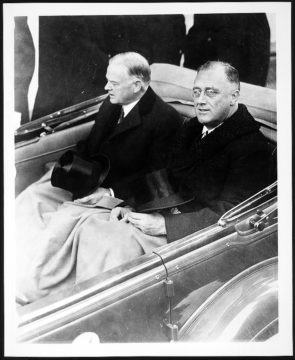
Last month, I wrote about the fraught transition from Buchanan to Lincoln, which ended with secession and, shortly after Lincoln’s Inauguration, led to the Civil War. Lincoln, and all that he represented, was clearly anathema to Buchanan, who, when he got up the nerve, acted accordingly. This month, I’m turning to the potent clashes of ideology and ego that went into the transition between Herbert Hoover and Franklin Delano Roosevelt.
Hoover was once one of the most admired men in the world. He had earned that through his service in World War I, first by aiding thousands of American tourists stranded in Europe, then, as Chairman of the Commission for Relief in Belgium, by helping to feed millions of people. He returned home in 1917 to take a role as Food Administrator for the United States, and, without much statutory authority, accomplished logistical feats on food supply and conservation. Woodrow Wilson sent him back to Europe to head the American Relief Administration, where he led economic restoration efforts after the war’s end, distributed 20 million tons of food to tens of millions across the continent, rebuilt communications, and organized shipping on sea and by rail. His efforts were so extraordinary that streets were named after him in several European cities. Read more »

Photo taken from my window yesterday morning in Franzensfeste, South Tyrol.
by Bill Murray

In this column I write about international travel, especially travel to less understood parts of the world. This month, with such travel still a wee bit constrained, we start a two-part look back at Sri Lanka, April/May 1999:
There are certain things a guidebook ought to level with you about right up front, before gushing about the exotic culture, pristine sandy beaches and friendly people. Number one, page one, straight flat out:
YOU ARE FLYING INTO A COUNTRY THAT CAN’T KEEP THE ROAD TO ITS ONE INTERNATIONAL AIRPORT PAVED, AND LINES THE ROAD IN AND OUT WITH BOYS WITH NO FACIAL HAIR HOLDING MACHINE GUNS.
Lurching into and out of potholes on the road from the airport to the beach, dim yellow headlights illuminated scrawny street dogs sneering from the road, teeth in road kill. Mirja and I took the diplomatic approach and decided, let’s see what it looks like in the morning.
•••••
The fishing fleet already trolled off the Negombo shore in the gray before dawn. The last tardy catamaran, sail full-billowed, flew out to join the rest. Read more »
Music as a prelude to Jerry Seinfeld
I started trumpet lessons when I was ten years old or so. After about two years or so my lessons were drawn from Jean-Baptiste Arban’s Complete Conservatory Method for Trumpet, which dates from the middle of the 19th century and is the central method book in ‘legit’ trumpet pedagogy. Near the end, before a series of virtuoso solos, I read words which, in retrospect, are at the center of my interest in Jerry Seinfeld’s observations on his craft. Arban observed:
There are things which appear clear enough when uttered viva voce but which cannot be committed to paper without engendering confusion and obscurity, or without appearing puerile.
There are other things of so elevated and subtle a nature that neither speech nor writing can clearly explain them. They are felt, they are conceived, but they are not to be explained; and yet these things constitute the elevated style, the grande ecole, which it is my ambition to institute for the cornet, even as they already exist for singing and the various kinds of instruments.
What, you may ask, does this grande ecole have to do with standup comedy? Everything and nothing.
Cool your jets. Read more »
by Scott F. Aikin and Robert B. Talisse
In his victory speech President-elect Joe Biden declared that “this is the time to heal America,” urging citizens to “come together,” “give each other a chance,” and “stop treating opponents as enemies.” He added that partisanship “is not due to some mysterious force,” but is rather “a choice we make.” To be sure, that partisanship is a choice doesn’t mean it’s easily overcome. So, Biden offered a plan. He proposed that we “see each other again” and “listen to each other again.”
In calling for the healing of our partisan divisions, Biden struck a popular note. Americans across the spectrum tend to agree that our politics has become dangerously toxic and uncivil. We say we want more compromise, civility, and cooperation in politics; however, it seems we demand that compromise come strictly from our political opponents. Oddly, lamenting partisan division is itself an expression of our animosity towards the other side. That is, the distance we see between ourselves and our political others is perceived as their distance from our ideas, their resistance and recalcitrance to our thoughts. Consequently, even though Republican and Democratic citizens generally are no more divided over central public policy issues than they were forty years ago, we are more partisan than ever in that we are more inclined to regard our partisan opponents as untrustworthy, dishonest, unpatriotic, and threatening.
In other words, partisan division is a matter of our negative feelings towards the other side, rather than disagreements over political ideas. Perhaps unsurprisingly, citizens’ political behavior – voting, donating, volunteering, and so on – is now more driven by animosity for the opposing party than by commitment to the ideals of our own.
This animosity is tied to a range of phenomena which have rendered our partisan identities central to our overall self-understandings. In the United States, liberalism and conservatism are distinct lifestyles, with partisan identity serving as the “hyper-identity” that organizes all of the other aspects of our lives, from our consumption habits to our religious affiliations and views about family and child-rearing. As we grow to see our partisan rivals as living strange lives that differ from our own, we come eventually to see their lives as alien and eventually degenerate. Seeing them in this way, we project on to them exaggerated vices, including close-mindedness, untrustworthiness, lack of patriotism, dishonesty, and general immortality. From there, we then infer a vast divide over democracy itself, with no common ground or basis for cooperation. What is shared government with those who appear to be moral aliens?
Biden’s recipe for political healing is thus fraught. Read more »
by Jonathan Kujawa
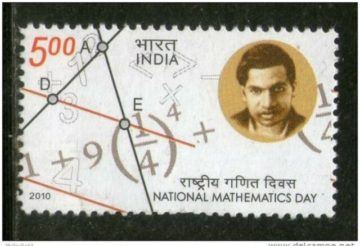
On December 22nd I started thinking about topics for this month’s 3QD essay. In a happy coincidence, someone posted to Twitter that Srinivasa Ramanujan was born on December 22, 1887. We’ve touched on Ramanujan’s work here at 3QD, but it seemed like a sign that we should dive a little deeper [0].
The story of Ramanujan is now famous, especially after the award-winning film “The Man Who Knew Infinity” [1]. He was born in southern India into a poor family. His talent in mathematics was noticed at an early age, but it wasn’t until he got hold of a copy of G. S. Carr’s “Synopsis of Pure and Applied Mathematics” at the age of fifteen that his talent was really revealed. Carr’s book was meant to be a Cliff Notes to undergraduate mathematics for students cramming for Cambridge University exams. It gave little to no explanations — just a thousand pages of raw, uncut mathematical formulae stated as gospel. Using Carr’s book, Ramanujan taught himself mathematics.
Ramanujan became consumed with his own mathematical explorations. So much so that he neglected his college studies and failed out after the first year. He continued to do math and live in poverty until his mother arranged for him to marry S. Janaki in 1909. Feeling the responsibility of marriage, Ramanujan eventually found employment as a clerk in the Madras Port Trust Office and in 1913, thanks to the encouragement of other mathematicians in India, finally sent a letter containing some of his results to several famous mathematicians in the UK.
Faithful 3QD readers might recognize the first of the following formulas from Ramanujan’s letter:

In one of my first essays for 3QD I talked about how you can make sense of infinite sums and how, properly interpreted, it is reasonable to think of the sum of all the counting numbers as equal to -1/12. Read more »
by David Kordahl
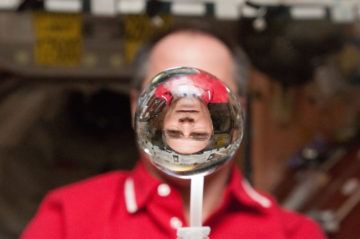
Last month I worked on a modern sort of archaeological dig, going through the equipment in a college physics lab to see what sorts of devices were on hand. It reminded me of being a little kid, when I would tiptoe around my dad’s religious paraphernalia (he was a Lutheran pastor), not really knowing what everything was for, but being sure that each item had a definite purpose. My job in the lab was to construct setups for a modern physics course, demos for students to learn a few things about the empirical basis of special relativity and quantum theory, to cut through the layers of interpretative bullshit. Encountering unfamiliar items, I would rummage around for their service manuals, pushing aside brittle O-rings and chipped pipettes, stacking old printouts, believing without proof that the lab’s former occupants had found some use for these treasures.
In bed one night after a long day with the machines, it occurred to me that these educational toys might share some common purpose with the portable communion kits and illustrated Bibles of my childhood. In each case, the devices were technologies designed to strengthen belief in a distinct mask for the world of observed phenomena. And in each case, strengthened beliefs hold for believers the promise of new ways to navigate the world, ways that non-believers can neither appreciate nor access.
This is not to deny the obvious differences between a communion kit and a current amplifier. One obvious feature of technology is that it’s mostly belief-proof. Almost no one understands all the devices that they use, and many users hold views that explicitly contradict the theories used to construct the devices on which they rely. (Teaching high school science, I met smartphone savants who were supremely confident in the irrelevance of physics to their lives.) Yet the fact that I now entertained the possibility that my lab setups had anything to do with religious conversion already proved that I’d strayed pretty far from my early days. Read more »
by Tim Sommers
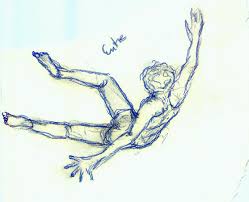
The Medieval Arabic philosopher Ibn Sina – Avicenna to Europeans – was rivaled in renown as a thinker in the Islamic world only by Al Farabi and hailed as “the leading eminent scholar” (ash-Shaykh ar-Ra¯sı ) of Islam. He worked in virtually every area of philosophy and science and influenced subsequent Jewish and Christian philosophers almost as much as Muslim ones. But he is probably known best for a single image, a heuristic more than a thought-experiment, “the falling person”.
“We say: The one among us must imagine himself as though he is created all at once and created perfect, but that his sight has been veiled from observing external things, and that he is created falling in the air or the void in a manner where he would not encounter air resistance, requiring him to feel, and that his limbs are separated from each other so that they neither meet nor touch. He must then reflect as to whether he will affirm the existence of his self. He will not doubt his affirming his self-existing, but with this he will not affirm any limb from among his organs, no internal organ, whether heart or brain, and no external thing. Rather, he would be affirming his self without affirming for it length, breadth and depth. And if in this state he were able to imagine a hand or some other organ, he would not imagine it as part of his self or a condition for its existence.”
Ibn Sina’s ultimate aim was to prove the existence of the soul. Let’s leave that more complicated task aside and stick to the question of what “the falling person” might tell us just about the existence of a self.
Ibn Sina, by all accounts, didn’t count “the falling person” as proof of the reality of the soul or self. He taught his students a whole chain of sophisticated arguments for that purpose. He described “the falling person” more as “alerting” or “reminding” us of the self. It’s not quite a thought-experiment. It’s not about how you would react. It’s not a puzzle with a solution. It’s a question. And the question is, if you were without a past and shut off from any input external or internal, would you have or be a self? Or, maybe, would a self still be there? Would you, could you, think, I am here? Or I am me. Or I am something.
What would this bare self’s awareness of its self be like?
I picture a hum.
Just to the right of where I sit now there’s a freezer on the other side of a closed door. But I can still hear the hum. It only comes into my awareness when there’s dead silence and my mind goes blank for a moment. But it’s always there. The kind of self that “the falling person” might have, I picture as that hum. No content just…there. But is it really there? Couldn’t the falling man think? Read more »
by Thomas Larson
 It’s Monday, 1:45, and six men and I sit in a circle with our German-trained psychotherapist, an imperious woman who reminds us that she is here to help only if we get bogged down or offer guidance and that we men need to find our own way through our turmoil, which is the point of the group and the point of each of us paying $3000 per year. I’m fairly new, so before I speak, I’m seeking some level of comfort or commonality among us, and every week I come up short. I’m not yet adjusted and unsure what I should be adjusting to.
Obviously, I don’t know these men. And I doubt I’d associate with them outside this forum or be in a social situation where we’d meet. Case in point, the tanned man (our real names cannot be shared). The tanned man has the time-clocked sadness my father had at fifty-five, the greying hair above his ears, the loyalty to a global corporation and the ease of leveraged investments about him, a man who regards his goldenness as some golf-cart anhedonia, with his deck shoes, and his velour pullover, and his browning legs and white ankles and baggy, bluish shorts, and his marriage run aground, whose chassis has been scraping the gravel for a couple years now.
He says everything he’s tried won’t move the needle, that is, between him and his wife. The strangely placid woe he wears into our sessions I find disturbing; he always sits in the room’s lone hard back chair, best, he says, for his sofa-ruined back, telling us, as he did last Monday, that he’s still sleeping on the leather couch in the basement where she sentenced him (hard-on in tow, an adolescent bit of humor) and where nailed above the foot of the stairs a little plaque reads, I’m not kidding, “Man Cave.”
His tortured spine is no better, he says, even after a beach-walk and the treadmill, and yet he seems relaxed becoming, I presume, accustomed to us commiserating with his fraught condition, we his brethren therapists, though there’s wariness and worry in how often his legs cross and uncross as if this is a job interview: Why do I notice all this? Why can’t I concentrate on my own shit? I’ve got plenty of it, guy-wired in me and my partner, a problem with medications. Read more »
by Brooks Riley

by David Oates
 We are entering the aftermath. Two of the most epic and wrenching struggles in American history are finally playing out to their conclusions. At last we see a conclusive democratic rejection of a presidency built on systematic lying and racism. At the same time we look just weeks or months ahead for vaccines that will liberate us from our deadly yearlong pandemic.
Of course the two catastrophes are entwined, most wrenchingly in the excess numbers of Americans who died not just because of the disease, but by the incompetence and malfeasance of the president’s handling of it. According to a summary by the Center for Infectious Disease Research and Policy (October 2020), “If the coronavirus death rate in the United States were similar to that of Australia, it would have had 187,661 fewer COVID-19 deaths . . . and, compared with Canada, it would have had 117,622 fewer deaths.” And another hundred thousand US deaths have accumulated since October. So amplify those numbers accordingly, please, as this president’s personal death-toll on the nation.
Our collective house in disorder, occupied by thugs and dying by the thousands. All coming, at last, to an end! An end to constant alarm and worry. An end to the adrenaline-rush of hyperalertness, the daily fight-or-flight. The four-year emergency. The cavalcade of death. The pageant of ignorance.
Who are we now? we might soon be asking ourselves, as we step out, one by one, from our psychological foxholes and almost-literal bunkers. Can we relax now? Can we pick up normal life again?
Can we? Will we?
The after-blight is beginning. How shall we then live, in the aftermath of so much sustained stress and fear and misery? Read more »
by Chris Horner
 A Task for the Left
‘Freedom’ must be about the most popular term in the world of politics, and not only in that world. But what does it actually mean, in social and political terms? How should people who want to be broadly progressive understand it? Too often the Left finds it hard to articulate just how they stand in relation to it and the effect is to cede the term to the Right. This is important, as the word, vague as it is, carries enormous affective force. It matters to people, because it represents a vital human aspiration. And so it’s too important to be abandoned to the people who are, for all their rhetoric, actually the enemies of freedom. On their account of it, freedom is just about individuals having more choices. This is a very weak account of freedom that ought to be met head on and refuted. It won’t do to change the subject, or talk vaguely about equality and solidarity: the Left needs make it clear what freedom is, what it isn’t, and what it could be. If it doesn’t, it risks being portrayed as being ‘against’ freedom, and in favour of mediocre uniformity and regimentation. So we end up with two caricatures, one about freedom and the other about its supposed enemies.
2020 had plenty of examples of this weak version of ‘freedom’. The Covid pandemic led to masks being rejected, vaccines shunned and lockdowns attacked and breached, all in the name of individuals’ rights and freedoms and ‘freedom of choice’. Beyond Covid, in the UK the freedom flag has been waved in support of Brexit, which apparently also means freedom, via the sloughing off of regulations. In the UK and US the word is hardly ever out of the mouths of Prime Ministers and Presidents. Hardy perennials of the right continue to be diatribes against against Health and Safety at work (‘red tape’), tax (the freedom to spend the money one earns as one pleases) and of course, in favour of arrangements that allow ‘flexible working’ – supposedly to free up the choices of employer and employee, but which in fact confirm the precarious status of hundreds of thousands of workers. Then there are ‘free schools’, free markets and much more. It’s an extremely long list. The Left is generally cast as the enemy of all this, the enemy of aspiration, of social mobility, of the opportunity to become a billionaire. It just wants equality, which stifles freedom.
How should one respond to this? Read more »