by Callum Watts
Four years ago I looked at the US election and predicted that Donald Trump would likely win. The day after the election I described the kind of president he was likely to be. That he would ignore all norms, stack the federal judiciary and bureaucracy with lackeys who would obey him, and likely use private militias to intimidate political opponents. Many of these predictions have born true. A key part of my argument was trying to explain the sort of man Trump is, and therefore what his behaviours are likely to be, and what effect that was likely to have on the institutions he is in charge of. One of my main points was to stop imagining that shared norms in and of themselves can provide restraint to Trump’s power when he quite explicitly does not believe in them.
As we had towards November 3rd some new questions have appeared on the lips of many commentators, will Trump step down if he loses? And is the US on the verge of a coup? I don’t feel able to make any predictions this time around, but I do think there are some observations which are worth bearing in mind. On the issue of a coup we see some great journalists like Krystal Ball and Glenn Greenwald trying to resist the case that Trump is some kind of budding dictator or fascist. They worry that this kind of alarmism is exactly what drives cynicism in politics and voters into Trump’s embrace (I know, a horrible thought). And to some extent I agree; it doesn’t look like Trump operates according to anything like a coherent political programme or philosophy which can explain his behaviour and political machinations. However, I think these pundits are missing a key point. The key issue is not whether Trump is cut from the same cloth as other nationalist authoritarians and where he fits in this political taxonomy, it is understanding what Trump is likely to do, what he is able to do, and what he wants to do. Read more »

 Racial disparities are present in all aspects of life. In the U.S.
 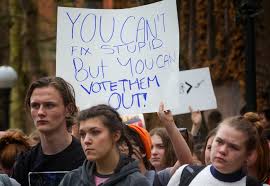 Some people whose political views are liberal and progressive say they will not vote in the 2020 US election. They detest Donald Trump and his Republican enablers like senate leader Mitch McConnell; they oppose Trump’s policies on most issues–the environment, immigration, health care, voting rights, police brutality, gun control, etc.; but they still say they won’t vote. Why not?


 Last month’s most popular movie on Netflix is a horror show in the guise of a documentary. In 2020, reality has turned scarier than fiction, and The Social Dilemma expends more dread per minute than any episode of Black Mirror. It’s a timely, manipulative film, built for one purpose: to scare the f*ck out of everyday Americans.

 What did the wines that stimulated conversation in Plato’s Symposium taste like? Or the clam chowder in Moby Dick, or the “brown and yellow meats” served to Mr. Banks in To the Lighthouse? Or consider this repast from Joyce’s Ulysses:
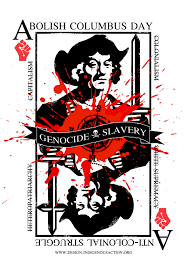 Today in the United States is Indigenous Peoples’ Day, a time to bear witness and remember the savagery of Christopher Columbus and other European explorers when they first encountered indigenous peoples throughout the Americas. It’s also a day to recognize and celebrate the courage, knowledges, and cultures of indigenous peoples throughout the world. It coincides with Columbus Day, a national holiday that triggers a day of protests and celebratory parades, rekindles debates about removing statues of Christopher Columbus from parks, squares and circles throughout the United States, and provokes critical discussions about the kind of stories we should be teaching the Nation’s children about his earliest encounters with indigenous communities.
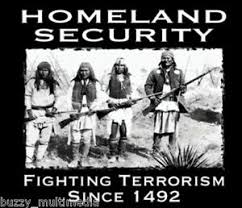 Although American history curriculum has always been a site of ideological struggle, historians, history teachers, and curriculum designers have done a good job over the past several decades to revise many historical inaccuracies, distortions, and lies that helped whitewash the historical record in the service of white, male, imperialistic, and neoliberal interests. But with Trump’s latest decree to create a “1776 Commission” charged to design a “pro-American” curriculum of American history coupled with his promise to defund schools that use the 1619 Project as well as other curricular platforms that bring attention to historical facts and truths that counter the “official” curriculum, the Nation’s collective historical memory is under siege with public schools at the center of the assault. Whether Trump and the GOP actually care about how American history is represented and taught in schools or whether they are just cynically using the issue to create a political wedge between people who may otherwise be allied to vote against Trump in November is irrelevant.
 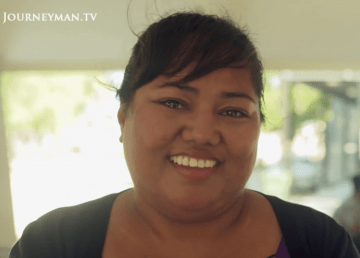 Tabea Bakeua lives in Kiribati, a North Pacific atoll nation. Her country is likely to be the first to disappear completely under the rising seas within a few decades. Asked by foreign documentary filmmakers if she “believes” in climate change, Bakeua considers and tells them, “I have seen climate change, the consequences of climate change. But I don’t believe it as a religious person. There’s a thing in the Bible, where they say that god sends this person to tell all the people that there will be no more floods. So I am still believing in that.” She smiles, self-consciously, as she continues. “And the reason why I am still believing in that is because I’m afraid. And I don’t know how to get all my fifty or sixty family members away from here.” She’s still smiling as tears fill her eyes. “That’s why I’m afraid. But I’m putting it behind me because I just don’t know what to do.” She turns, apologetically, to wipe away her tears. [from “
 We live in The Year Of Overlapping Catastrophes. Oh 2020, we know ye all too well. The pandemic, our very own plague. Economic depression. A quasi-fascistic con man at the head of government. The discovery that perhaps forty percent of our fellow Americans are truth-hating dupes and low-information racists. (Brits too. Decline of the Anglophone empire?)