by R. Passov
This will be one of the most important compounds of our generation. —Jeff Kindler, former CEO, Pfizer, commenting on Torcetrapib
Failure of a drug in development, especially in a late stage clinical trial, is 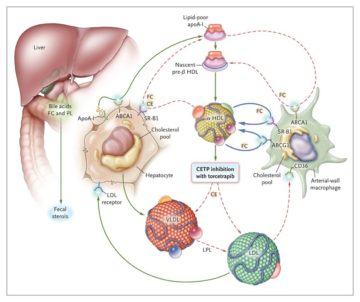 shocking. Torcetrapib, for example, failed at the very end of its phase III trial. So many resources had been expended to get that far in development. Everything spent was lost. All that remained was a big data pile worth virtually nothing, along with pilot plants that were built to supply the drug to thousands of patients across years of clinical trials.
The high cost of failure is why big rewards are offered to underwrite the risk of drug development. But because the costs of failure are so high, you have to be careful not to over-reward success. This is can happen rather too easily when the odds of success are relatively immutable with respect to the amount of money spent in search of success. And when the prize money continues to grow.
When you have these circumstances the incentives to take risks grow to the point where the amount of risk taken is excessive leading to repeated failures and wastage. How does this happen? When, given success, there is too much pricing power; too much power such that the profits the industry generates fall into the realm of what economists term ‘rent’ vs true profits that result from increasing overall social welfare. (See Garthwaite.) Read more »

 “The American way of life is not up for negotiation.” —George HW Bush to the assembled international diplomats at the Earth Summit in Rio de Janeiro, 1992
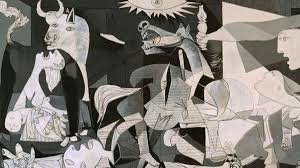 Not since the Civil War and Reconstruction has the citizenry in the United States been so divided. In our current
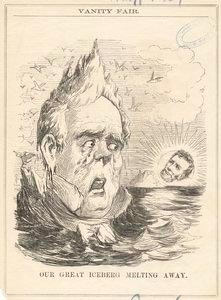 November 6, 1860. Perhaps the worst day in James Buchanan’s political life. His fears, his sympathies and antipathies, the judgment of the public upon an entire career, all converge into a horrible realty. Abraham Lincoln, of the “Black Republican Party,” has been elected President of the United States.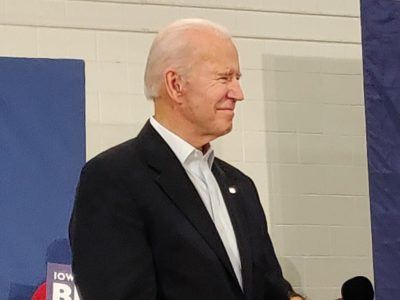

 Back in 1971, I couldn’t have predicted that the release of Joni Mitchell’s fourth album, Blue, would mark the beginning of the end of a friendship.
 2020 has been a wild ride, but it’s almost over, and I’m here to tell you it wasn’t all bad, as some great music came out this year – so much, in fact, that we’ll have to have two or even three podcasts this time even for the small taste which is our annual year-end review. Here’s part 1 (widget and link below).
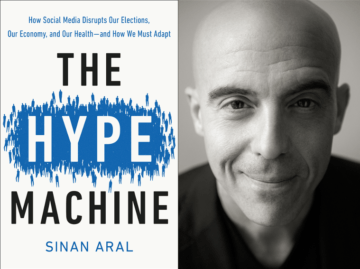 Given where we find ourselves in this late November of 2020, it is hard to think of a book more relevant or timely than The Hype Machine by Sinan Aral. The author is the David Austin Professor of Management and Professor of Information Technology and Marketing at the Massachusetts Institute of Technology. As one of the world’s foremost experts on social media and its effects, Prof. Aral is the perfect person to look at how this phenomenon has changed the world and the human experience. This is what he sets out to do in his new book, The Hype Machine, published under the Currency Imprint of Random House this September, and with considerable success.
 Dylan Kwait. Surfers by Plum Island, October 2020.
 Not long ago there was an article circulating on Facebook about ‘Hating the English’, originally published in a large circulation newspaper. The Irish author says something to the effect that once she thought it was just a few bad ones etc., but now she hates the lot of them. It’s been stimulated, I think, by the repulsive English nationalism that has been raising its head since Brexit, plus the usual ignorance about Ireland, Irish history and Irish interests on the part of your typical ‘Brit’. It’s not a very good piece of writing, and it has a rather slight idea in it. I’d ignore it but for the ‘likes’ and positive comments it’s received, particularly from ‘leftists’. It’s an example of what we could call ‘bloc thinking’ – the emotionally satisfying but futile consignment of entire masses of people into categories of nice and nasty.
 According to Donald Trump, in
 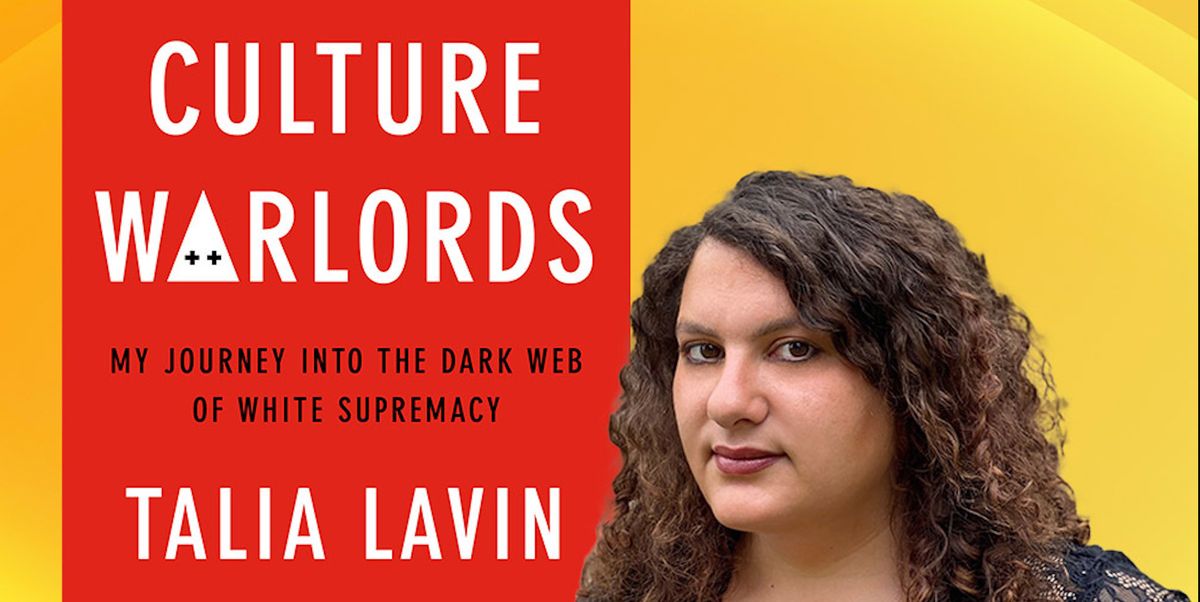 Recent protests in the US by Trump supporters since the election of Joe Biden, highlight just how political ideologies have the potential to tear seemingly ‘stable’ societies apart. A political divide however cannot always be seen as a clear-cut contradiction between the right and the left, as, for example, the way Trump supporters might assert; Biden, and Democrats more broadly, could hardly be seen to represent the left. Likewise, the right has it shades of commitment to conservatism. However, Trump’s 70 million supporters represent a congealing of far-right politics in America identifiable by the policies articulated by Trump that they endorse: anti- immigration, racism, a resurgent nationalism. While there is little doubt that such policies have been magical music to the ears of many right wingers, for others Trump and the Republican Party do not go far enough, and it is these extreme right-wing groups that are the subject of Talia Lavin’s book Culture Warlords: My Journey into the Dark Web of White Supremacists.