Text by David Oates
Artwork by Alex Hirsch
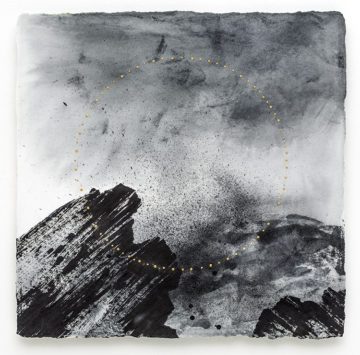 1. “A more perfect union.” The Founders expressed a breezy confidence, didn’t they? As if such a thing were possible – the distant states cohered into a nation; the various occupants working it all out. Loyal. Collaborative. Taking part in the common welfare. While remaining, of course, individual and autonomous and free, free, free. (Certain restrictions applied.)
I’m a child of the sixties but have kept a wary distance from virtually all forms of organized groupiness, togetherness, or even (alas) belonging. I’m a curious observer, though.
2. Planetary Ecology. The modern environmental movement based itself on the analogy of the organism: we were really one big animal. “We” meaning all of nature (Gaia), or an ecosystem, or a human community. It worked on various levels! Lewis Thomas, one of our gurus, held up the example of a critter that was disunified cells, squiggling around individualistically (“voting straight Republican” he quipped). . . until something signalled them and they joined together as one, “solid as a trout”! That this exemplary organism was slime mold did not strike us, in the sixties, as funny. Decades later, our sliminess seems way less promising.
Now our planetary health teeters on a terrifying brink and the message of connectedness seems more compelling than ever. Biologically, we are interwoven in increasingly obvious ways we still can’t seem to accept. Read more »

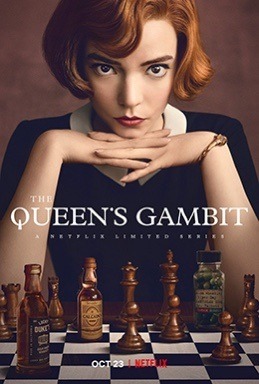 Two series have been streaming recently, to considerable success – The Queen’s Gambit (a Netflix miniseries, now concluded) and Succession (HBO, two series so far and more planned). They are interesting for a number of reasons – both for what they show, and perhaps more for what they do not, possibly cannot, show. So let’s consider some of the things we see and don’t see. I’m not going to recount the plot of either of them, as you can get that from Wikipedia and plenty of other places. But: spoiler alert: some will be divulged. Let’s look first at The Queen’s Gambit.

 I think it is fair to say that we usually see science and magic as opposed to one another. In science we make bold hypotheses, subject them to rigorous testing against experience, and tentatively accept whatever survives the testing as true – pending future revisions and challenges, of course. But in magic we just believe what we want to be true, and then we demonstrate irrational exuberance when our beliefs are borne out by experience, and in other cases we explain away the falsifications in one way or another. Science means letting what nature does shape what we believe, while magic means framing our interpretations of experience so that we can keep on believing what feels groovy.

 Let me recommend a New Year resolution, in case you don’t have one yet: Be nicer to people you disagree with.