by Leanne Ogasawara
1.
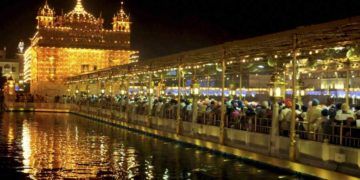
The sound of thousands of clattering stainless steel plates and bowls ripple across the water, as hundreds line up to enter the Golden Temple in Amritsar. Built atop a platform in the middle of a pool of water, this is the holiest shrine of the Sikh religion. Pilgrims arrive at the floating “Abode of God” walking slowly across a very crowded covered-causeway.
Just when you think nothing can be done to repair the world, you stand in awe as thousands are fed in the great communal kitchens of the temple.
The numbers are staggering. An army of volunteers show up every morning to chop vegetables, peel garlic, and fry roti. This in preparation for feeding tens of thousands every day. Known as the Langar, this communal meal is an act of charity and love, open and free to all. And what’s more, you don’t have to travel all the way to Amritsar to experience a Langar, as it is practiced in all Sikh places of worship around the world. Sitting on the ground shoulder-to-shoulder so that all are equal, pilgrims are provided with sustenance, ensuring that none leave the temple hungry.
Anyone is welcome to eat and anyone is welcome to serve.
In her beautiful book, Be My Guest: Reflections on Food, Community, and the Meaning of Generosity, Priya Basil—who herself hails from a Sikh family—feels it is a shame the meaning of the word “hospitality” in English has come to be so firmly associated with the industry of hospitality, something which has conflated acts of generosity with capitalist entertainment. And she rightly asks:
“What does this say about us when a notion that long implied giving without getting any return becomes synonymous with paying for services that promise customer satisfaction or your money back?” Read more »

 Not long ago, a reader complained, politely but firmly, about your humble author’s regrettable tendency to post something called “Blah blah blah pt. 1” and then never get back to it for part two, in particular the post about history, wondering if possibly I thought no one would notice that I had left it hanging. I admit the fault, but I assure my patient reader, or possibly readers, that I do indeed intend to finish each and every one of my multipart posts, and even to make clear how they are related to each other. (That’s the intent, anyway.) So fear not! (I do have to read some more history though … !) This time, though, I finish a different sort of multipart post: my end-of-2020 podcast. Plenty of unfamiliar names, even to me, but some great stuff! As always, widget and/or link below.
 Do you have a right to own a microwave oven? To be clear, ideally in a free society, absent a clear showing of harm to others, there’s a presumption that you can do whatever you want and own whatever you can make or buy. So, you do have a basic right to own things – to acquire property, as political philosophers like to say. But it’s consistent with that right for there to be a lot of rules and regulations around what you can own – and even prohibitions on owning certain kinds of things.


 For those of us who classify ourselves as Nones—
 The presence of covid-19 running amok amongst us has momentarily disrupted the perimeters of our lives. That two, three, or possibly four generations are not always able to gather together under one roof has given rise to greater appreciation of the family.
 1. “A more perfect union.” The Founders expressed a breezy confidence, didn’t they? As if such a thing were possible – the distant states cohered into a nation; the various occupants working it all out. Loyal. Collaborative. Taking part in the common welfare. While remaining, of course, individual and autonomous and free, free, free. (Certain restrictions applied.)
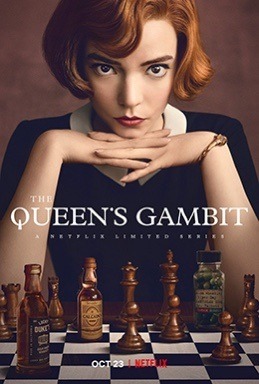 Two series have been streaming recently, to considerable success – The Queen’s Gambit (a Netflix miniseries, now concluded) and Succession (HBO, two series so far and more planned). They are interesting for a number of reasons – both for what they show, and perhaps more for what they do not, possibly cannot, show. So let’s consider some of the things we see and don’t see. I’m not going to recount the plot of either of them, as you can get that from Wikipedia and plenty of other places. But: spoiler alert: some will be divulged. Let’s look first at The Queen’s Gambit.