by Mindy Clegg

New York Times op-ed columnist Charles Blow continues to make the rounds with his new book, The Devil You Know. In it he advocates for a reversal of the Great Migration, when Black Americans fled Jim Crow violence and sought economic opportunity in Northern and Western cities during the first half of the twentieth century. Unfortunately, these refugees from the American South were met with more of the same, Blow argues in several recent interviews. Still, most considered escaping the situation in the south a general improvement, a premise he agreed with until recently.
In Professor Hope Wabuke’s review on NPR, she notes how a speech Blow heard by entertainer and activist Harry Belafonte challenged his thinking about the Migration, prompting this book. Based on recent interviews Blow’s premise is that a new Black migration from the North back to the South will give Black Americans a greater share of political power in America, locally and nationally. Born in Louisiana, he’s recently returned to the south himself and currently resides in Atlanta. The recent political shifts here in Georgia bear him out. Atlanta has become an internationally celebrated Black city that’s been led by Black mayors since 1973. In the past decade or so, Stacey Abrams and many others worked to elect President Biden and Vice President Harris, as well as Senators Raphael Warnock and Jon Ossoff, our first Black and Jewish senators respectively. People expressed shock that this could happen. But that’s only because they’ve not been paying attention to what’s been happening in places like Georgia.
I wish to echo Blow’s argument and highlight a necessary strategy for political change. Based on what Abrams and her allies have done here in Georgia—still unfinished work—there is no reason not to think about this in terms of transforming the entire south. I will argue that Blow’s argument has a lot of merit and is how political change happens. When thinking of history, people like to focus on extraordinary individuals and events, but the reality is that changing the politics of a place is a long hard slog undertaken by everyday men and women. Doing that work is going to be critical to creating an enduring and vibrant democracy. Building and transforming institutions are the key to long term change. Read more »






 Jesus is reported to have critiqued the seventh commandment as follows:
  by Thomas R. Wells
 We both have daughters who are good at math, but opted out of advanced math. In so doing, they effectively closed off entry into math-intensive fields of study at university such as physics, engineering, economics, and computer science. They used to be enthusiastic about math, but as early as grade three this enthusiasm waned, and they weren’t alone. It was a pattern we observed repeatedly in their female friends during those early school years, as boys slowly inched ahead.
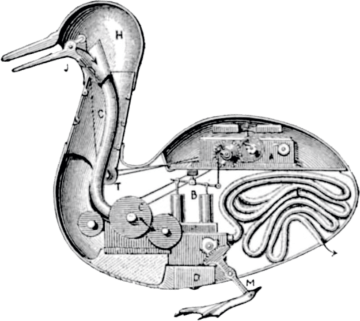

 Here is a hardy perennial: Are human beings naturally indolent? From sagacious students of human nature there is no shortage of opinions.
 Epistenology: Wine as Experience