
by Jochen Szangolies

The year 2021 marks the 40th anniversary of the introduction of IBM’s first Personal Computer (PC), the IBM 5150. Since then, computers have risen from a novelty to a ubiquitous fixture of modern life, with a transformative impact on nearly all aspects of work and leisure alike.
It is perhaps this ubiquity that prevents us from stopping to ponder the essentially mysterious powers of the computer, the same way a fish might not ponder the nature of the water it is immersed in.
By ‘mysterious powers’, I don’t mean the impressive capabilities modern computers offer, in terms of, say, data storage and manipulation—while it is no doubt remarkable that even consumer grade devices today are able to beat the best human players at chess, and the engineering behind such feats is miraculous, there is nothing mysterious about this ability.
No, what is mysterious is instead the feat of computation itself: a computer is, after all, a physical object; while a computation, say something straightforward like calculating the sum of two numbers, operates on abstract objects. Therefore, the question arises: how does the computer qua physical system connect to abstract objects, like numbers? Does it reach, somehow, into the Platonic realm itself? To the extend that computers can use the result of computations to drive machinery, they seem to present a bridge by which the abstract can have concrete physical effects. Read more »

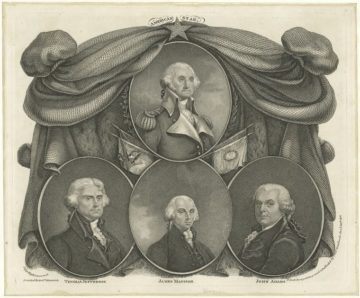 John Adams was not the kind of man who easily agreed, and it showed. Nor was he the kind of man who found others agreeable. Few have accomplished so much in life while gaining so little satisfaction from it. When you think about the Four Horsemen of Independence, it’s Washington in the lead, Benjamin Franklin, Thomas Jefferson and, last in the hearts of his countrymen, John Adams. You could add to that mix James Madison and even the intensely controversial Alexander Hamilton, and, once again, if you were counting fervent supporters, Adams would still bring up the rear.

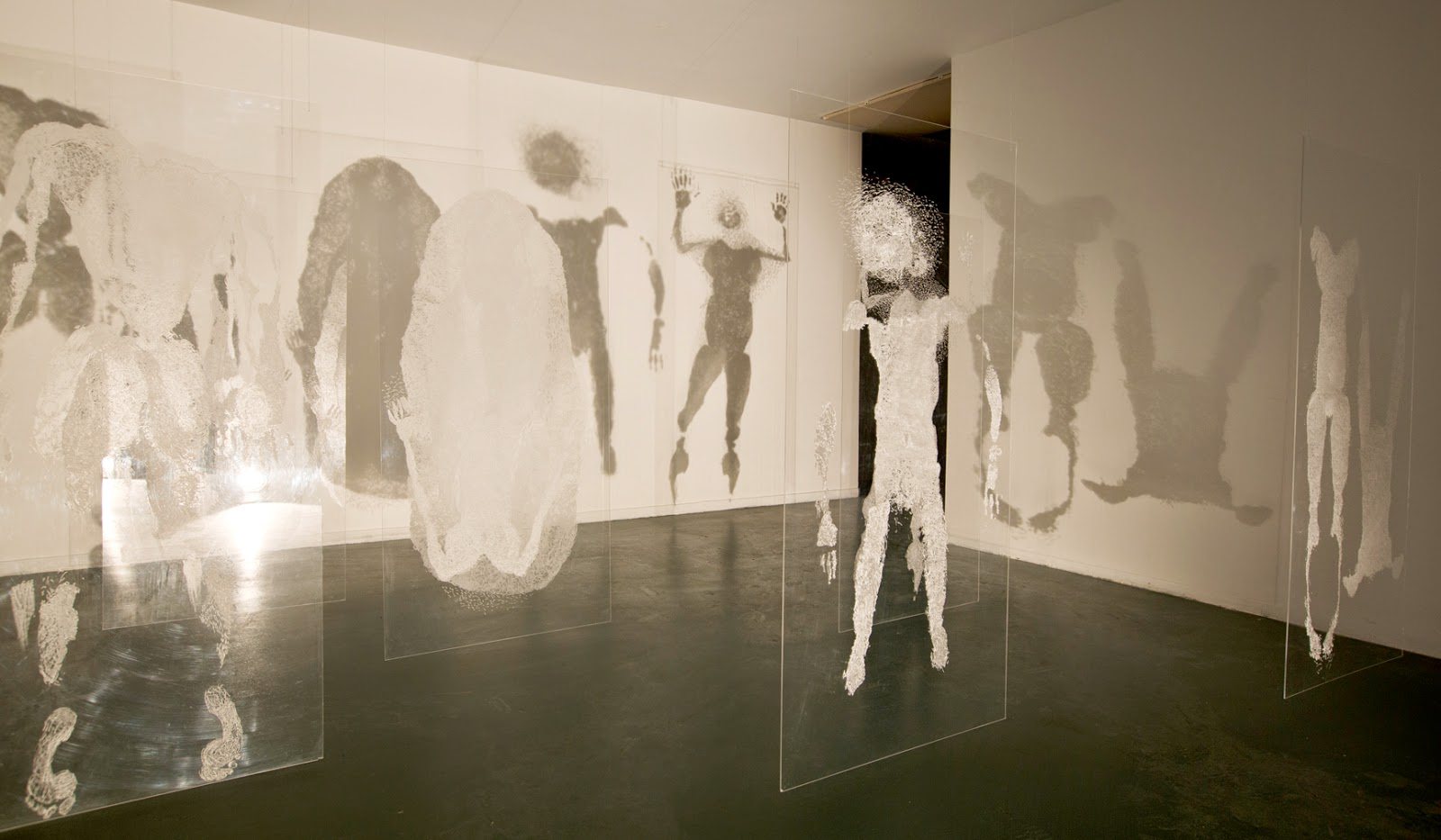 Shada Safadi. Promises. 2014.
 The overwhelming majority of pre-service and in-service teachers I have worked with over the past two decades believe that they should, first and foremost, love, care, and nurture their students. Everything else associated with what is euphemistically called “best practice,” they believe, will follow. When pushed to describe what loving, caring and nurturing their students actually looks like within and beyond the classroom and school—in theory and practice—many of them have trouble getting beyond superficial appeals to “multiple intelligences,” “diversity,” “safe spaces,” and “culturally responsive pedagogy.” Focused primarily on making their students feel safe and emotionally supported, they’ve reduced their pedagogical responsibilities to a metaphorical big hug. Stir in a tablespoon of standardized ideological content, blend with a half cup of research-based strategies, add a pinch of job training/college prep, stir in a few high-stakes tests and, voilà, the neoliberal agenda for public education is rationalized and set.
 3QD editor Abbas was desperate. After more than a year of pandemic life, much of it spent in a state of semi-lockdown, he and his partner had run out of shows to watch. So he did what any abject and forlorn person in his situation would do: he solicited recommendations via social media. I then did what any person who has spent the last year watching far too much TV and thinks far too much of his own opinion would do: I emailed him scores of streaming titles, replete with very brief descriptions.
 Aye Chan Zin, a 22 year old competitive cyclist, once raced from Yangon to Mandalay and back. He fell and lost both incisors to gold teeth.

 For the past year or so there have been a considerable number of cases of teachers or authors or journalists who have been threatened with sanctions, had sanctions imposed, or lost their positions, because of articles they wrote or statements they made as part of their occupations. Many of these cases involved the appearance of the N-word in their speech or written work. Here are some of them.
 Please, See My Innocence
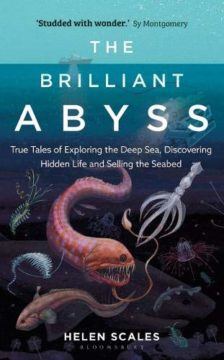 Marine biologist Helen Scales’ book, The Brilliant Abyss: True Tales of Exploring the Deep Sea, Discovering Hidden Life and Selling the Seabed is a triumph. The four major sections in the book, ‘Explore’, ‘Depend’, ‘Exploit’ and ‘Preserve’ are indicators of the breadth of issues addressed in the book: the variety of life forms in the different levels of the oceans; the significance of the oceans to life on the planet; the various ways in which human activity exploits the oceans resources, and concludes with her ideas about how to prevent the ocean from becoming just another area of resources of the planet for exploitation by human beings.
 Sughra Raza. River Magic. May, 2021.