by David J. Lobina

I naturally pose this question in the context of the series of posts on Language and Nationalism I have published here in the last few months. An example of a peripheral nationalist movement, the case of Catalonia will allow me to make my final message on these issues explicit enough, thus bringing the series to an end (this is the last entry; the previous 4 instalments are here: Part 1, Part 2, Part 3, and Part 4).
Catalonia, a region in the north-east of Spain, is by any definition of nationalism one might have quite clearly a nation which is furthermore in charge of a significant number of state functions all of their own – namely, it has a devolved parliament, some control over fiscal policies, a local police force, and more. What Catalonia isn’t, of course, is an independent nation-state, though in the last decade or so political events in the region suggest that a sizeable portion of Catalans would be partial to changing that. So what do the people of Catalonia want? And who are the Catalans to begin with?
The answers to these questions are partly historical, but contrary to what is usually the case in discussions such as these, we don’t actually need to go too far back in history. This is of course in keeping with the point I have made in this series of posts that the concept of nationalism and the actual reality of nation-states are rather modern phenomena, no older than 200 years (and mostly European in origin). Curiously, however, it is often the case that many standard or official histories of a given country or nation start rather far back in time, and the case of Catalonia is no exception. The monumental Història de Catalunya [The History of Catalonia], for instance, first published in 1987-89 (in 8 volumes, expanded to 10 in 2003), starts in prehistorical times. There are no doubt many who will claim that in some cases the history of a nation does start much further back than 200 years ago; some nationalists from the Basque Country, for example, another region in the north of Spain, regard Basque culture as a 1000-year phenomenon, but this is an ideological viewpoint rather than a historical one and I shall not be concerned with this type of discourse here.[i] Read more »

 Someone described the US Federal Government as a huge insurance company that has its own army. There’s real truth to that description. The vast majority of the federal budget goes to Social Security, Medicare, and Medicaid. Those entitlement programs take up about 65% of the federal budget, while the military takes up about 11% of the federal budget. The interest on the federal debt takes up another 8%, leaving only about 15% for “discretionary” spending. The money spent on the military is also considered discretionary but given our vast reach with hundreds of military bases in dozens of countries, voting to reduce the military budget much would be political suicide.
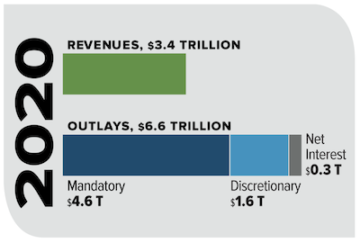 Last year the federal government took in $3.4 trillion of taxes and spent $6.6 trillion, nearly twice its revenues. A trillion dollars is a vast, almost inconceivable amount of money. And yet our government spends money in such cosmic sums that congresspeople and senators toss around the word trillion as if it’s the cost of a night’s stay in a Motel 8. Perhaps the two best quotes about casually spending and losing vast sums of money come from the late Texas oilman Nelson Bunker Hunt. When asked about his $1.7 billion losses after he tried to corner the silver market, he replied, “A billion dollars isn’t what it used to be.” Then at a congressional hearing when asked about his net worth, Hunt replied, “I don’t have the figures in my head. People who know how much they’re worth aren’t usually worth that much.”
 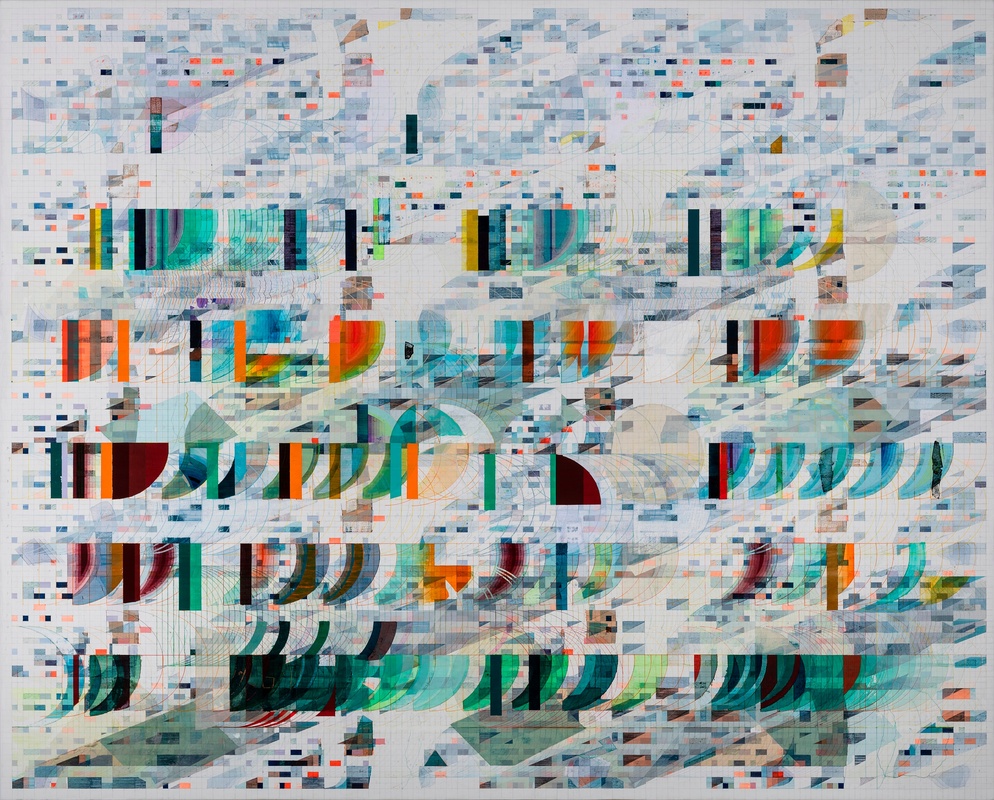 Tanya Goel. Mechanisms 3, 2019.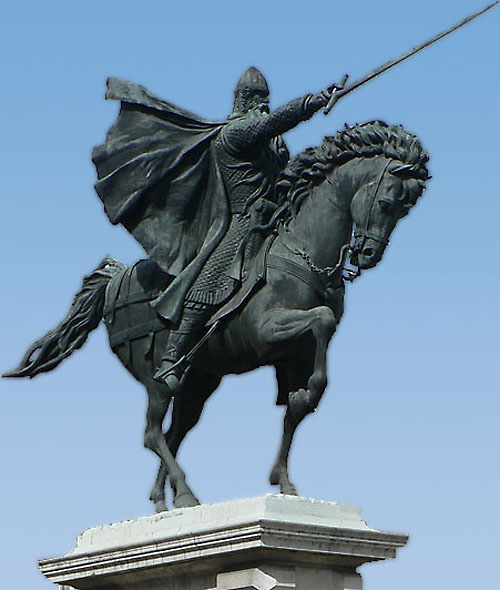

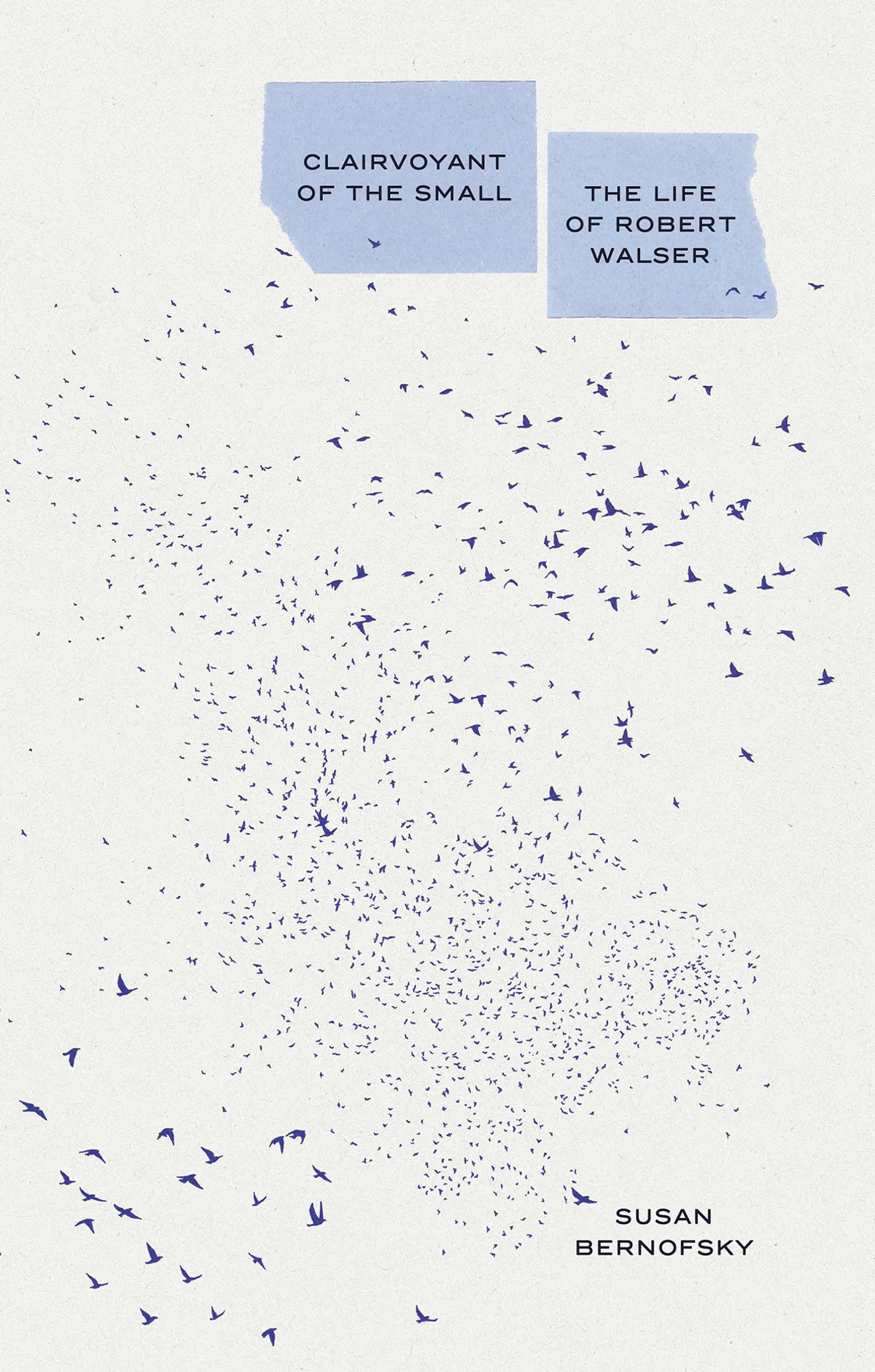 Clairvoyant of the Small, Susan Bernofsky’s long-awaited biography of the Swiss modernist writer Robert Walser, is erudite, painstakingly thorough, and sensitively written. Readers of Walser finally have a volume that connects the development of the writer’s work and its publishing history to the various episodes of his peripatetic adult life in the cities of Biel, Bern, Zurich, Berlin, and finally the sanatoriums in Waldau and later Herisau, where Walser—revered by Franz Kafka and Max Brod, Walter Benjamin, W. G. Sebald, and many others—presumably ceased writing altogether.
 Men have always wanted to fly to the moon and stars. We wanted to find out what was up there on the moon and planets? Was it heaven? Were there angels? Or were these worlds inhabited by strange creatures who built canals? We looked up, we used telescopes. We watched the stars and charted their movements. But we wanted to do more than look and imagine; we wanted to go up there and see for ourselves? The birds could fly, why couldn’t we?

 My Presidency College friend Premen was always a voracious reader, particularly of political, social and military history. He often told me of new books in those areas and sometimes persuaded me to read them. But by the time I saw him again in Cambridge, I could see his slow turn from his fascination with Trotsky to Mao. This was in line with a general movement among the young in the European left around that time. Jean-Luc Godard’s 1967 film La Chinoise captured the restless energy of politically-activist students in contemporary France, foreshadowing the student rebellions in a year or so.
 Imagine a world where the prison population was a rough mirror of wider society. In such a world there is a similar spread of rich and poor, highly educated and less educated, as well as a roughly equal proportion of men and women and those from deprived areas and well-off areas. The proportions of different ethnic groups reflect those in the surrounding society, as does the age profile, and having a mental health problem bears no relation to the likelihood of being in prison, neither does being in care in any systematic way increase the chances of ending up as a young offender. In addition, there seems to be no pattern from year to year. Some years there are low levels of crime and in other years the crime rate jumps for no discernible reason. The random nature of the prison population is recognised as providing good evidence for the belief that criminality is simply a result of individuals using their free will to make bad decisions, since we are all equally capable of this. After all, it could be argued, everyone is equal in possessing free will, and crime is a conscious and fully autonomous act in which social and psychological conditions play little part. Anyone, the argument goes, can be selfish or greedy and so succumb to criminality. In such a world, the general view is that prison exists to teach these individuals the error of their ways by providing them with extra motivation to retain their self-control next time temptation beckons.

 I went to France to study abroad as a 20-year-old in my third year of university. At the time, I had been studying French for eight years, but when I arrived in France, I found I was unable to express myself beyond the most rudimentary statements, and I couldn’t understand the rapid-fire questions sprayed at me by curious French students. After attending a dorm party that first weekend, I realized the gap between myself and the French students was simply too large to bridge; the most I could hope for from them was small talk and polite chatter—deep, meaningful conversation, and thus friendship, would be impossible.
 Upton Sinclair famously remarked that “it is difficult to get a man to understand something when his salary depends on his not understanding it.” It is easy to imagine the sort of scenario that illustrates his point. A drug company rep works to increase how often a certain drug is prescribed, putting aside any worries that it is addictive. A video game designer seeks to increase the number of hours young players spend hooked on a game, not thinking about the impact this might have on their education.