by David Oates
In the plague year I walked every day, just about. It added up to a long journey of surprising homeliness. A solidarity of strangers. A neighborhood of distance and vista. A journey far and yet without the lie of the exotic.
It began in March over a year ago now. Since I was about to turn seventy, I had been planning a Big Do: hired a violinist from our Portland orchestra, plus a pianist who was a splendid performer (and also my teacher on alternate weeks). They would play for my birthday guests: I hoped for part of Beethoven’s Spring Sonata, and something from Mozart; and to celebrate my wonderful piano, a couple of Goldberg Variations and some Chopin. Who wouldn’t love such an evening?! I sent out invitations weeks ahead. The musicians rehearsed at my home.
But with one week to go, the picture clouded. Do you remember how our collective predicament came on? Each day, we wondered – how bad is this, really? On Monday I sent a placating email to my guests: “We’ll all be masked, but follow your conscience. . .” On Wednesday another: “If you can’t make it, I’ll understand. . .” The situation ripened sourly, direly. Almost hour by hour came new reports: infection, contagion, danger. With one day to go, I cancelled it.
And went for a walk. Read more »
 You may know everything that you need to know about the on-going “Critical Race Theory” debate. Indeed, you might have concluded that actually there is no such
  Where I live in Colorado there are unstable elements of the landscape that sometimes fail. In severe cases, millions of tons of rock, silt, sand, and mud can shift, leading to massive landslides. The signs aren’t always evident because the breakdown in the structural geology often happens quietly underground. The invisible changes can take hundreds or thousands of years, but when a landslide takes place, it is fast and violent. And the new landscape that comes after is unrecognizable.
 A number of issues in the study of nationalism ought to be widely accepted nowadays, most notably perhaps the claim that political nationalism – the idea that a citizen pledges allegiance to a nation-state rather than to a village or a town – is a modern phenomenon. After all, nationalism properly takes hold in a territory when modern tools such as universal schooling are employed to produce a national identity – the inhabitants of a territory must speak the same language and recognise a common culture if a nation is to surface – and this is a product of the last 200 years. A national identity doesn’t come about on its own.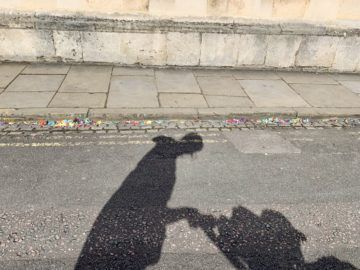

 When I finished my residency in 1980, I chose Medical Oncology as my specialty. I would treat patients with cancer.