
by Pranab Bardhan
All of the articles in this series can be found here.
 I knew that Cambridge was by the river Cam, but the first day when I looked for it I could not find it. From the map I knew that on my way to the Economics Department I had to cross it, I stopped and looked around but I could not see anything like a river. Then I asked a passerby, and he pointed to what I had thought was a small ditch or a canal. It was difficult to take it as a river, as in India I was used to much bigger rivers. Over time, however, I saw the serene beauty of this mini-river, with its placid water by the weeping willows, the swans, gliding boats and all.
There was a time when the Cambridge Economics Department was one of the most famous in the world. By the time I went as a student its relative rank had declined somewhat, particularly compared with a few American universities, but it was still very high. As I was going to specialize in International Trade Theory, the professor who was assigned to supervise me was James Meade (later to get the Nobel Prize in that field). He was an extremely decent, soft-spoken, and modest man (he declined a knighthood). I was told that he was a superb musician (I occasionally heard him humming inside when I knocked at his door) and an excellent carpenter.
He was also an austere man. He usually gave me appointments at 8 AM; in wintry mornings when I arrived shivering from the long walk from my bed-sitter, I’d find that he had switched off the heating in his office (he, of course, asked me if I minded, but how could I). He was the most conscientious supervisor imaginable. He’d promptly and meticulously read all the writings I inflicted on him, write detailed comments on the margin, mark a few lines on some pages saying that he had not vetted those lines as the mathematics used there was somewhat beyond him, which I should get checked by someone else (at his urging, I had soon a joint supervisor appointed: Frank Hahn). Read more »
 The well-known counterintuitive Monty Hall problem continues to baffle people if the emails I receive are any indication. A meta-problem is to understand why so many people are unconvinced by the various solutions. Sometimes people even cite the large number of the unconvinced as proof that the solution is a matter of real controversy, just as in politics an inconvenient fact, such as the ubiquity of Covid-19, is obscured by fake controversies.
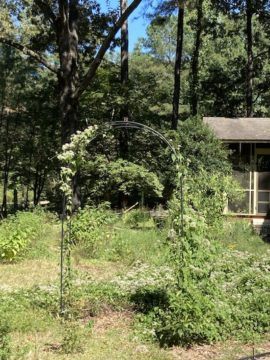 It had been a long time since I thought about lawns. I don’t mean in a grand philosophical sense, or the stoned contemplation of a single blade of grass. I mean thought about them at all. Before moving to Mississippi we had lived in Vancouver for 13 years, where we felt lucky to have a place to store our toothbrushes and maybe an extra pair of slacks; we really hit the jackpot when we acquired a postage-stamp-sized balcony on which we could murder tomato plants. Actual yards were out of the question for anyone who hadn’t bought a house on the west end of town 30 years ago; by the time we moved to Vancouver in 2006 as a tenure-track assistant professor and a trailing-spouse adjunct, it was already clear that we would never own a lawn.
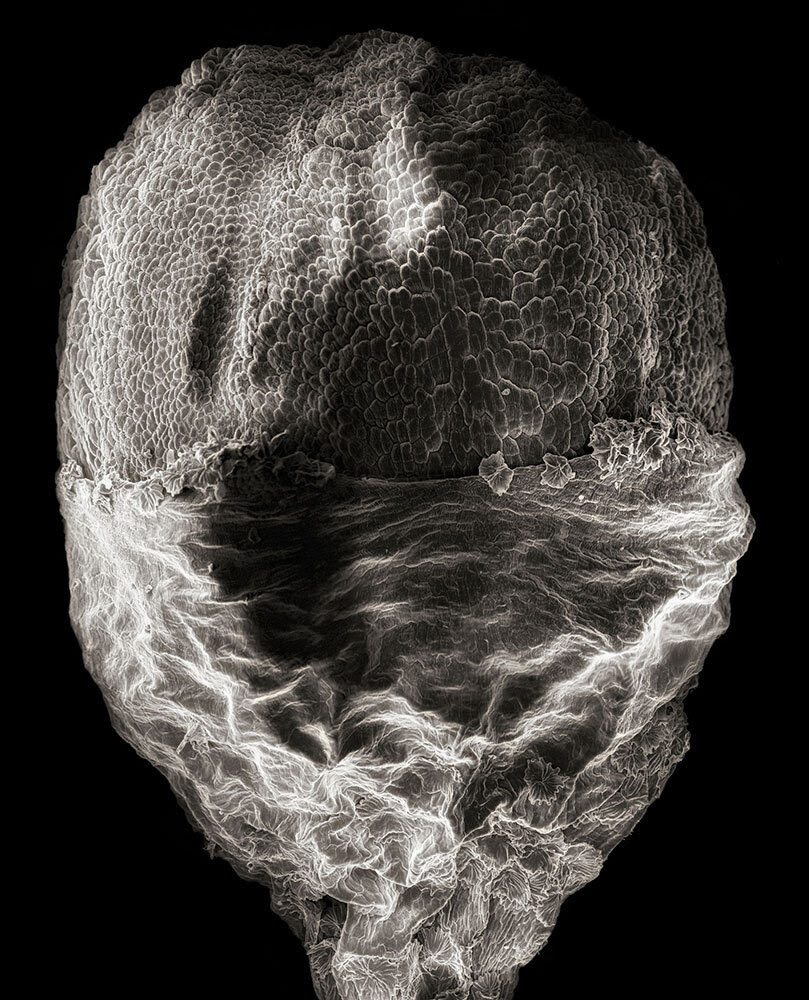 Robert Dash. Flower Bud of the Arbequina Olive Tree (black olives).
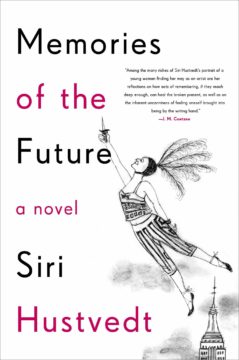 What is it to be twenty? Forty? Sixty? Eighty? These points that mark the four quarters of a life — fifths if you’re lucky, larger portions if you’re not.
  1. The public library is holding a book or DVD for me.



 The gender wage gap is a well-documented phenomenon. Many are familiar with the claim that women earn 80 cents on the dollar. A more precise statement would be something like, “In the U.S., according to