by Tim Sommers
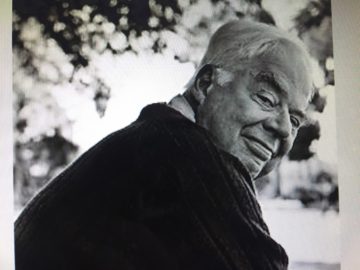
This past Friday, 3 Quarks Daily linked to a review by George Scialabba of the recent posthumous publication of a Richard Rorty lecture series called Pragmatism as Anti-Authoritarianism. The review was called, “Should Philosophy Retire?” I promised myself I wouldn’t respond to it. That I wouldn’t respond, for example, to the claim that philosophy “led Western thought into a dead end and should be retired”.
Or Scialabba’s claim that Hume, Mill, and William James would agree with this, and Rorty’s that Dewey, Wittgenstein, and Heidegger would too. But when Scialabba went on to insist that Rorty is “widely-revered”, I had, at least to ask this much. “Widely-revered” by whom? Not by philosophers, surely.
But let me start by saying something positive about Rorty. Rorty is a clear, crisp, concise writer whose prose style fits firmly within the analytic tradition. Analytic philosophers are seldom credited as great writers, but the best are great. “I prefer desert landscapes,” Quine said in explaining his thinking, but it might as well as been his prose he was describing. “To be is to be the value of a bound variable,” was his answer to the mystery of existence. “Science,” he wrote “ is not a substitute for common sense, but an extension of it.” And Donald Davidson, another great writer, spare but whimsical, famously wrote that “Conceptual relativism is a heady and exotic doctrine or would be if we could make good sense of it. The trouble is, as so often in philosophy, it is hard to improve intelligibility while retaining the excitement.” (Keep that one in mind for later.) Rorty had a similar style and a similar talent for turns of phrase. “The world does not speak,” he wrote, “Only we do.” Since Rorty was one of the few analytic philosophers widely read outside the field, I think he is, as a writer, if not a thinker, our prose emissary to the wider academic world.
It was Rorty’s argumentation that was infuriating. Read more »



 A scar is a shiny place with a story.
 When I first attended the occasional Harvard-MIT joint faculty seminar I was dazzled by the number of luminaries in the gathering and the very high quality of discussion. Among the younger participants Joe Stiglitz was quite active, and his intensity was evident when I saw Joe chewing his shirt collar, a frequent absent-minded habit of his those days. Sometimes one saw the speaker incessantly interrupted by questions, say from one of the big-name Harvard professors, Wassily Leontief (soon to be a Nobel laureate). At Solow’s prodding I agreed to present a paper at that seminar, with a lot of trepidation, but fortunately Leontief was not present that day.
 In politics, business, and education, the issue of how to ensure proportional representation of groups is often salient. A salient issue, but usually an impossible task. Why?

 My books are arranged more or less the way a library keeps its books, by subject and/or author, although I don’t use call numbers. I also have various piles of current and up-next and someday-soon reading. In addition, I have a loose set of idiosyncratic categories that guide my choice of what to read right now, out of several books I’m reading at any given time. I choose books for occasions the way more sociable people choose wines to complement their menus.