by Jochen Szangolies
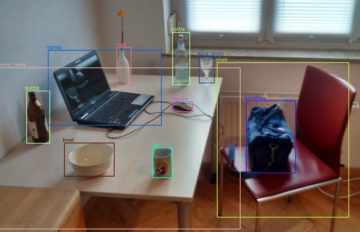
The world we inhabit is a world of objects. Wherever we look, we find that it comes to us already disarticulated into cleanly differentiable chunks, individuated by certain properties: the mug on the desk is made of ceramic, the desk of wood; it is white, the desk black; and so on. By some means, these properties serve to circumscribe the object they belong to, wrapping it up into a neatly tied-up parcel of reality. No additional work needs to be done cutting up the world at its joints into individual objects.
Moreover, this fact typically doesn’t strike us as puzzling: objects seem entirely non-mysterious things. I could describe this coffee mug to you, and, if I include sufficient detail, you could fashion an identical one. The same procedure could be repeated for every object in my office, indeed, for the entire office itself.
Certainly: there may be edge cases. Where I see one cloud, you might see two. When the mug is glued to the desk, they don’t seem to become one object; but certain sorts of fastening, such as assembling various electronic components into a computer, seem to beget novel objects over and above mere collections of parts. Still: there are various ways out of these troubles. The computer can be described as various sorts of parts and their arrangement; the cloud by its shape.
Objects seem eminently describable sorts of things. There seems to be no residual mystery beyond an exhaustive specification of their properties. But not everything is so amenable to description, as speakable as objects seem to be. Read more »
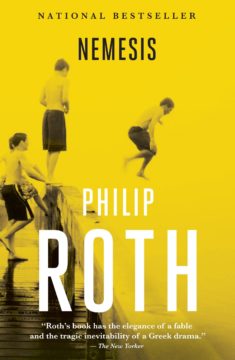 I recently read Philip Roth’s Nemesis, a novel that’s received renewed attention as it centers on a polio epidemic. This isn’t why I read it, although I’ll admit that reading about the slow build and then cascading avalanche of a virus, and the public’s nonchalance giving way to caution and then increased panic and hysteria, closely paralleled the events of early 2020. I suppose epidemics and our response to them always play out in a similar fashion. I picked the book off my shelf because I needed something to read—much like the setting of the novel, it’s summer vacation for me. My dad had given me the book some time before, and it had sat there, collecting dust on the shelf built into the low walls of my slope-ceilinged attic apartment. As a rule, I hate receiving books as gifts because I then feel an obligation to read them; instead, I prefer to choose and read a book in a more serendipitous fashion. It’s not something that can be forced. But if the giver of the book knows that their gift will go unread, possibly for years, but will then present itself to be read at the right moment, a book can be a great gift.
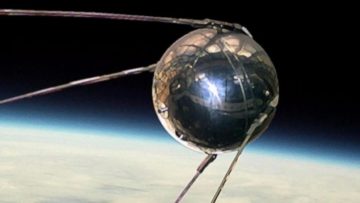 By the time I got to high school, the humanities were seen as a kind of side dish in the educational meal. This was largely due to the exigencies of the space race and an inclination on the part of American society to acquiesce to the suppression of critical thought in the post-war years. The main course from a geopolitical perspective was science and engineering.
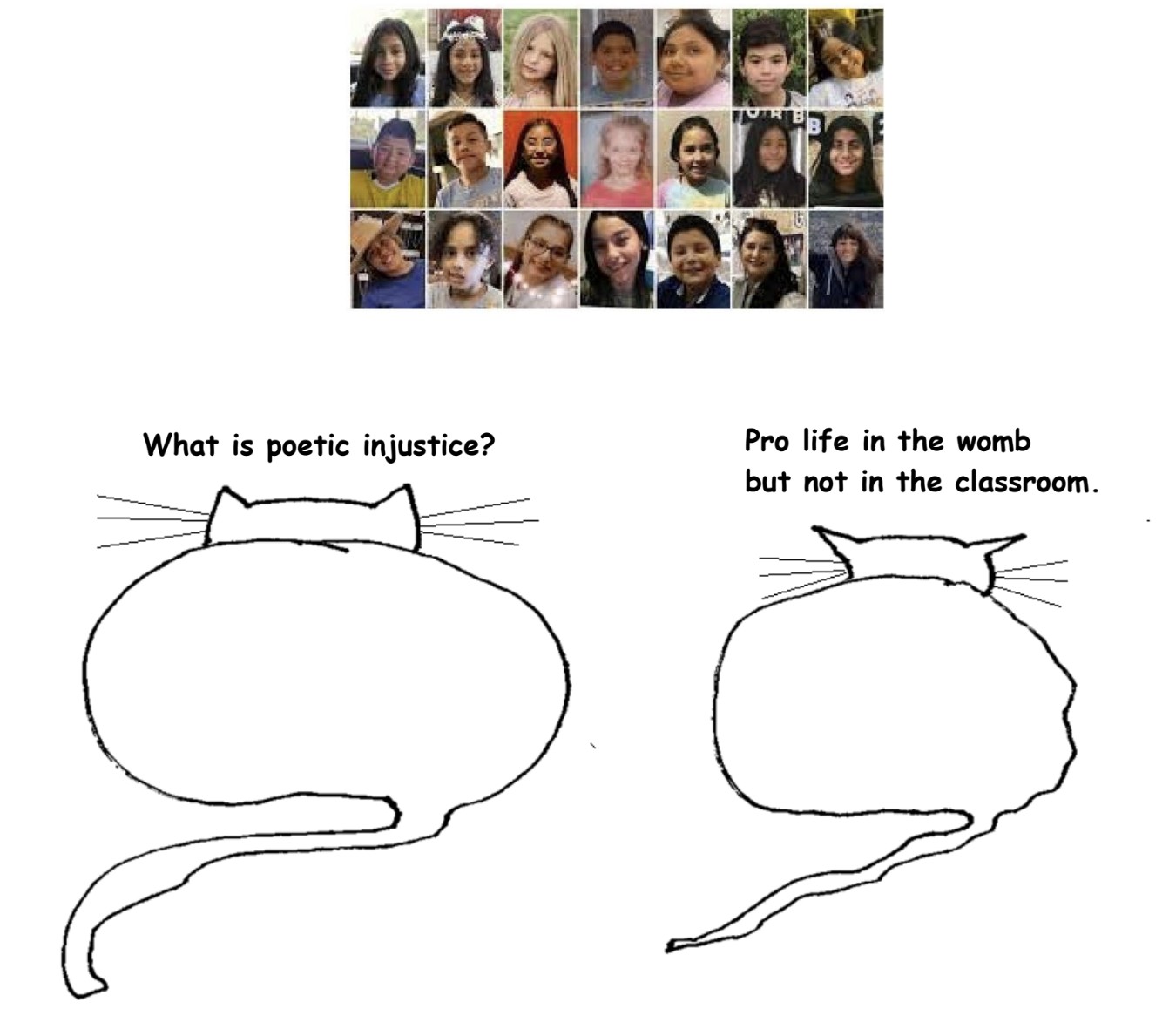
 Guns guns guns
  Since 1990 I have also visited Vietnam a few times. Vietnamese economic reform (called doi moi) started in the mid-1980’s. On my first visit I found Hanoi to be more like a small quiet town in India, with a lot of poverty (and some begging in the streets, but not many visibly malnourished children), while Saigon or Ho Chi Minh City was somewhat better-off, and more raucous and colorful. One lecture I gave in Vietnam was titled “ The Rocky Road to Reform” where I spelled out the challenges of economic transition from a state-dominated economy; after my lecture a Vietnamese academic came to me and said, “Our roads are all full of potholes, so we are used to the ‘rocky road’ of challenges”!
 Sughra Raza. Shadows on Beech Trunk, May 21, 2022.
 Not
Not 
 “The constant direct mode of address was a chore. No one will enjoy having this read to them.” Quoting from a referee report on the Nicomachean Ethics misses the point of James Warren’s hilarious