by Rebecca Baumgartner
There’s a pervasive idea that there must be works of art and culture that contain “people who look like me,” where “looking like” is usually scanned as race, ethnicity, sex, or gender expression. This clique-ish attitude masquerades as liberalism and can twist your head in knots if you let it: rather than encouraging and reveling in different perspectives, we want a coterie of authors, creators, and fictional characters that can fill out a census form in precisely the same way that we do. No one is so foolish as to come right out and say, “I only want to read about people who have lives similar to my own,” but this is the unstated purpose of wanting books with more people who “look like me.”

There are a couple of problems with this idea, right off the bat. First, and maybe simplest, is: Get over yourself. There are as many stories as there are people on Earth, and then some. We all contain multitudes. Even someone exactly like you on paper will have a different perspective and different story – quite possibly not one you would agree with or find palatable. Second, you must believe there is an immutable essence to being or looking a certain way, otherwise what would be the point of insisting on having more of it? Author Jia Tolentino, in her essay “Pure Heroines,” says:
“…my white friends would be able to fantasy-cast their own biopic from an endless cereal aisle of nearly identical celebrities…while I would have no one to choose from except about three actresses who’d probably all had minor roles in some movie five years back. In most contemporary novels, women who looked like me would pop up only occasionally, as a piece of set decoration on the subway or at a dinner party, as a character whose Asian ethnicity would be noted by the white author as diligently as the whiteness of his or her unmarked protagonist was not.”
There’s a lot here to sort through, but my initial thought is about narcissism. Does someone need to share visible, tangible attributes with us before we can identify with them, sympathize with them, like them? What about their non-visible, non-tangible attributes? If a character shares our race but not our generation, how much do we really have in common? If they share our biological sex but come from a different social class, how far can we identify with them? Read more »

 The only thing worse than a good argument contrary to a conviction you hold is a bad argument in its favor. Overcoming a good argument can strengthen your position, while failing to may prompt you to reevaluate it. In either case, you’ve learned something—if perhaps at the expense of a cherished belief.

 In connection with our research and meetings in the MacArthur network we did a considerable amount of international travel. Let me now turn to a whole series of my travel-related stories, some in connection with this network but mostly outside it and in different periods of my itinerant life.

 As forced migration in the wake of war and climate change continues, and various administrations attempt to additionally restrict the movement of people while further “freeing” the flow of capital, national borders, nativism, and a sense of cultural rootedness have re-emerged as acceptable topics in a globalized order that had until recently believed itself post-national. In the German-speaking world, where refugees have been met with varying degrees of enthusiasm depending on their provenance, national pride, long taboo following the Second World War, at least in Germany, is enjoying a comeback. As the last generation of perpetrators and victims dies and a newly self-confident, unproblematically nationalist generation comes to consciousness, it is again becoming possible to use a romantic, symbolically charged term like Heimat.
 Sughra Raza. Don’t Step On The Jewels, 2014.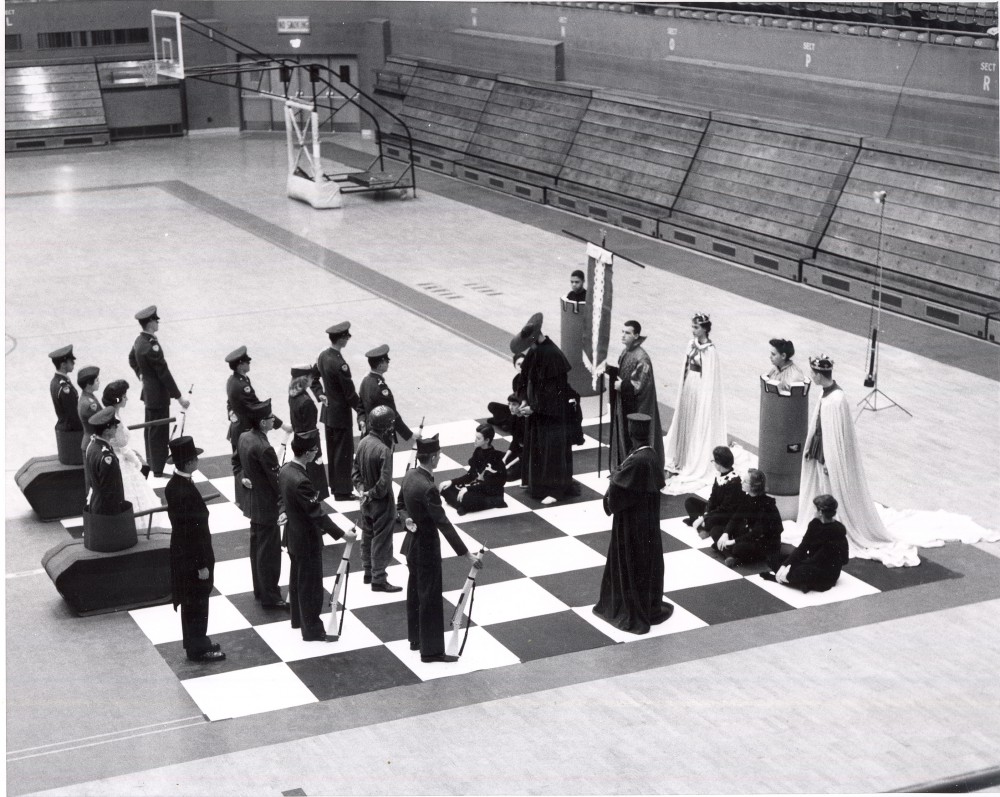
 technology will somehow amplify itself into a superintelligence and proceed to eliminate the human race, either inadvertently – as a side effect of some other project, such as creating paper clips (a standard example), or deliberately.

 About eight years ago, I was in downtown Manhattan and went into a Warby Parker store, an eyewear retailer. I didn’t post anything on social media about it, but I did have location services enabled on Facebook. Later that day, Facebook started showing me ads for eyewear (something it had never done before.) How and why it did that wasn’t a giant leap of understanding, and I immediately turned location services off for Facebook. But of course, this was sticking one thumb in the crumbling dam that is my data privacy. I own an Alexa, and I have an iPhone, an Apple watch, and an iPad. And that’s just for starters. I use Google all day long, subscribe to multiple online publications, use Amazon regularly, have used Instacart in the past, and the list goes on.