
by Deanna K. Kreisel (Doctor Waffle Blog)
 A couple of years ago I briefly became famous for hating Vancouver. By “famous” I mean that a hundred thousand people or so read an essay I posted on Medium, and for a few weeks it became a part-time job to answer emails from well-wishers, cranks, and haters.[1] (Now, thank God, I am blissfully obscure again and all my emails are from manufacturers of undereye creams and students asking questions that are answered on the syllabus.) By “hating Vancouver” I mean that in the essay I wrote, which was in response to a truly nutso anti-American screed by Wade Davis published in Rolling Stone, I used Vancouver as a test case to refute Davis’s claims of Canadian superiority. It was too easy, in a way: Davis held up my former hometown as an example of income equality and social justice, which is sort of like using the Marquis de Sade’s château as an example of Buddhist lovingkindness. In my response, poor Vancouver—which has many other excellent qualities—was the innocent victim of an essayistic drive-by shooting; my aim was elsewhere, but she got caught in the crossfire.
But lambasting real estate greed and excoriating the hypocrisy of the municipal government are not all I have to say about Vancouver. I would also like to complain about the weather. Just kidding! Well, not kidding: I really do like to complain about the weather, but that is not what this essay is about. This is a love letter to a place I left, a place that I wanted to leave and do not regret leaving and yet miss, deeply and tenderly, every single day. It is also an essay, I suppose, about why my spouse and I decided to leave Canada and relocate to Mississippi, a move that never ceases to amaze anyone who hears about it. I mean, fair enough—without more information, I suppose such a move seems akin to relocating from a Buddhist monastery to the Marquis de Sade’s château. Read more »


 It was announced last week that scientists have integrated neurons from human brains into infant rat brains, resulting in new insights about how our brain cells grow and connect, and some hope of a deeper understanding of neural disorders.
  Visualize a purple dog, the exercise said. Imagine it in great detail; picture it approaching you in a friendly way. So I did. I thought of a spaniel: long silky ears, beautiful coat, all a nice lilac color. Pale purple whiskers. The dog was friendly but not effusive. I’m not a dog person, but I wouldn’t have minded meeting this dog. All right, now what? The exercise went on to say something along the lines of “Wonderful! If you can visualize that purple dog, can’t you imagine your own life as being full of amazing possibilities?”
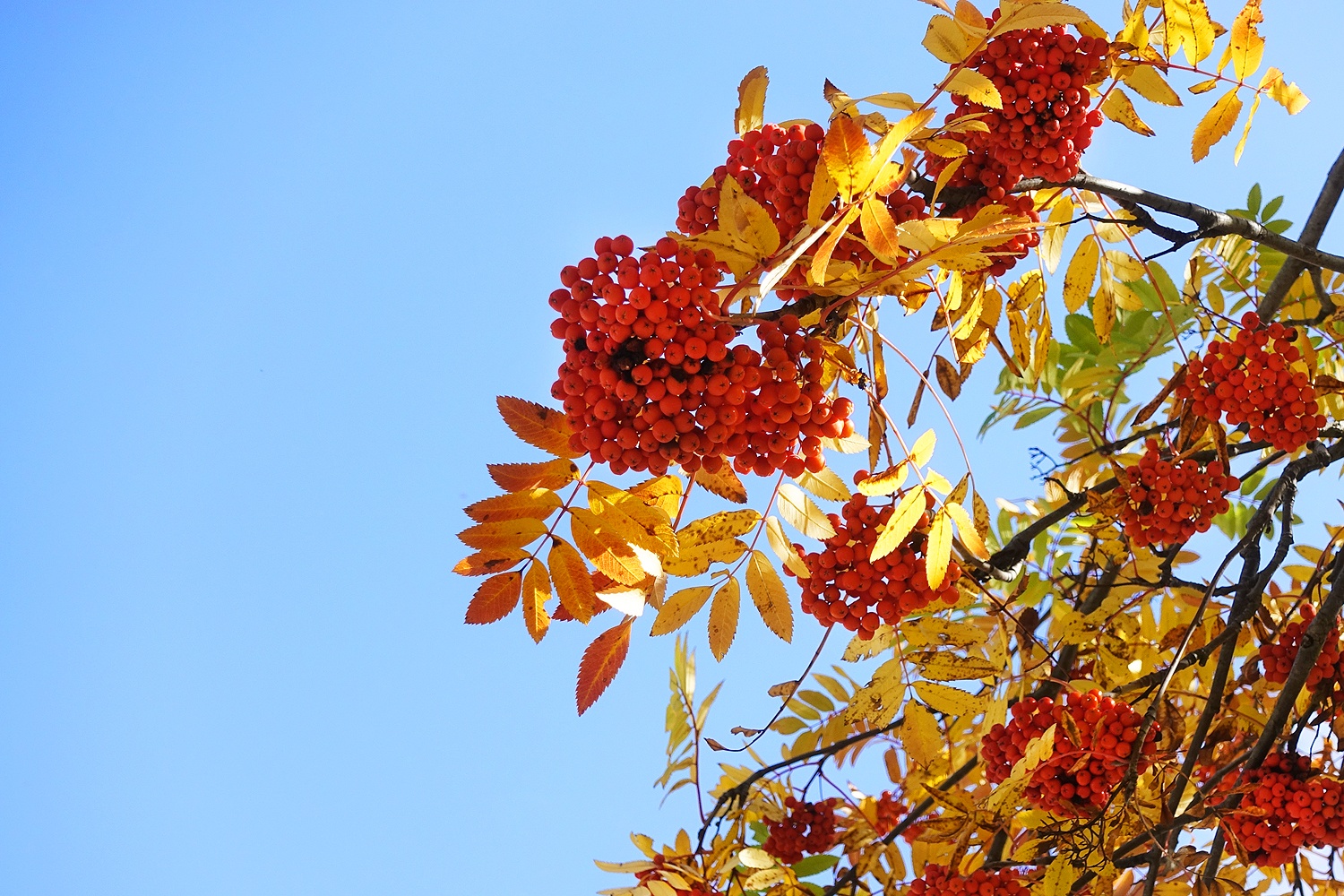
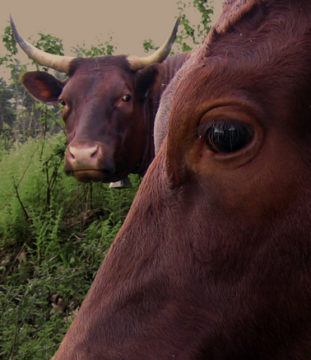
 The Fate of the Animals: On Horses, the Apocalypse, and Painting as Prophesy (Three Paintings Trilogy), by Morgan Meis, Slant
 Scheduled departure at Dulles came and went as we waited for the last passenger to board. Although the non-smoking section in the rear cabin was full, the smoking section where I sat was half empty. Death by asphyxiation on the flight to Paris was a distinct possibility but with three empty, adjacent seats in the centre nave there was some chance that my obituary might read, “She died peacefully, in recumbent sleep.”
 Indifference is an attitude first theorised as a philosophical stance by ancient Greek Stoic philosophers from the 3rd century BC. It was conceived as the right attitude to cultivate in reaction to indifferent things. What was surprising were the things the Stoics considered to be indifferent and hence require us to be indifferent to. Not your usual ‘whether the number of hairs on your head is odd or pair’, or the number of billions of stars in the galaxy, or even what colour underwear your boss wears – though in some circumstances, the latter can start becoming titillating. And titillation is of course what it’s all about. It’s the tickle that spurs the Stoic to resist it. Resisting what exactly? Feeling, uncontrolled gratification, heart-melting, giving in, touching, kiss-&-make-up-ing.
 Deborah Roberts. Shankia and Grace. 2021.
 According to the meta-charity