
by Brooks Riley
 ‘Wenn möglich, bitte wenden.’
That was the voice of the other woman in the car, ‘If possible, please turn around.’ She was nowhere to be seen in the BMW I was riding in sometime in the early aughts, but her voice was pleasant—neutral, polite, finely modulated and real. She was the voice of the navigation system, a precursor of the chatbot—without the chat. You couldn’t talk back to her. All she knew about you was the destination you had typed into the system.
‘Wenn möglich, bitte wenden.’
She always said this when we missed a turn, or an exit. Since we hadn’t followed her suggestion the first time, she asked us again to turn around. There were reasons not to take her advice. If we were on the autobahn, turning around might be deadly. More often, we just wanted her to find a new route to our destination.
The silence after her second directive seemed excessive—long enough for us to get the impression that she, the ‘voice’, was sulking. In reality, the silence covered the period of time the navigation system needed to calculate a new route. But to ears that were attuned to silent treatments speaking volumes, it was as if Frau GPS was mightily miffed that we hadn’t turned around.
Recent encounters with the Bing chatbot have jogged my memory of that time of relative innocence, when a bot conveyed a message, nothing more. And yet, even that simple computational interaction generated a reflex anthropomorphic response, provoked by the use of language, or in the case of the pregnant silence, the prolonged absence of it. Read more »

 Everyone is talking about artificial intelligence. This is understandable: AI in its current capacity, which we so little understand ourselves, alternately threatens dystopia and promises utopia. We are mostly asking questions. Crucially, we are not asking so much whether the risks outweigh the rewards. That is because the relationship between the first potential and the second is laughably skewed. Most of us are already striving to thrive; whether increasingly superintelligent AI can help us do that is questionable. Whether AI can kill all humans is not.
 Sughra Raza. NYC, April 2023.
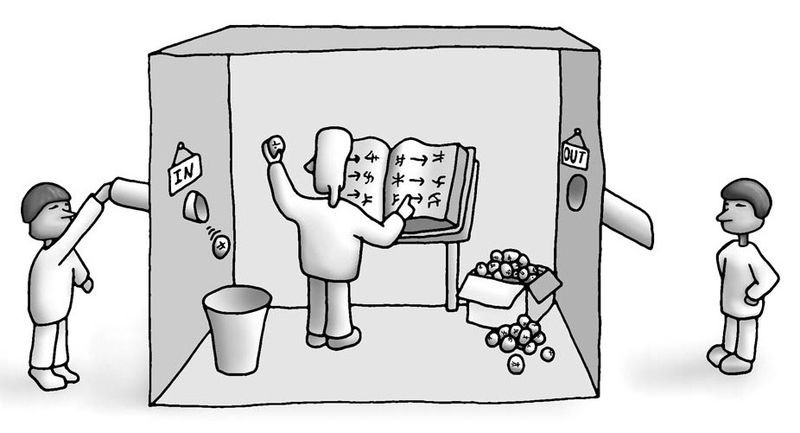 Despite many people’s apocalyptic response to ChatGPT, a great deal of caution and skepticism is in order. Some of it is philosophical, some of it practical and social. Let me begin with the former.



 How intelligent is ChatGPT? That question has loomed large ever since
 Environmentalists are always complaining that governments are obsessed with GDP and economic growth, and that this is a bad thing because economic growth is bad for the environment. They are partly right but mostly wrong. First, while governments talk about GDP a lot, that does not mean that they actually prioritise economic growth. Second, properly understood economic growth is a great and wonderful thing that we should want more of.
 Sughra Raza. Untitled. April 1, 2023.