
Joseph Howlett in Quanta:
 In 1896, the Swedish physicist Svante Arrhenius realized that carbon dioxide (CO2) traps heat in Earth’s atmosphere — the phenomenon now called the greenhouse effect. Since then, increasingly sophisticated modern climate models have verified Arrhenius’ central conclusion: that every time the CO2 concentration in the atmosphere doubles, Earth’s temperature will rise between 2 and 5 degrees Celsius.
Still, the physical reason why CO2 behaves this way has remained a mystery, until recently.
First, in 2022, physicists settled a dispute over the origin of the “logarithmic scaling” of the greenhouse effect. That refers to the way Earth’s temperature increases the same amount in response to any doubling of CO2, no matter the raw numbers.
Then, this spring, a team led by Robin Wordsworth of Harvard University figured out why the CO2 molecule is so good at trapping heat in the first place.
More here.
Enjoying the content on 3QD? Help keep us going by donating now.
 Populism, the rule of many, and authoritarianism, the rule of one, might seem like antipoles. But they are intimately related. Wherever populism appears, so do various forms of illiberalism that if allowed to run their course result in strongman politics with its contempt for dispersed power, checks and balances, freedom of the press, and other constraints on one-man (or woman) rule.
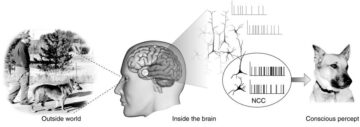 It’s not just a scientific theory of consciousness that’s controversial; attempts to define “consciousness” are too. Language might not be necessary for consciousness, but you can’t study consciousness without using words. Some theorists define “consciousness” as “awareness,” “sentience” or “experience,” but that merely shifts the point of confusion; those terms are as much in need of clarification as “consciousness” is.
 The reaction of the Smiths and millions of other working-class families to their new suburban environments rarely surfaced at the time. John’s quotes above were recorded almost
  Science—meaning the Western tradition of testing hypotheses and writing research papers—has its roots in the Enlightenment of 17th and 18th century Europe. When this new way to understand the natural world emerged, colonialism was already well established, with a handful of nations in Western Europe exerting political and economic control over distant lands and peoples. Eventually, just eight nations claimed more than half the globe (see
  According to Alexandre Lefebvre, professor of politics and philosophy at the University of Sydney and author of the new book Liberalism as a Way of Life, the allegory that best captures the liberal self-conception was given to us by the late David Foster Wallace, during his commencement speech at Kenyon College. I suspect you know it, but if not, here’s the truncated version: two younger fish are swimming by an older one. When the older fish politely asks, “How’s the water?”, one of the younger fish looks at the other and says, “What the hell is water?” Lefebvre would say the water is liberalism; I’m one of the younger fish.
 Baldwin’s imagination remained passionately connected to the destiny of his country. He lacked the guile and watchfulness that might have tempted him to keep clear of what was happening in America; the ruthlessness he had displayed in going to live in Paris and publishing Giovanni’s Room was no use to him later as the battle for civil rights grew more fraught. It was inevitable that someone with Baldwin’s curiosity and moral seriousness would want to become involved, and inevitable that someone with his sensitivity and temperament would find what was happening all-absorbing.
 Fine, the title is an exaggeration. But only a small one. GLP-1 receptor agonist medications like Ozempic are already FDA-approved to treat diabetes and obesity. But an increasing body of research finds they’re also effective against
  John Rawls, the preeminent political philosopher of the
  W
W I read James Baldwin’s Go Tell It on the Mountain just after my eighteenth birthday, at a time when I presumed that my Catholic upbringing would soon mean little to me. During my first year at university, which I had just completed, I told no one that I had come close to joining a seminary. Some of my memories of almost having a vocation for the priesthood were embarrassing. I wished they belonged to someone else. But now my religious feelings had not merely ended; I hoped they had been effectively erased. Such feelings, I noticed, were mostly absent from the books I was reading, the films I was watching, the plays I was seeing, the conversations I was having.
 W
W B
B It must be dismal to come of age in an era so drenched in utility as ours. What was once called soul hunger is now relentlessly thwacked aside by engines of ever greater efficiency, from effective altruism to generative AI. Even the animating realms of art and sex appear to have contracted to the merely serviceable, functional, and fair-minded.