
Stan Carey at Sentence first:

I was sad to hear that Edna O’Brien had died. She lived a remarkable life and leaves an amazing body of work: she was, in Eimear McBride’s description, ‘one of the last great lights of the golden age of Irish literature’.
The controversy over O’Brien’s taboo-breaking early books – starting with The Country Girls (1960), which was banned in Ireland – had ebbed by the time I started reading her, but the elegance of her writing and the power of her stories remained, and remains, undiminished.
Recently, revisiting her short story ‘Madame Cassandra’, which was published in the 1968 collection The Love Object and again in 2011’s Saints and Sinners, a rare word in its opening paragraph caught my eye:
I always love the way the bees snuggle into the foxglove … for the coolth and the nectar.
I don’t think bees are snuggling into foxgloves for the coolth, but it’s such a pleasing idea that I don’t mind the poetic licence.
More here.
Enjoying the content on 3QD? Help keep us going by donating now.
 Schmidt confessed to revising his AI outlook every six months, a testament to the field’s volatility. He shared a striking example: “Six months ago, I was convinced that the gap [between frontier AI models and the rest] was getting smaller, so I invested lots of money in the little companies. Now I’m not so sure.”
 America’s most curious endeavors: Atoms for Peace and its policy that spread dangerous nuclear technology world-wide.
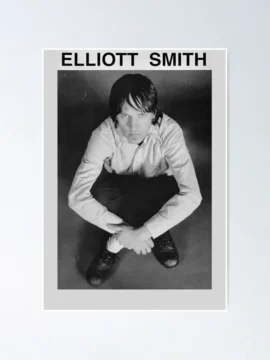 Though it’s true that sadness in its many forms was one of Smith’s central preoccupations, neither he nor his music were defined by it. The spare waltz that defeats Tiny Rick appears on Smith’s third solo album, 1997’s Either/Or. It’s played acoustically at an unhurried pace and combines a seductive lyric about finding solace in booze with a melody that perfectly captures its quiet desperation. In the chorus, a dark E-flat minor hits you like a gut punch because your ears expect a more optimistic E-flat major, and the song returns to that unstable chord to finish, denying you any conventional harmonic resolution. It’s a masterly composition that eclipses anything by Smith’s own idols, including the Beatles or Elvis Costello – sad, yes, but too wondrous to feel strictly morose. And he didn’t write it strung out and crying into an empty glass of Jameson. It was apparently knocked into shape while he was watching the swords-and-sandals TV show Xena: Warrior Princess.
 We’re publishing these exchanges just about every two weeks—a compressed timeline that somehow seems like an eternity amid this summer’s news cycles. Thankfully, art offers its own distinct time signature. When we look at a painting or read a poem, we don’t escape from time, but we do experience it differently. Time contracts and dilates; it folds in and out; mere sequence becomes pattern, shape, meaning. “You are the music / While the music lasts,” as T. S. Eliot puts it. This temporal re-shuffling is one of the gifts of art, and it’s one that I’m especially appreciating during this frenetic summer.
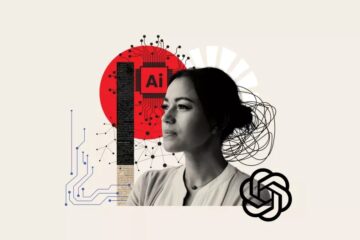 With persistent, fast-moving advancements in artificial intelligence (AI) cornering most of us every day, even the most technology-shy have begun to accept that AI now infiltrates nearly every aspect of our lives. However, while AI may be useful for retrieving data and making predictions, using it for the intimate and challenging endeavor that is therapy is one purpose you likely wouldn’t have seen coming. Yet, increasing numbers of people are sharing how they are using ChatGPT and other AI-led bots for “makeshift therapy”—which has also left experts questioning how safe this new practice is.
 The first time I heard nematode worms can teach us something about human longevity, I balked at the idea. How the hell can a worm with an average lifespan of only 15 days have much in common with a human who lives decades?
 A
A In America today, we are bad at conscious decisionmaking about technology. Our best efforts lately leave much to be desired: a decade of zero-sum argument about whose speech norms will prevail on social media, a long-delayed and fragmented debate about smartphones conducted through research about a teen mental health crisis, and scaremongering and special interests determining the fate of what was once the promise of “too cheap to meter” nuclear energy.
 In 1918, the citizens of Moscow, the new capital of Communist Russia, struggled to maintain a semblance of normal life. It wasn’t easy. A brutal civil war between the White and Red Russian armies was raging. The West had imposed a trade war. The capital was aswirl with revolutionary ideas, new ways of thinking about equality, justice, and history. Those of means who had not fled were demoted to ordinary citizens and forced to share their wealth and homes with the less privileged. Despite all the revolutionary fervor, Alexander Oparin, a young biochemist steeped in radical scientific ideas, received disappointing news. The censorship board would not permit him to publish a manuscript that speculated on how life arose from mere chemicals. Though the Bolsheviks had overthrown the tsar a year ago, their revolutionary ideology had not yet filtered down to the censors, perhaps because they were not yet ready to directly antagonize the Russian Orthodox Church.