
George Scialabba in The Hedgehog Review:
 In 1884, William James began his celebrated essay “The Dilemma of Determinism” by begging his readers’ indulgence: “A common opinion prevails that the juice has ages ago been pressed out of the free-will controversy, and that no new champion can do more than warm up stale arguments which everyone has heard.” James persisted and rendered the subject very juicy, as he always did. But if the topic appeared exhausted to most people then, surely a hundred and forty years later there can’t be anything new to say. Whole new fields of physics, biology, mathematics, and medicine have been invented—surely this ancient philosophical question doesn’t still interest anyone?
Indeed, it does; it retains for many what James called “the most momentous importance.” Like other hardy perennials—the objectivity of “good”; the universality of truth; the existence of human nature and its telos—it continues to fascinate philosophers and laypersons, who agree only that the stakes are enormous: “our very humanity,” many of them insist.
Why so momentous?
More here.
Enjoying the content on 3QD? Help keep us going by donating now.
 I’m an engineer who
  In late 1949, the West Indian intellectual
  The actual exchange between Oppenheimer and Einstein was, as it happened, far less cordial than the film’s version. It ended with an exasperated Einstein telling his assistant, “There goes a Narr [fool],” nodding toward the Institute director.
 I
I T
T So far, we humans have mostly restricted ourselves to the Search for Extraterrestrial Intelligence (SETI). The SETI Institute, a private, nonprofit research organization, has built a variety of instruments designed to detect signs of extraterrestrial life. So have other institutes and universities. This activity is reasonably uncontroversial: If somebody is trying to send us a message, it would likely be beneficial to receive it; we can then figure out how, and whether, to answer.
 W
W
 In the wake of his huge defeat on June 30, 2024, when 80 percent of voters rejected French “centrist” President Emmanuel Macron, he said he understood the French people’s anger. In the UK, Conservative loser Rishi Sunak said the same about the British people’s anger, as Labor leader Starmer now says as the anger explodes. Of course, such phrases from such politicians usually mean little or nothing and accomplish less. Such leaders and their parties just keep calculating how best to regain power when they lose it. In that, they are like the U.S. Democrats after Biden’s performance in his debate with Trump and like the U.S. Republicans after Trump’s loss in 2020. In both parties, a small group of top leaders and top donors made all the key decisions and then organized the political theater to ratify those decisions. Even surprises like Harris replacing Biden are temporary departures from resuming politics as usual.
 Dear Tom,
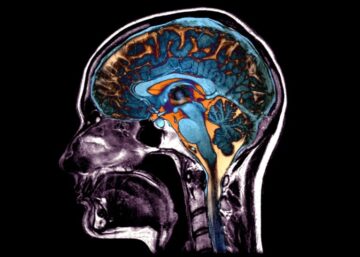 An analysis of almost 50,000 brain scans