
Enjoying the content on 3QD? Help keep us going by donating now.
Category: Recommended Reading
Bangladesh’s protests explained: What led to PM’s ouster and the challenges that lie ahead
Tazreena Sajjad in The Conversation:
 The protests stem from long-running resentment over a quota system that saw 56% of government positions in Bangladesh reserved for various groups, including 30% for the descendants of freedom fighters who fought in the 1971 War of Independence.
This quota system has proved an enormous barrier to highly coveted civil service positions for the country’s large youth population, many of whom are unemployed.
It had also become a subject of controversy due to how many of those quota jobs went to supporters of the ruling Awami League party.
Under immense pressure from an earlier student mobilization over the issue, Hasina abolished the entire quota system in 2018.
But in June 2024, the country’s high court ruled that move illegal, sparking a fresh round of protests across the country.
More here.
Enjoying the content on 3QD? Help keep us going by donating now.
Friday Poem
Mirror
I am silver and exact. I have no preconceptions.
Whatever I see I swallow immediately
Just as it is, unmisted by love or dislike.
I am not cruel, only truthful —
The eye of a little god, four-cornered.
Most of the time I meditate on the opposite wall.
It is pink, with speckles. I have looked at it so long
I think it is part of my heart. But it flickers.
Faces and darkness separate us over and over.
Now I am a lake. A woman bends over me,
Searching my reaches for what she really is.
Then she turns to those liars, the candles or the moon.
I see her back, and reflect it faithfully.
She rewards me with tears and an agitation of hands.
I am important to her. She comes and goes.
Each morning it is her face that replaces the darkness.
In me she had drowned a young girl, and in me an old woman
Rises toward her day after day, like a terrible fish.
by Sylvia Plath
from Crossing the Water
Harper Collins, 1963
Buddhist Ethics And The Bodhisattva Path
Jay Garfield at Notre Dame Philosophical Reviews:
 A final idea that frames Harris’ interpretation of Śāntideva—one that is clearly correct, and unappreciated—is that the universal altruism and the attitudes of kindness, care, impartiality, and joy in the accomplishments of others that Śāntideva recommends do not constitute self-sacrifice or self-abnegation. Instead, Harris demonstrates that, on Śāntideva’s view, they are both constitutive of and instrumental to human happiness (40 ff., 60 ff.). So, when Śāntideva compares pleasure in the everyday world to honey on a razor blade, he is pointing out that the pursuit of our own pleasure in the end yields only pain, because of the attachment it generates to a fragile commodity; when Śāntideva argues that we only become happy when we dedicate ourselves to the welfare of others, the freedom from attachment to our own narrow interest expands our sources of joy. As Harris puts it, “Perfect giving, for Śāntideva, is private, but other-focused; self-benefitting, but radically benevolent; total, and yet not self-injurious” (67).
Harris thus frames Śāntideva’s text as a guide to escaping from the suffering of ordinary life by cultivating virtue, grounded in the insight that we succeed in advancing our own true interests only by detaching ourselves from apparent narrow self-interest and from a concern with the immediate present in favor of a longer and broader moral vision. This reading opens the text beautifully, and it helps the reader to unpack Śāntideva’s arguments.
more here.
Enjoying the content on 3QD? Help keep us going by donating now.
Intellectual Economy Speech
Enjoying the content on 3QD? Help keep us going by donating now.
One-quarter of unresponsive people with brain injuries are conscious
Julian Nowogrodzki in Nature:
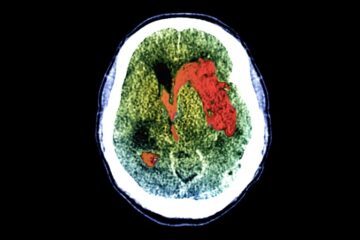 At least one-quarter of people who have severe brain injuries and cannot respond physically to commands are actually conscious, according to the first international study of its kind1. Although these people could not, say, give a thumbs-up when prompted, they nevertheless repeatedly showed brain activity when asked to imagine themselves moving or exercising. “This is one of the very big landmark studies” in the field of coma and other consciousness disorders, says Daniel Kondziella, a neurologist at Rigshospitalet, the teaching hospital for Copenhagen University.
The results mean that a substantial number of people with brain injuries who seem unresponsive can hear things going on around them and might even be able to use brain–computer interfaces (BCIs) to communicate, says study leader Nicholas Schiff, a neurologist at Weill Cornell Medicine in New York City. BCIs are devices implanted into a person’s head that capture brain activity, decode it and translate it into commands that can, for instance, move a computer cursor. “We should be allocating resources to go out and find these people and help them,” Schiff says.
More here.
Enjoying the content on 3QD? Help keep us going by donating now.
What The Decameron Reveals About Contemporary Anxiety
Ed Simon at Lit Hub:
 I imagine the ideal way in which to read Giovanni Boccaccio’s profane and earthy 14th-century classic The Decameron is to be ensconced for a sweltering summer at the Villa Schifanoia. There you would have a small but elegant room overlooking the Tuscan hillsides whose winding roads are lined with those tall and preposterously skinny trees, while evenings would be given over to feasts in the yellow-walled courtyard where you dine on cantaloupe wrapped in prosciutto cut to a near-translucent pinkness, pappardelle with fresh pesto studded with garlic and pine-nuts, and a thick cut of charred and marbled ribeye whose interior is as luridly crimson as a muscular human heart.
All of this, obviously, is to be whetted with thimblefuls of grappa and multiple fiascos of chianti. “Much have I eaten, much have I drank, and much have I mocked mankind”—that’s not Boccaccio, it’s the Greek lyric poet Simonides of Ceos some two millennia before The Decameron, but their worldviews are identical.
more here.
Enjoying the content on 3QD? Help keep us going by donating now.
The Artworld Revisited – Arthur Danto (1991)
Enjoying the content on 3QD? Help keep us going by donating now.
Thursday, August 15, 2024
Helen Phillips on Writing Speculative Fiction in the Age of Artificial Intelligence
Jane Ciabattari at Literary Hub:
 May Webb sees her first hum standing at a bus stop, and mistakes it for a sculpture. One year later, in the anxious “now” of Helen Phillips’ new novel Hum, AI-based robots called “hums” have taken over many jobs, or rendered them obsolete (May’s job working on AI communications has been erased). In fact, as the novel opens, a hum is performing facial recognition obscuring surgery on May’s face. May is being paid well to be a guinea pig in this test, a choice she may come to regret. Reading Hum is like shifting your perspective a couple of years into a dystopian future. Everything could turn out this way. In fact, it seems likely this is where we might be headed, based on the current state of climate change, artificial intelligence, surveillance, and government control.
Read it as a warning, and double down on that danger when you consider the dire implications for a responsible mother trying to grab a few moments of private time with her husband while giving her children a taste of the quickly dwindling natural world in a pricey Disneyland-esque botanic garden. Phillips’ short stories and earlier novels have been compared to the work of Calvino, Kafka, Margaret Atwood, Ursula Le Guin, and Lorrie Moore. But she’s truly an original. Hum is speculative fiction at its best. (No AI was involved in our email conversation, which spanned the continent.)
More here.
Enjoying the content on 3QD? Help keep us going by donating now.
MDMA therapies hit a roadblock – what’s next?
Grace Wade in New Scientist:
 Roughly one year ago, thousands of people gathered in Denver, Colorado, for the largest psychedelic conference in history. The mood was electric, with most attendees confident that the US Food and Drug Administration (FDA) was on the verge of approving its first psychedelic drug.
But last week, the FDA dealt a devastating blow to supporters of psychedelic therapies. It rejected the hallucinogen MDMA as a treatment for post-traumatic stress disorder (PTSD), citing concerns about safety and the validity of clinical trial results. The decision is a pivotal moment for psychedelic science and raises questions about what – if any – future these drugs have in medicine.
The California-based company Lykos Therapeutics has published two phase III clinical trials showing that MDMA, along with talk therapy, significantly improved symptoms of PTSD. The trials, which involved almost 200 adults with moderate-to-severe PTSD, found that between 33 and 46 per cent of those treated with three doses of MDMA were in remission from the condition two months later. The same was true for less than a quarter of the trial participants who had received only talk therapy.
At face value, these results are remarkable.
More here.
Enjoying the content on 3QD? Help keep us going by donating now.
Sabine Hossenfelder: How I lost trust in scientists
Enjoying the content on 3QD? Help keep us going by donating now.
NYT wins the gold medal for Olympic medal visualization
Ben Orlin in Math with Bad Drawings:
A few days into these Olympics, my friend Ryan lobbed me an alley-oop question via email:
Which brings to the next point, what is the ideal medal count ranking to your estimation? I figure this is something you probably have the correct answer to.
Alas, I told him, I don’t. There are three basic options, all of them bad.
First, the standard solution is to rank by gold medals. But like many standard things, this is deeply problematic. Did Ireland really outperform Brazil, even though the latter won 7 more silvers and 7 more bronzes?

Second is an alternative practiced sometimes in the U.S. and never anywhere else: to rank by total number of medals, treating gold, silver, and bronze as equals. But this is no better. Which would you prefer: Great Britain’s 7 extra bronzes, or France’s 2 extra golds + 4 extra silvers?

The third solution is to strike a balance between these deficient extremes; that is, to weight the medals. A gold is worth X silvers, and a silver is worth Y bronzes. But this has its own problem: what weights do you use? Is a gold worth 2 silvers, or 10? Is a silver worth 1.5 bronzes, or 15? Who knows! It’s inescapably arbitrary.
More here.
Enjoying the content on 3QD? Help keep us going by donating now.
World’s Fastest Drone
Enjoying the content on 3QD? Help keep us going by donating now.
Unreasonably Effective AI With Demis Hassabis
Enjoying the content on 3QD? Help keep us going by donating now.
How Renaissance Art Found Its Way to American Museums
Ashley Couto at JSTOR Daily:
 Although art historical writing had flourished since Giorgio Vasari’s Lives of the Artists, art consumers of the nineteenth century were particularly reliant on the expertise of the artists and art enthusiasts who published and became authorities on specific subjects. They needed guidance on what was best to buy.
As Manfred J. Holler and Barbara Klose-Ullmann posit, the American taste for medieval and Renaissance art was bolstered, in part, by James Jackson Jarves. An American art critic based in Florence, Jarves enjoyed privileged access to works and documents from the Renaissance era. In his essay “A Lesson for Merchant Princes,” from Italian Rambles, published in 1883, Jarves encouraged Americans to follow in the footsteps of the fifteenth-century banker and prominent Florentine Giovanni Rucellai and invest their fortunes in art. In Rucellai’s eyes, there were three key reasons to become a patron: to honor God, to honor one’s city, and to secure one’s immortality by means of cultural legacy. These aspirations captivated a small sector of affluent Americans.
more here.
Enjoying the content on 3QD? Help keep us going by donating now.
Heman Bekele Is TIME’s 2024 Kid of the Year: Dreaming of a cure
Jeffrey Kluger in Time Magazine:
 Heman Bekele whipped up the most dangerous of what he called his “potions” when he was just over 7 years old. He’d been conducting his own science experiments for about three years by that point, mixing up whatever he could get his hands on at home and waiting to see if the resulting goo would turn into anything. “They were just dish soap, laundry detergent, and common household chemicals,” he says today of the ingredients he’d use. “I would hide them under my bed and see what would happen if I left them overnight. There was a lot of mixing together completely at random.”
But soon, things got less random. For Christmas before his 7th birthday, Heman was given a chemistry set that came with a sample of sodium hydroxide. By then, he had been looking up chemical reactions online and learned that aluminum and sodium hydroxide can together produce prodigious amounts of heat. That got him thinking that perhaps he could do the world some good. “I thought that this could be a solution to energy, to making an unlimited supply,” he says. “But I almost started a fire.”
More here.
Enjoying the content on 3QD? Help keep us going by donating now.
Here’s How Intermittent Fasting Impacts Your Body
Allison Futterman in Discovery:
 In the mid-1960s, a Scottish man named Angus Barbieri fasted for more than a year. For a total of 382 days, he survived on liquids, vitamins, and some yeast, ultimately losing 276 pounds. He undertook the fast (under medical supervision) to lose weight in his pursuit of better health. The practice of fasting for health benefits dates back to the fifth century B.C.E. when Hippocrates recommended fasting for certain illnesses. By the 1800s, fasting was being studied for its potential health effects.
What Is Intermittent Fasting?
Intermittent fasting (IF) is the practice of restricting eating to certain times, also known as time-restricted eating. After a substantial time without eating, the body uses up its glycogen (sugar) stores and starts burning fat. This process is known as metabolism switching. This leads to increased ketone levels, which stimulates weight loss. In addition to weight loss, IF can positively influence other aspects of health.
More here.
Enjoying the content on 3QD? Help keep us going by donating now.
Thursday Poem
A Man Said to the Universe
A man said to the Universe
“Sir, I exist!”
“However,” replied the universe,
“The fact has not created in me
A sense of obligation.”
by Stephen Crane
from Literature and the Writing Process
Prentice Hall, 1996
Space Travel And The Cold War Fantastic
Isaac Ariail Reed at The Hedgehog Review:
 On their surface, the stories in Store of the Worlds operate in new ways with an old conceit: The beings possessed of superior technology turn out to be less mature and developed in their social sensibilities and cultural commitments than their supposed inferiors on less technologically advanced planets. In Sheckley’s worlds, hyper-rationalists, religious imperialists, and wealthy suburbanites addicted to the latest gadget are given their comeuppance. But this highly typified first layer, when peeled back, reveals deeper meanings. Sheckley is interested in the human mind and its aversion to the kinds of sociality that demand conformity as a condition for the achievement of peace. His picture of the mind is psychoanalytic, though also inflected by his absurdist-influenced concerns with the human use and abuse of language and his pulpy inclinations to shock, scare, and amuse the reader.
In Store of the Worlds, then, we get a picture of technological civilization that still must deal with the three aspects of the soul as understood by Plato (logistikon, thymoeides, and epithymetikon: reason, spirit, and appetite), and one in which, with the wrong fantasy in place and spirit run amok, reason stands no chance.
more here.
Enjoying the content on 3QD? Help keep us going by donating now.
Wednesday, August 14, 2024
The $6,374 Pineapple
Tony Morley at The Up Wing:
 In 1667 John Rose, the royal gardener, took a knee at the foot of Charles II, the King of England, and presented him with a pineapple. This wasn’t the $3.00 discount pineapple from your local grocer, but rather the single most expensive fruit in the Western world. Christopher Columbus was perhaps the first Westerner to encounter the pineapple in 1493 on the island of Guadeloupe, a small island amongst a grouping of islands that includes Puerto Rico, Dominica, St Lucia, and Barbados. Columbus called the fruit “piña de Indes,” ‘pine of the Indians’ and with considerable difficulty, managed to bring a small quantity of unspoiled pineapple back to Europe. The pineapple was a fruit that could only grow within tropical regions and was astonishingly difficult to transport, frequently spoiling on the journey across the Atlantic. While it isn’t clear when the first pineapples arrived in England, what is clear, is that the ones that managed the journey without spoiling commanded astonishingly high prices, to the tune of thousands of pounds. At the dawn of the Industrial Revolution, the pineapple could be imported from the New World, often with high levels of spoilage losses, or grown in one of less than a handful of royal greenhouses, an option which was no less expensive than imported pineapple. The cost of domestic pineapple in England was so high as to make the fruit essentially too valuable to eat. Pineapples may well have been eaten by the King, but lesser royalty had used the pineapple as a luxury ornament, the ultimate pre-industrial flex. Guests would gather around, not to eat the pineapple, but simply to stare at its manifest symbolism of wealth, luxury, rarity, and power.
More here.
Enjoying the content on 3QD? Help keep us going by donating now.