pay attention!

HumanMark Edmundsun at The Hedgehog Review:

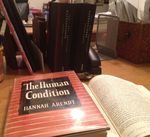
Pay attention! The phrase bears some considering. In his essay “On Truth and Lies in a Nonmoral Sense,” Friedrich Nietzsche posed the question of the nature of language and made an acute observation. Language, he wrote, is a mobile host of metaphors and metonyms that have become conventional over time. Words become like coins that have been worn plain from overuse. We no longer see the tropes that are embedded in our language, the figures of everyday speech. Well, here is one such trope: Attention is something that must be paid. Paying attention is not unrelated to discharging a debt, to offering tribute, to giving the entity that demands the attention something akin to cash. When you tell someone to pay attention, you are trying to take something from him, something that, one might assume, he does not wish to give: his focus, his presence of mind, his full being. Is it possible that paying attention is akin to paying tribute? When someone asks you to pay attention, he is imposing authority on you. Perhaps it is not that we can’t get ourselves to focus on this or that matter, but simply that offering attention is felt as a challenge, a burden. “I made myself pay attention, even though what he was saying was boring.” “It wasn’t easy to pay attention to him, but I did.” There’s a tribute involved. There’s a tax. There’s a debt. Do you understand? Are you paying attention to me? We can take satisfaction in paying a bill, or getting rid of a debt, but it is never exactly a joy.

more here.

edmund wilson on houdini

HarryHoudini1899Edmund Wilson from a 1925 piece at The New Republic:

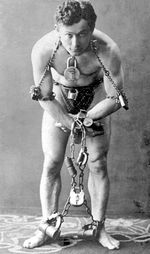
Houdini is a short strong stocky man with small feet and a very large head. Seen from the stage, his figure, with its short legs and its pugilist's proportions, is less impressive than at close range, where the real dignity and force of his enormous head appear. Wide-browed and aquiline-nosed, with a cleanness and fitness almost military, he suggests one of those enlarged and idealized busts of Roman generals or consuls. So it is rather the man himself than the showman, the personality of the stage, who is interesting. Houdini is remarkable among magicians in having so little of the smart-aleck about him: he is a tremendous egoist, like many other very able persons, but he is not a cabotin. When he performs tricks, it is with the directness and simplicity of an expert giving a demonstration and he talks to his audience, not in his character of conjuror, but quite straightforwardly and without patter. His professional formulas—such as the “Will wonders never cease!” with which he signalizes the end of a trick—have a quaint conventional sound as if they had been deliberately acquired as a concession to the theatre. For preeminently Houdini is the honest earnest craftsman which his German accent and his plain speech suggest—enthusiastic, serious- minded, thoroughgoing and intelligent.

Houdini is in fact a German Jew (Houdini is not his real name)—born in Wisconsin.

more here.

Writing What You Know

Simon Hammond in The White Review:

BS-JohnsonIn the summer of 1959, a headstrong but lovesick English graduate took a trip to the hometown of his favourite writers, to mark the end of his degree and to help him forget his sorrows. En route to Dublin via the Welsh Coast he hitched a lift with the owner of an upscale holiday resort, who offered him a job for the summer, an offer he took up after walking in the footsteps of Joyce, Beckett and O’Brien. Travelling People, which BS Johnson wrote in fits and starts over the next two years, is the story of a young man who takes a job at a Welsh holiday resort. It has the brisk outlines of a familiar English comedy, but presented with an incongruous trickery more in keeping with Johnson’s Irish heroes. Plenty of direct experience made it into the novel (Johnson even incorporated letters that he had written that summer) but names were changed and elements added to provide excitement, perhaps even as wish-fulfilment. Henry has a passionate affair and gets a first in his degree, while Johnson wasn’t so fortunate; the heart attack that afflicts the owner, with whom Johnson fell out, never happened. But the translation of experience is uneasy: rogue autobiographical elements – Johnson’s romantic hysteria, his odd superstitions – crop up without explanation.

Published after a string of rejections to muted applause, with some copies returned in the belief that the typographical experimentation was a printing error, Johnson was nevertheless pleased with what he saw as the novel’s ingenuity, even claiming that in some respects it had improved on Joyce’s Ulysses. But behind the bravado lay a nagging dissatisfaction. He began to feel embarrassed by the fictional additions, to believe that the novel would have been better if it had been more honest, if he hadn’t compromised the truth for the sake of a good story. Increasingly Johnson dismissed it as an apprentice work, and was later reluctant to have it republished. Never again would he be so blasé with the facts of his life. The six novels that followed would be the work of a writer at war with the imagination.

More here.

The Intelligent-Life Lottery

George Johnson in The New York Times:

DnaAlmost 20 years ago, in the pages of an obscure publication called Bioastronomy News, two giants in the world of science argued over whether SETI — the Search for Extraterrestrial Intelligence — had a chance of succeeding. Carl Sagan, as eloquent as ever, gave his standard answer. With billions of stars in our galaxy, there must be other civilizations capable of transmitting electromagnetic waves. By scouring the sky with radio telescopes, we just might intercept a signal.

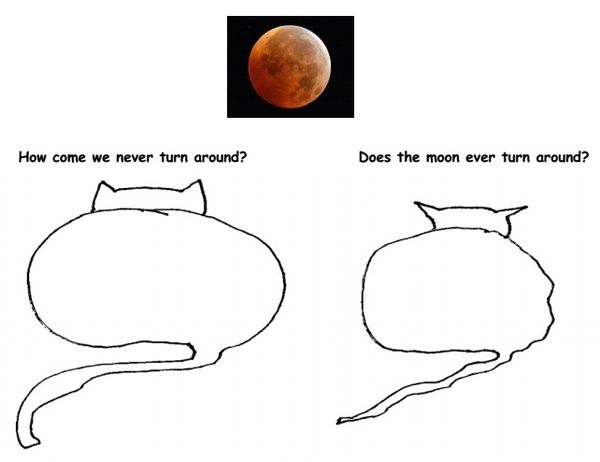
But Sagan’s opponent, the great evolutionary biologist Ernst Mayr, thought the chances were close to zero. Against Sagan’s stellar billions, he posed his own astronomical numbers: Of the billions of species that have lived and died since life began, only one — Homo sapiens — had developed a science, a technology, and the curiosity to explore the stars. And that took about 3.5 billion years of evolution. High intelligence, Mayr concluded, must be extremely rare, here or anywhere. Earth’s most abundant life form is unicellular slime. Since the debate with Sagan, more than 1,700 planets have been discovered beyond the solar system — 700 just this year. Astronomers recently estimated that one of every five sunlike stars in the Milky Way might be orbited by a world capable of supporting some kind of life. That is about 40 billion potential habitats. But Mayr, who died in 2005 at the age of 100, probably wouldn’t have been impressed. By his reckoning, the odds would still be very low for anything much beyond slime worlds. No evidence has yet emerged to prove him wrong.

More here.

Total police control over black bodies has echoes in American history

Ta-Nehisi Coates in The Atlantic:

LeadAmong the many relevant facts for any African-American negotiating their relationship with the police the following stands out: The police departments of America are endowed by the state with dominion over your body. I came home at the end of this summer to find that dominion had been. This summer in Ferguson and Staten Island we have seen that dominion employed to the maximum ends—destruction of the body. This is neither new nor extraordinary. It does not matter if the destruction of your body was an overreaction. It does not matter if the destruction of your body resulted from a misunderstanding. It does not matter if the destruction of your body springs from foolish policy. Sell cigarettes without proper authority and your body can be destroyed. Resent the people trying to entrap your body and it can be be destroyed. Protect the home of your mother and your body can be destroyed. Visit the home of your young daughter and your body will be destroyed. The destroyers of your body will rarely be held accountable. Mostly they will receive pensions.

It will not do to point out the rarity of the destruction of your body by the people whom you pay to protect it. As Gene Demby has noted, destruction is merely the superlative form of a dominion whose prerogatives include friskings, detainings, beatings, and humiliations. All of this is common to black people. All of this is old for black people. No one is held accountable. The body of Michael Brown was left in the middle of the street for four hours. It can not be expected that anyone will be held accountable.

More here.

Kurdistan: Where Poets Are More Than Poets

Alana Marie Levinson-LaBrosse in Fair Observer:

Poetry-pic-1The poet, in a collared shirt beneath a sweater vest and elbow-patched blazer, takes his seat. The more audacious fans push to shake his hand; he rises to accept, to graze cheeks in the formal kiss. Each time he stands, the audience follows, breaking into fresh, ferocious applause. He takes the stage flanked by three bodyguards who clear a path through the grabbing attendees.

During his short speech on political parties and their failings, the Kurdish language and its splintering, the audience keeps bursting into applause, like peals of thunder. I start a tally as he reads his poems. Audience members mouth the words along with him. After one poem, the clapping synchronizes and the audience takes up a chant, “Doo-bah-rah! Doo-bah-rah!” — “Again! Again!” and the poet relaunches, delivering the poem a second time. He leans over the lectern to deliver the lines. The tally: 48.

I remember the first time I’d seen such a response to live poetry — at an elocution contest sponsored by the American University of Iraq, Sulaimani (AUIS). Some 20 contestants took the stage and at least 100 students crammed into the cafeteria just to watch try-outs. At the time, the school only had 400 students. When the student-translator took the stage to read the poem in its original language first, the audience interrupted him, cheering at the end of each line. All this while the university had trouble galvanizing students to come to soccer games.

More here.

Monday, August 18, 2014

Frans B. M. de Waal to Judge 5th Annual 3QD Science Prize

UPDATE 09/22/14: Winners accounced here.

UPDATE 09/05/14: Finalists accounced here.

UPDATE 09/03/14: Semifinalists accounced here.

UPDATE 08/26/14: Voting round is now open. Click here to see full list of nominees and vote.

Dear Readers, Writers, Bloggers,

FdW2009SWe are very honored and pleased to announce that Frans de Waal has agreed to be the final judge for our 5th annual prize for the best blog and online-only writing in the category of science. Details of the previous four science (and other) prizes can be seen on our prize page.

As you may know, Frans B. M. de Waal is a Dutch/American biologist and primatologist known for his work on the behavior and social intelligence of primates. His first book, Chimpanzee Politics (1982) compared the schmoozing and scheming of chimpanzees involved in power struggles with that of human politicians. Ever since, de Waal has drawn parallels between primate and human behavior, from peacemaking and morality to culture. His scientific work has been published in hundreds of technical articles in journals such as Science, Nature, Scientific American, and outlets specialized in animal behavior. His popular books – translated into twenty languages – have made him one of the world's most visible primatologists. His latest books are The Age of Empathy (2009), and The Bonobo and the Atheist (2013).

De Waal is currently C. H. Candler Professor in the Psychology Department of Emory University and Director of the Living Links Center at the Yerkes National Primate Research Center, in Atlanta, Georgia. He has been elected to the (US) National Academy of Sciences, the American Academy of Arts and Sciences, and the Royal Dutch Academy of Sciences. In 2007, he was selected by Time as one of The Worlds’ 100 Most Influential People Today, and in 2011 by Discover as among 47 (all time) Great Minds of Science.

As usual, this is the way it will work: the nominating period is now open. There will then be a round of voting by our readers which will narrow down the entries to the top twenty semi-finalists. After this, we will take these top twenty voted-for nominees, and the editors of 3 Quarks Daily will select six finalists from these, plus they may also add up to three wildcard entries of their own choosing. The three winners will be chosen from these by Frans de Waal.

The first place award, called the “Top Quark,” will include a cash prize of 500 dollars; the second place prize, the “Strange Quark,” will include a cash prize of 200 dollars; and the third place winner will get the honor of winning the “Charm Quark,” along with a 100 dollar prize.

(Welcome to those coming here for the first time. Learn more about who we are and what we do here, and do check out the full site here. Bookmark us and come back regularly, or sign up for the RSS Feed.)

The schedule:

August 11, 2014:

  • The nominations are opened. Please nominate your favorite blog entry by placing the URL for the blog post (the permalink) in the comments section of this post. You may also add a brief comment describing the entry and saying why you think it should win. Do NOT nominate a whole blog, just one individual blog post.
  • Blog posts longer than 4,000 words are strongly discouraged, but we might make an exception if there is something truly extraordinary.
  • Each person can only nominate one blog post.
  • Entries must be in English.
  • The editors of 3QD reserve the right to reject entries that we feel are not appropriate.
  • The blog entry may not be more than a year old. In other words, it must have been first published after August 10, 2013.
  • You may also nominate your own entry from your own or a group blog (and we encourage you to).
  • Guest columnists at 3 Quarks Daily are also eligible to be nominated, and may also nominate themselves if they wish.
  • Nominations are limited to the first 200 entries.
  • Prize money must be claimed within a month of the announcement of winners.

August 22, 2014

  • The nominating process will end at 11:59 PM (NYC time) of this date.
  • The public voting will be opened soon afterwards.

September 1, 2014

  • Public voting ends at 11:59 PM (NYC time).

September 5, 2014

  • The finalists are announced.

September 22, 2014

  • The winners are announced.

One Final and Important Request

If you have a blog or website, please help us spread the word about our prizes by linking to this post. Otherwise, post a link on your Facebook profile, Tweet it, or just email your friends and tell them about it! I really look forward to reading some very good material, and think this should be a lot of fun for all of us.

Best of luck and thanks for your attention!

Yours,

Abbas

Sunday, August 17, 2014

Our Microbiome May Be Looking Out for Itself

Carl Zimmer in the New York Times:

ScreenHunter_750 Aug. 18 11.31Your body is home to about 100 trillion bacteria and other microbes, collectively known as your microbiome. Naturalists first became aware of our invisible lodgers in the 1600s, but it wasn’t until the past few years that we’ve become really familiar with them.

This recent research has given the microbiome a cuddly kind of fame. We’ve come to appreciate how beneficial our microbes are — breaking down our food, fighting off infections and nurturing our immune system. It’s a lovely, invisible garden we should be tending for our own well-being.

But in the journal Bioessays, a team of scientists has raised a creepier possibility. Perhaps our menagerie of germs is also influencing our behavior in order to advance its own evolutionary success — giving us cravings for certain foods, for example.

Maybe the microbiome is our puppet master.

“One of the ways we started thinking about this was in a crime-novel perspective,” said Carlo C. Maley, an evolutionary biologist at the University of California, San Francisco, and a co-author of the new paper. “What are the means, motives and opportunity for the microbes to manipulate us? They have all three.”

More here.

Graham Priest on Buddhism and logic

Massimo Pigliucci in Scientia Salon:

Buddhism47gfGraham Priest is a colleague of mine at City University of New York’s Graduate Center, a world renowned expert in logic, a Buddhist connoisseur, and an all-around nice guy [1]. So I always pay attention to what he says or writes. Recently he published a piece in Aeon magazine [2] entitled “Beyond true and false: Buddhist philosophy is full of contradictions. Now modern logic is learning why that might be a good thing.” I approached it with trepidation, for a variety of reasons. To begin with, I am weary of attempts at reading things into Buddhism or other Asian traditions of thought that are clearly not there (the most egregious example being the “documentary” What The Bleep Do We Know?, and the most frustrating one the infamous The Tao of Physics, by Fritjof Capra). But I quickly reassured myself because I knew Graham would do better than that.

Second, Graham knows a lot more than I do about both logic and Buddhism (especially the latter), so surely I was going to learn new things about both topics and, more crucially, how they are related to each other. The problem is that I ended up learning and appreciating more about logic, not so much about Buddhism, and very little about their congruence. Hence this essay.

I am going to follow Graham’s exposition pretty closely, and will of course invite him to comment on my take at his pleasure. Broadly speaking, my thesis is that the parallels that Graham sees between logic and Buddhism are more superficial than he understands them to be and, more importantly, that Buddhism as presented in his essay, is indeed a type of mysticism, not a philosophy, which means that logic (and, consequently, argumentation) are besides the point. Moreover, I will argue that even if the parallels with logic run as deep as Graham maintains, Buddhism would still face the issue — fundamental in any philosophy — of whether what it says is true of the world or not, an issue that no mystical tradition is actually equipped to handle properly.

More here.

Henry Peck interviews Elliott Colla about his new novel

As Iraq faces a new crisis, the novel Baghdad Central explores the freighted “moment of ambiguity” a decade earlier.

From Guernica:

Guernica: Baghdad Central is unusual first of all for its Iraqi protagonist. What was the genesis of the book?

ScreenHunter_748 Aug. 18 11.03Elliott Colla: I saw The Hurt Locker in August 2009. I thought it was a great film but it also really disappointed and infuriated me. Here was another great work about American war in the Middle East, and yet again there are no non-American characters. Iraqis in that film are either victims or perpetrators and Americans get to be heroes. I was with a friend, and we talked about how we should just flip that on its head. What would it be like to have a movie where all the heroes were Iraqi and all the Americans are on the periphery? I sat down and wrote, and when I woke up the next morning I had this character, Khafaji, in my mind. Then there was the work of imagination and research. I was going to take the American bogeyman, the villain—the Baathist war criminal—and see what it would be like to make this kind of person into a hero. What would it take to make a reader like him, or become interested in his story before they learn that he’s a war criminal?

Guernica: How knowledgeable of Iraq were you at the time?

Elliott Colla: Recently I heard Barbara Ehrenreich talk about her writing process, and in response to a question on whether to write what you know, she said, “Listen, I write what I want to know.” I couldn’t put it any better.

More here.

More on Philosophy’s ‘White Man’ Problem

Justin E. H. Smith in his own blog:

6a00d83453bcda69e201a73e0345e5970d-250wiThere have been many forceful contributions recently to the discussion of academic philosophy's 'white man problem' (see in particular here). I have been trying in my own way to contribute to these discussions, but what I am able to contribute is limited by the fact that in my social identity I am pegged as a cis straight white man (though in truth, I feel like protesting, it is far more complicated than this; and isn't it always!), and also by the fact that I disagree with my political allies in the effort to make academic philosophy more inclusive on some fundamental philosophical points as to what this inclusiveness must involve. Allow me to elaborate briefly on this latter limitation.

Jonardon Ganeri, following Homi Bhabha, articulates a distinction between two sorts of intercultural communication: cosmopolitanism and pluralism. Cosmopolitanism tends to interpret different viewpoints as “co-inhabitants in a single matrix, and to that extent [as] susceptible to syncretism,” while the cardinal tenet of pluralism “is that the irreconcilable absence of consensus is itself something of political, social, or philosophical value” (31). It has come to seem to me that most proposed solutions to the 'white man problem' in philosophy are based on a philosophical commitment to pluralism, in the sense defined, whereas I believe that cosmopolitanism is far more appropriate to the subject under investigation: expressions of philosophical ideas about, say, mind-body dualism, or the relationship between utterances and the things the utterances are about, really do exist in a universal matrix, bounded by the evolutionary history of the human species, whether they occur in Europe, India, or Amazonia. To study any of these ideas as if they were the particular property of any constituency in virtue of affiliation or ancestry is simply bad scholarship.

More here.

A Gandhi, A Gypsy And A Rushdie: García Márquez’s India Connect

Nina Martyris in Forbes India:

ScreenHunter_747 Aug. 18 10.52Gabriel García Márquez, the genius of the imagination who died in April at the age of 87, may not have written on India, but he had a multifaceted connection with the country that can be boiled down to three people: A Gandhi, a gypsy, and a Rushdie. Gandhi first, and for that we must wind back to a magical morning in October, 1982, when the news broke that the Latin American writer who had enchanted the world with One Hundred Years of Solitude had been awarded the Nobel Prize for literature.

In that joyous moment, Gabo became to Colombia what Pele is to Brazil. For this beautiful Caribbean country battered by poverty, drug violence and civil war, the fact that one of its countrymen had won the Nobel was akin to it winning the World Cup. And because Gabo had grown up dirt poor and could be as coarse as a sailor and as chivalrous as Don Quixote, celebrations erupted not just in Bogota’s linen-clad salons but in the country’s barrios and villages as well. Taxi drivers in Barranquilla, where Gabo had spent his early years as a journalist, heard the news on their radios and began to toot their horns in unison. One excited reporter asked a prostitute if she had heard, and she replied, yes, a client had told her in bed. This nugget would have delighted the new laureate, for not only are prostitutes—especially the trembling child prostitute—portrayed with extraordinary sympathy in his stories (his depiction reminds one of Manto’s Bombay prostitutes), he himself had lived above a brothel in his youth when he was unable to afford more respectable quarters. Publicly Gabo maintained that winning the Nobel would be “an absolute catastrophe”, but secretly he longed for it. And so, when the Swedish minister called his home in Mexico City with the news, he put down the phone, turned to his beloved wife Mercedes, and said: “I’m fucked”.

That day, his telephone was so jammed with calls that his old friend Fidel Castro was forced to send a telegram: “Justice has been done at last… Impossible to get through by phone.” Far away in New Delhi, Prime Minister Indira Gandhi thrilled to the news, not least because she happened to be in the middle of One Hundred Years of Solitude. In a lucky turn of events, Gandhi got a chance to meet Castro the very next month in Moscow, where they’d both gone to attend Soviet Premier Leonid Brezhnev’s funeral. Why don’t you bring your friend to India for the Non Aligned Movement summit next year, she suggested. Why not, said Castro.

More here.

Water From Elephants

Jake Flanagin in The Morning News:

Elephant-sotryThere is an old Tamil proverb: “Even an elephant can slip.” It is not a challenging metaphor to parse out—even the greatest beasts may fall. And when they do, the impact is ground-shaking. After all, their physical magnitude is biblically ordained: “Behold now Behemoth, which I made with thee; he eateth grass as an ox… His bones are as strong as pieces of brass; his limbs are like bars of iron” (Job 40:15-18). And yet, despite inch-thick skin and bones like brass, Behemoth feels pain—great pain. And has a corresponding capacity for great relief. His nerves function like those of any other warm-blooded creature; bundling and fraying, crackling with neuro-electric energy. And when that signal ascends the spinal column, arriving at the thalamus and dispersing to the various cortexes that register hurt and reprieve, Behemoth may even shed a tear or two. When Raju the Indian elephant was unshackled from the chains that bound his “bars of iron” for more than five decades, rescuers observed what they described as “gushes of liquid” pouring forth from the animal’s eyes, cascading down his cheeks. A video of his rescue by Indian animal-rights advocates, and the accompanying tears, rode through the public consciousness on a wave of internet virality: “50 Years a Slave,” “This Elephant Was Released After 50 Years in Chains… You Won’t Believe What Happened Next,” et cetera.

…In March of this year, a wild male elephant raged through a village in the state of West Bengal. Dipak Mahato awoke to violent crashing sounds as the bull besieged his home. He recalled hearing a loud “cracking sound” coming from the bedroom of his 10-month-old daughter: “We ran over and were shocked to see the wall in pieces and a tusker standing over our baby,” he said, according to the Times of India. “She was crying and there were huge chunks of the wall lying all around and on the cot. The tusker started moving away but when our child started crying again, it returned and used its trunk to remove the debris.” Mahato’s wife, Lalita, was shocked by the beast’s seemingly instantaneous shift from furor to almost parental tenderness. “We worship Lord Ganesh in our village. Still, I can’t believe that the tusker saved my daughter after breaking down the door and smashing a wall. We watched amazed as it gently removed the debris that had fallen on her. It’s a miracle.”

More here.

The man with the missing brain

Sanjiv Bhattacharya in The Telegraph:

Simon-4_3008751cHere was a young couple driving home through Hancock Park, a well-heeled suburb of mansions and manicured lawns. Lewis was a thriving film producer of 36, best known for the huge comedy hit Look Who’s Talking, starring John Travolta, and Marcy, 27, was in marketing. They’d been married five months. Then out of nowhere, a white Chevrolet van hit them at 75mph, an absurd speed for the neighbourhood. Marcy was killed outright and Lewis was so thoroughly broken that the paramedic on the scene took him for dead. The Chevrolet driver, meanwhile, fled the scene, and was never caught. That was the story the Times ran with – the destructive experience of a hit-and-run in a city where everyone drives everywhere.

Twenty years on, that crash continues to reverberate. Only this time, it’s a happier story, one that Lewis has told in a book, Rise and Shine, and before large audiences at numerous public events. It’s the story of his astonishing recovery, and it not only gives hope to sufferers of traumatic brain injury (TBI), but provides proof, in the most dramatic fashion, of the brain’s incredible ability to regenerate and reorganise itself. Doctors simply didn’t expect Lewis to live on the night of “the trauma”, as his mother Pat calls it. When two Jaws of Life machines freed him from the wreckage, he’d sustained a broken skull, jaw, arms, clavicle and pelvis, with compound fractures in nine ribs. And then there was the “catastrophic brain insult” he’d suffered – a stroke that destroyed a third of his right hemisphere and caused a contusion to the brainstem and severe internal bleeding.

More here.