Comedy’s Cost

Matthew Hennessey in City Journal:

RobinComedy, they say, is tragedy plus time. It may take a while for the world to laugh again at the comic genius of Robin Williams, who died this week, apparently at his own hand, after what he himself called a long struggle with addiction and depression. This sudden and tragic ending seems at odds with the joie de vivre that he brought to his work. Manic, magical, incandescent, uncontainable—there aren’t adjectives enough to describe Williams’s improvisational talent and the role he played in American popular culture over four decades.

He was the Keith Moon of comedy, barely believable, a sweaty mess yet somehow right on the beat, a size XXXL figure with almost no earthly point of reference. It seemed as if he’d arrived fully formed, in an interstellar egg-ship like his first, wholly original creation—the now nearly non-translatable icon of the late 1970s, Mork from Ork. Then it seemed as if he’d always been here, as Popeye, as Garp, as the tweedy English teacher you never had but always wanted, as the zany and improbably Scottish Mrs. Doubtfire. He was a slam dunk on Leno or Letterman. In fact, he was a slam dunk everywhere. There were no half-assed Robin Williams appearances. He never phoned it in; you got the sense that he couldn’t. Like any comedian, some of his gags didn’t land, but not for lack of trying. Williams was all-in to make us laugh. The price, it seems, was paid mostly by him. His public exuberance masked private anguish. And in the end, tragedy won out of over comedy, as it does for many who strive to make us laugh.

More here.

ABBEY ROAD STILL FAMOUS AT 45

Rebecca Willis in More Intelligent Life:

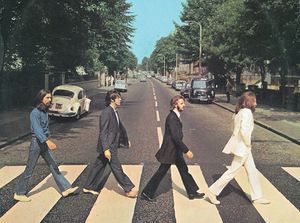
BeatlesForty-five years ago today, four young men walked across a zebra crossing in north-west London, the shutter of a camera clicked, and history was made. The cover of the Beatles' 11th studio album immortalised the Abbey Road crossing—and everything else in the picture, too. (Apparently the number plate of the white VW Beetle parked half on the pavement in the background was repeatedly stolen.) Paul McCartney, who still lives around the corner, had the idea for the image and sketched it out. The creative director decided not to put the name of the band or the album on the cover—even though EMI wanted it—because “they were the most famous band in the world”. And so, thanks to the contagion of celebrity, it's now the most famous zebra crossing in the world. Those of us who live nearby are accustomed to being asked for directions to Abbey Road by strangers outside the tube station. Legions of fans crowd the crossing—especially at this time of year, and no doubt even more today—eager for their chance to get “The Shot”. There is even a “crossing cam”, so you can watch it live online.

If you drive regularly over it, as I do, you soon learn that the rules of the Highway Code are virtually impossible to implement here. You can still “look out for pedestrians waiting to cross” and “be ready to slow down or stop to let them cross”, but however much you may want to “give way when a pedestrian has moved onto a crossing”, they just don't want you to. They wave you impatiently on, scanning the road beyond for a break in the traffic. The last thing they want is your car in their photo—even my little electric car, which is white and could do a passable imitation of the Beetle behind George Harrison's head. What the fans possibly don't know is that, at 11.35am on August 8th 1969 (also a Friday), a policeman stopped the traffic for the shoot, and the photographer, Iain Macmillan, stood on a stepladder in the middle of the road to get his vantage point.

More here.

You Are Not Nearly Scared Enough About Ebola

Ebola_gloves_8-14

Laurie Garrett in Foreign Policy (Sean Gallup/Getty Images for Siemens):

Last week, my brilliant Council on Foreign Relations colleague John Campbell, former U.S. ambassador to Nigeria, warned that spread of the virus inside Lagos — which has a population of 22 million — would instantly transform this situation into a worldwide crisis, thanks to the chaos, size, density, and mobility of not only that city but dozens of others in the enormous, oil-rich nation. Add to the Nigerian scenario civil war, national elections, Boko Haram terrorists, and a countrywide doctors' strike — all of which are real and current — and you have a scenario so overwrought and frightening that I could not have concocted it even when I advised screenwriter Scott Burnson his Contagion script.

Inside the United States, politicians, gadflies, and much of the media are focused on wildly experimental drugs and vaccines, and equally wild notions of “keeping the virus out” by barring travelers and “screening at airports.”

Let's be clear: Absolutely no drug or vaccine has been proven effective against the Ebola virus in human beings. To date, only one person — Dr. Kent Brantly — has apparentlyrecovered after receiving one of the three prominent putative drugs, and there is no proof that the drug was key to his improvement. None of the potential vaccines has even undergone Phase One safety trials in humans, though at least two are scheduled to enter that stage before December of this year. And Phase One is the swiftest, easiest part of new vaccine trials — the two stages of clinical trials aimed at proving that vaccines actually work will be difficult, if not impossible, to ethically and safely execute. If one of the vaccines is ready to be used in Africa sometime in 2015, the measure will be executed without prior evidence that it can work, which in turn will require massive public education to ensure that people who receive the vaccination do not change their behaviors in ways that might put them in contract with Ebola — because they mistakenly believe they are immune to the virus.

We are in for a very long haul with this extremely deadly disease — it has killed more than 50 percent of those laboratory-confirmed infections, and possibly more than 70 percent of the infected populations of Liberia, Sierra Leone, and Guinea. Nigeria is struggling to ensure that no secondary spread of Ebola comes from one of the people already infected by Liberian traveler Patrick Sawyer — two of whom have died so far.

More here.

nostalgia

Caspar_David_Friedrich_-_The_Abbey_in_the_Oakwood_-_WGA08240Ricky D'Ambrose at The Quarterly Conversation:

Few habits are as prone to affliction, or as vulnerable to an ordeal, as the bent of a peddler’s consciousness. Placeless, the peddler completes an untold number of transactions; there are ideas to conduct (through language, which can transact a mind) and feelings to certify (through tasks, repeated interminably).

One example: Kleist, writing at the start of the nineteenth century, wanted the mind to catch up to language, which leads the way. Ideas, in Kleist’s view, can be made to syncopate with speech—and the mind can arrive at the summit or at the top of an idea—but through language alone, which forms and dispatches a thought spontaneously. For Kleist, what matters is the movement of a consciousness; an idea can never be fixed, but created only by the whim, and the digressiveness, of thinking aloud.

Another, much earlier example: the mystic, who expends a human life to verify his piousness, and whose own movement entails an ongoing series of tasks, a life project, that ensures the intimacy of his relationship with God. Events, like ideas, are replayed endlessly in the soul of the believer (the soul being, for the mystic, the exemplary scene of revelation).

more here.

The colourful life of the man who translated Proust’s opus

220px-Edward_Stanley_Mercer_-_Charles_Kenneth_Scott-MoncrieffSam Taylor at The Financial Times:

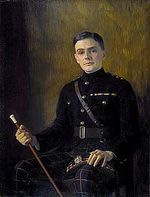
The subtitle of this entertaining biography describes CK Scott Moncrieff as a “Soldier, Spy and Translator”. But Jean Findlay, his great-great-niece, makes clear in Chasing Lost Time that the list of his accomplishments and activities did not end there. Scott Moncrieff was also a generous family man, a promiscuous homosexual and a converted Catholic. His colourful, 40-year life somehow seems to embody almost every literary cliché of his time, from poet of the trenches to jazz age expat. And yet his name never appeared on the front cover of any of the 20-odd books he published.

Born in 1889, Scott Moncrieff took part in the first world war and, like many sensitive young officers of his generation, he wrote poetry; unlike Siegfried Sassoon (whom he disliked) or Wilfred Owen (with whom he was in love), however, Scott Moncrieff’s poems were not bleak portrayals of futility and horror but rather jaunty little rhymes. In “Billeted” (published in 1917), for example, he wrote:

Mustn’t think we don’t mind when a chap gets laid out,
They’ve taken the best of us, never a doubt;
But with life pretty busy, and death rather near
We’ve no time for regret any more than for fear . . . 

more here.

The Grand and Terrible Polar Voyage of the USS Jeannette

17HARRIS-master675Robert R. Harris at The New York Times:

Ice. You remember ice. The stuff that forestalled so many polar explorers back before global warming and dreams of beachfront homes along the shores of Baffin Bay. But, as Hampton Sides reminds us in this first-rate polar history and adventure narrative, the notion of mildish weather in the Arctic did not begin with climate change. Just 150 years ago many believed that the Gulf Stream and its counterpart in the Pacific, the Kuroshio, reached all the way to the North Pole. Once a ship broke through a rim of ice circling the top of the globe, the thinking went, it would encounter an open polar sea and easy sailing to the pole.

Following the failed tries in the mid-19th century to discover a Northwest Passage and make progress north between Canada and Greenland, many experts, including August Petermann — the eminent German geographer known as the Sage of Gotha and, as Sides writes, “probably the world’s most vocal and indefatigable advocate of the Open Polar Sea theory” — argued for an attack on the pole from the other side of North America through the Bering Strait.

more here.

Neurons at work: Research provides a clearer view of ‘alternative splicing’

Peter Reuell in the Harvard Gazette:

ScreenHunter_746 Aug. 16 19.30Film editors play a critical role by helping shape raw footage into a narrative. Part of the challenge is that their work can have a profound impact on the finished product — with just a few cuts in the wrong places, comedy can become tragedy, or vice versa.

A similar process, “alternative splicing,” is at work inside the bodies of billions of creatures — including humans. Just as a film editor can change the story with a few cuts, alternative splicing allows cells to stitch genetic information into different formations, enabling a single gene to produce up to thousands of different proteins.

Harvard scientists say they’ve now been able to observe that process within the nervous system of a living creature.

Using genetic tools to implant genes that produce fluorescent proteins in the DNA of transparent C. elegans worms, John Calarco, a Bauer Fellow at the Faculty of Arts and Sciences Center for Systems Biology, and postdoctoral researcher Adam Norris were able to gather hard evidence that the alternative splicing process frequently works differently in different types of neurons.The study was described in a recent paper in Molecular Cell.

“Splicing is an essential process in gene regulation that happens in most eukaryotic cells, all the time,” Calarco said. “It’s a fundamental part of how eukaryotic genes produce proteins, but when it goes wrong, it can lead to any number of diseases, including in the nervous system.”

On the surface, Calarco said, the splicing process is relatively simple.

More here. [Thanks to Sughra Raza.]

The Power of the Powerless: Hong Kong’s Last Stand

Kong Tsung-gan in Hong Wrong:

ScreenHunter_745 Aug. 16 19.16In any freedom struggle, much of the struggle is between not only the oppressed and their oppressor but between the oppressed themselves, some of whom side with the oppressor, and within each of the oppressed, who in struggling against their oppressor also struggle against the voices within themselves that tell them to unconditionally obey authority or that there must be something wrong with them if they have such a grievance against ‘the way things are’, or that even if there is something wrong, it is utterly futile to fight it. The fault lines are many. Such is the case in the Hong Kong freedom struggle. This is the result of Hong Kong’s history as a colony and an immigrant society.

In the entirety of its modern history, from the start of British colonial rule in 1842 up to today (when Hong Kong is essentially under a new colonial rule of the Chinese Communist Party), Hong Kong has always been a colony and never been a democracy. Like the rest of China, it has no democratic tradition. Much of the current freedom struggle involves building the democratic culture Hong Kong has never had from the ground up. Creating culture, changing culture is by no means an overnight process. It takes time. The question is, Does Hong Kong have the time it takes? (More about that question in a moment.)

The process of democratic cultural change involves people transforming themselves from subjects ruled by others—which Hong Kong people have always been—to citizens who rule themselves. This means changing the way we see ourselves. It does not mean, in the first instance, the subjects ask the ruler for citizenship rights, for the ruler will not freely grant them. It means the subjects refuse to any longer act as subjects and instead act as citizens, demanding their full rights as citizens, demanding ownership of the society that is rightfully ours, taking our fate into our own hands.

More here.

Interview with Dr. James Flynn

Scott Jacobsen in In-Sight:
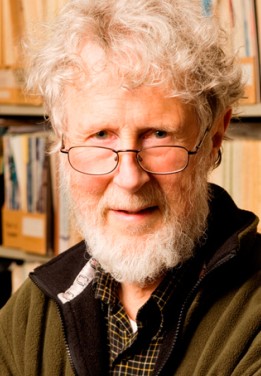
ScreenHunter_744 Aug. 16 18.07First part of a two-part comprehensive interview with Emeritus Professor of Political Studies and Psychology at the University of Otago in Dunedin, New Zealand on the main subjects of his research: intelligence and subsequent controversies; graduate students continuing the debate; Eysenck and Richard Lynn; incoming work for the year; environmental influence on intelligence; considerations on climate change; moral imperatives outsides of survival for solving climate change; family background and influence on development; influence of Catholicism; duties and responsibilities of being Emeritus Professor of Political Studies and Psychology at University of Otago, New Zealand; differences between intelligence and IQ; definitions of intelligence and IQ; the late Dr. Arthur Jensen and the 1969 journal article entitled How Much Can We Boost IQ and Scholastic Achievement?; Dr. Charles Murray and The Bell Curve.

1. Your most famous research area is intelligence. Of those studying intelligence, you are among those on the top of the list. Many researchers worked in this area and caused many, many controversies, but more importantly sparked debate.

Of the old timers, I guess there’s just Richard Lynn and me around. I mean among those people who really duelled over race and IQ.

Jensen died of a very bad case of Parkinson’s or something like that. Very sad really, I wrote an obituary for him that was published in Intelligence. Rushton died of something different, I’m not sure what his complaint was. Eysenck is dead.

2. You must have some ex-graduate students around that continue the debate.

Yes, there are people who will, though remember, it is a very politically sensitive topic. Jensen’s fingers were burned, though he always showed great courage. Rushton, I think, sort of enjoyed controversy, so I do not know how much his fingers were burned over the outrage his views caused. Eysenck was such a great man and had so many interests, that the race issue was not really too much associated with him. Richard Lynn, though he has made his views on race known, has been more interested in global matters.

More here. Part two of the interview can be seen here.

Saturday Poem

What The Old Woman Said

I will tell you this. There was a garden by the pump. Fallow land given me.
My father built flowerbeds. Offshoots of paths. Geometric patterns.
Cuttings. Bulbs from my mother. The texture of earth.
Stone. The smell of water. I could grow anything.

I will tell you this. There was a pond. Wrinkles of mud. Pups that were drowned there.
Dragged to the bank. Sacksful slit open. Way beyond saving.
Names that I gave them. Returned to the water. Each small splash.
Spirals expanding. My own face rippling.

I will tell you this. There was a heron. Constant. Returning.
Stilt-leg. Growing above water. Curtain of willows.
Everything still. A crowning of feathers.
Inflections of music. Nothing was moving.

I will tell you this. There were meadows. Light. Nectar from clover.
More flowers than I could name. Armfuls I carried.
Stems that I split. Smelling of summer.
Chains on my neck. Ankles. The bones of my wrists. Knowing nothing.

I will tell you this. There was a boy. Eyes like the sky.
Eyes like my father's. Children imagined. Rooms that were borrowed.
Rooms that were painted. Stories invented.
Histories. Futures. We knew everything.

I will tell you this. There was a man. Veins under skin.
Bones. Barely there. His stuttered breathing.
Green light on a screen. Intermittent beeping.
False light. False music. Someone was dying.

I will tell you this. I had seen his face on the shroud.
Running and bleeding. Wounds on his hands.
Pictures on glass. Coloured and leaded.
Faces on statues. A cross through his heart. Light always fading.

I will tell you this. There was a room. White. A white plate on the table.
A man at the table. Notes in his voice. A tune that I knew.
Beauty in the movements of his face. His arms. Frisson of wings.
Touch. Touch me. But he already had. I had forgotten everything.

I will tell you this. Some days are unbearable. Horizontal planes.
Moment to moment. Each long tick. I have been lonely.
Last night. A dream of a heron. The span of his wings.
Sounding through air. Listen. Listen. I am disappearing.
.

by Eileen Sheehan
from Song of the Midnight Fox
Doghouse Books, Tralee, 2004,

Karachi Burns Road: The Holy Grail for foodies

Sibtain Naqvi in The Express Tribune:

20813-dsc_-1391591964-495-640x480It is serious eating here, with no fancy presentations or garnishes, just honest, good food that lures the eater into a bacchanal of gluttony. My first experience was no light hearted affair but a complete immersion in the victuals on offer.

While perusing the various places, even the most casual observer will notice the predominance of restaurants that hark back to the city of Delhi. You can hear the echoes of Chandi Chawk and Nizammuddin and, in fact, I found more than a passing resemblance between a Nihari place here and the famous Karim restaurant in Delhi.

According to senior denizens of the area, many people who migrated from Delhi to Karachi preferred to live on Burns Road.

“In the 1950s, the newly migrated people were looking for dishes that were famous in Delhi and the shopkeepers of that time not only adapted the names and reproduced recipes of Delhi’s traditional fare but also decided to include the name Delhi while naming their shops to conjure an effect,” said Abbas Raza, an elderly resident of Burns Road.

Before partition, Rizwan’s grandfather was running a sweets shop near Jama Masjid Delhi and today he owns an establishment that is now known as Delhi Darbar Sweets.

More here.

Friday, August 15, 2014

The Most Wanted Man in the World

James Bamford in Wired:

02_Cnt1_Fr61The message arrives on my “clean machine,” a MacBook Air loaded only with a sophisticated encryption package. “Change in plans,” my contact says. “Be in the lobby of the Hotel ______ by 1 pm. Bring a book and wait for ES to find you.” ES is Edward Snowden, the most wanted man in the world. For almost nine months, I have been trying to set up an interview with him—traveling to Berlin, Rio de Janeiro twice, and New York multiple times to talk with the handful of his confidants who can arrange a meeting. Among other things, I want to answer a burning question: What drove Snowden to leak hundreds of thousands of top-secret documents, revelations that have laid bare the vast scope of the government’s domestic surveillance programs? In May I received an email from his lawyer, ACLU attorney Ben Wizner, confirming that Snowden would meet me in Moscow and let me hang out and chat with him for what turned out to be three solid days over several weeks. It is the most time that any journalist has been allowed to spend with him since he arrived in Russia in June 2013. But the finer details of the rendezvous remain shrouded in mystery. I landed in Moscow without knowing precisely where or when Snowden and I would actually meet. Now, at last, the details are set.

More here.

Responsibility and Punishment

Katrina-461-682x1024

Richard Marshall interviews Katrina Sifferd in 3:AM Magazine [Photo: Marcela Rafea Photography]:

3:AM: You’re interested in criminal responsibility and punishment. One thing you’ve defended is common-sense or folk psychology when used in law. So you say the law should take the state of mind ‘intent to kill’ or ‘knowingly’ seriously. Before saying why, can you outline the main reasons some say that this folk psychology is all wrong and shouldn’t be used in law?

KS: When folk psychology was under attack twenty-some years ago by eliminativists, the practice of holding persons responsible was threatened. If Paul Churchland is correct and folk psychological terms are radically false, then when judges and juries are trying to determine if a criminal defendant intended to kill someone, or knew that their act was likely to result in a death, they are looking for nothing real in the world, and criminal verdicts are nothing but post hoc just-so stories. One goal of my PhD thesis was to show how radical of a claim ontological eliminativism is from the perspective of the criminal law: if folk psychology is false, criminal verdicts, which of course result in very serious consequences for defendants, cannot be justified.

I think most of the elminativists, and behaviorists such as Gilbert Ryle, were motivated by the idea that folk psychology isn’t “scientific” enough. They were dubious that we can use our perceptions of people’s outward behavior to postulate true claims about what is going on in their heads. But this suspicion seems unjustified: a quick examination reveals that folk concepts tend to be roughly accurate, not radically false. Folk physics concepts, for example, appear to have captured true distinctions in the physical properties of objects. Solidity doesn’t really mean “no spaces between”, but folk concepts of gas, liquid, and solids do capture real differences between these states of things in the world, and such concepts have predictive power (liquid undergoes displacement whereas solids do not). So it seems a safe basic supposition that folk psychological concepts are likely to capture real categorical differences in the brain between states of desire and belief, or happy and sad, for example, especially as they seem to be so useful to understanding and predicting behavior.

Nobody really takes the elminativist position seriously anymore, but worrying about eliminativism is an effective way to begin exploring how true folk psychology has to be for our system of criminal responsibility to be correct, especially given data from neuroscience, and how we might effectively translate neuroscientific data into the folk psychological terms the criminal justice system uses.

More here.

Can New York City Survive the Sea?

1404086440steinberglower_manhattan_blackoutreeve_joliffe666Ted Steinberg at Dissent:

New York has a long history of thumbing its nose at the sea. The Dutch colonists took some of the initial steps to wade out into the water—building a pier, for example—but it was the British who followed them who transformed underwater land into a commodity. This move formed the basis for the physical expansion of the island of Manhattan. Back in the 1600s, the lower part of the island ended at what is now Pearl Street, a couple of blocks inland from where it ends today. But grants to underwater land, made by the Crown and then the state of New York, expanded the city’s underwater real estate. By 2010 such expansion had added 2,286 acres—the equivalent of more than 1,700 football fields of land—to the island.

The process of encroaching on the sea, which began at the tip of Manhattan, was then replicated in other places around New York Harbor, including Brooklyn and Queens and, across the Hudson River, in Jersey City and Hoboken. Indeed, before massive landfilling operations in the 1800s, Hoboken was an island community, and Jersey City little more than a spit of land connected to the mainland at low tide by a soggy marsh.

As New York rose to become the nation’s largest city—a position it has retained for some 200 years—it continued to grow at the expense of its surrounding waters. The rise of the city’s red-hot real estate market in the latter part of the 1800s, meanwhile, helped to underwrite the idea of New York City as a limitless proposition.

more here.

A new biography retraces Leonard Cohen’s longings for the flesh and spirit

Cover00Rhett Miller at Bookforum:

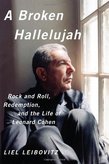
“So what is the prophet Cohen telling us? And why do we listen so intently?” Liel Leibovitz asks at the outset of A Broken Hallelujah, his moving portrait of the songwriter and poet Leonard Cohen. The author pursues the answers to these questions with the diligence and reverence of a religious scholar. Thank God. But Leibovitz recognizes that Cohen deserves more than mere rock biography, and so he structures A Broken Hallelujah around the premise that his subject is, indeed, a modern-day prophet.

Leibovitz’s account abounds with proof of this assertion, even as it charts the many other personae that Cohen has assumed through his long life and distinguished career. Still, to grasp the man’s peculiar sense of spiritual mission, one really need look no further than the greatest hymn of the rock ’n’ roll era, Cohen’s “Hallelujah”; in its closing verse, the singer proclaims, “I’ve told the truth, I didn’t come to fool you / And even though it all went wrong / I’ll stand before the Lord of Song / With nothing on my tongue but Hallelujah.”

Leonard Cohen grew up in a wealthy Jewish family in Montreal. When he was nine years old, his father, Nathan Cohen, died from lingering injuries sustained in World War I. Young Leonard was left with his sister and mother, as well as an extended family that included his maternal grandfather, a fiery rabbi named Solomon Klinitsky-Klein, “a celebrated scholar who was known as Sar haDikdook, or the Prince of Grammarians.”

more here.

Conversations with the Dead

Manguel_reading_jpg_250x1142_q85Alberto Manguel at the New York Review of Books:

Only a few centuries after the invention of writing, some six thousand years ago, in a forgotten corner of Mesopotamia, the few who possessed the ability to decipher written words were known as scribes, not as readers. Perhaps the reason for this was to lend less emphasis to the greatest of their gifts: having access to the archives of human memory and rescuing from the past the voice of our experience. Since those distant beginnings, the power of readers has produced in their societies all manner of fears: for having the craft of bringing back to life a message from the past, for creating secret spaces which no one else can enter while the reading takes place, for being able to redefine the universe and rebel against unfairness, all by means of a certain page. Of these miracles we are capable, we the readers, and these may perhaps help rescue us from the abjection and stupidity to which we seem so often condemned.

And yet, banality is tempting. To dissuade us from reading, we invent strategies of distraction that transform us into bulimic consumers for whom novelty and not memory is essential. We reward triviality and monetary ambition while stripping the intellectual act of its prestige, we replace ethical and aesthetic notions with purely financial values and we propose entertainments that offer immediate gratification and the illusion of universal chatting instead of the pleasurable challenge and amiable slow pace of reading.

more here.

John Oliver won’t be your therapist: How he torpedoed the reassuring tropes of fake news

Steve Almond in Salon:

ScreenHunter_743 Aug. 15 15.33It’s been something of a shock — and a joyous one — to see how quickly John Oliver’s HBO program, “Last Week Tonight,” has gone from an awkward up-and-comer to an outright hit.

Not only is the program wildly popular with critics in the big markets, it’s being hailed in plenty of smaller regional venues. It’s pretty safe to say that landing an extended rave in the Auburn Citizen — circulation 10,000 — means you’ve broken out of the New York City media bubble.

The significance of the show’s surging popularity goes beyond its various laudable, and widely lauded, elements (the more diverse writer’s room, the commercial-free format, and so on). What the success of “Last Week Tonight” suggests, on a deeper level, is that American television viewers may finally be tired of the frantic bombast generated by the Stimulation Media.

What’s more, after years of making do with the therapeutic jibes of Jon Stewart and Stephen Colbert, they are finding in Oliver a figure more interested in making sense of the world than in making them laugh.

This is not to say that Oliver isn’t funny. He and his writers and guests have come up with some uproarious bits, most recently an infomercial supplied by comedian Sarah Silverman urgingAmericans in dire financial straits to do anything other than borrow money from a predatory payday loan firm. “People will pay you to pee on them,” she confides. “That’s true. Doodies too! Doodies are more. Like double.” But a bit like this is not the point of the show. It’s merely the scatological kicker to a much larger story, one about the rapacity of an industry dedicated to exploiting our most economically vulnerable citizens.

Oliver spent more than 15 minutes detailing what payday loans are, how the industry targets desperate consumers with misleading ads, conceals its draconian fees and dodges regulation. It was a tour de force of explanatory journalism.

More here.

Friday Poem

Fashion Craze

We die more and more beautifully
in Gianni Versace’s collection.
Elegance is aesthetics’ nestling.

We bustle about the churches of fashion
believing that the orange will suit us.

You kiss me in a changing room
Look, it’s just Rome’s fall in green.

We solve the puzzles of our archetypes.
Translate berets into foreign languages.

Tonight we are invited
to the opening of the Last Judgment.

We enter without tickets.
Today is dead admission.

by Ewa Lipska
from Sklepy Zoologyczne
publisher: Wydawnictwo Literackie, 2001
translation: Robin Davidson & Ewa Elżbieta Nowakowska

Read more »