Go here to browse through the 85 nominees for this year's science prize and vote. Voting ends on Monday, September 1, at 11:59 pm NYC time.
[New posts below.]

Go here to browse through the 85 nominees for this year's science prize and vote. Voting ends on Monday, September 1, at 11:59 pm NYC time.
[New posts below.]
Frances Wilson in The Telegraph:
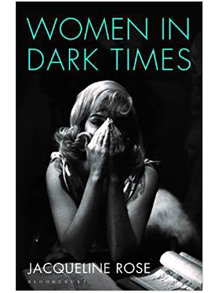
Rosa Luxemburg, the tiny Polish Jew who walked with a limp, is the glue that binds the book together: “I want to affect people like a clap of thunder,” she writes to her lover, “to inflame their minds not by speechifying but with the breadth of my vision, the strength of my conviction, and the power of my expression.” Luxemburg, says Rose, still has a lot to teach us, but for many readers the most compelling figure will be Marilyn Monroe. Why are women so drawn to her story? Rose does not argue that Monroe was a feminist, but that she had “something urgent to say to feminism today”. Written across her face and body were the desires of America; Monroe represented capitalism to itself. “I don’t look on myself as a commodity,” she said in her last interview, “but I’m sure a lot of people have.” Her beauty was the foil of her country’s moral decay, and she knew it.
More here.
Tara Parker-Pope in The New York Times:
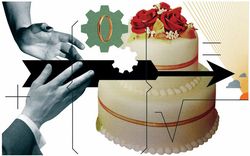
The research stems from a study that began with 1,294 young adults ages 18 to 34 recruited to the Relationship Development Study in 2007 and 2008. Over the next five years, 418 of the individuals in the study married, offering the researchers a glimpse into the lives and decision-making of couples before and after marriage. The researchers collected data on prior romantic experiences, whether the relationship started by “hooking up” in a casual relationship, whether the couple had a big or small wedding, and what the overall quality of the marriage was. Notably, they found that the decisions and experiences with others before marriage had a lasting effect on the relationship.
More here.
Burcu, Yonka and Defne
I walk down the Dordtselaan almost every day
to buy bread and cigarettes at Albert Heijn’s,
and malodorous French cheese, dark
Belgian beers and cold pork products.
Once, Burcu was the girl at the checkout,
before her Yonca, and Defne before her.
Each with shiny a name-tag on a lapel.
The only words I say are “Dank je wel”.
Today, Burcu saw my many packs of ham,
looked at me, stammered, was unsure, then
deciding finally that I must be Turkish,
“I’m sorry,” she said, “this is all pork.”
“I know, as we can’t buy it back home
I often yearn for it, that’s why” I said.
“Who is ‘we’?” I thought to myself
as I slowly made my way to the flat.
Would the thought have crossed her mind,
looking with tired eyes as I walked away:
“He’s not Dutch, I can tell, that’s easy.
But what is he? That’s a harder code to crack.”
by Roni Margulies
Browse the nominees in the list below and then go to the bottom of the post to vote.
Alphabetical list of nominated blog names followed by the blog post title:
(Please report any problems with links in the comments section below.)
For prize details, click here.
If you are new to 3 Quarks Daily, we welcome you and invite you to look around the site after you vote. Learn more about who we are and what we do here, and do check out the full site here. Bookmark us and come back regularly, or sign up for the RSS feed. If you have a blog or website, and like what you see here, we would very much appreciate being mentioned there or added to your blogroll. Please don't forget!
Voting ends on September 1st at 11:59 pm NYC time.
Results of the voting round (the top twenty most-voted-for posts) will be posted on the main page on September 3rd. The finalists will be announced on September 5th and winners of the contest will be announced on September 22nd, 2014.
PLEASE BE AWARE: We have multiple ways of detecting fraud such as multiple votes being cast by the same person. We will disqualify anyone attempting to cheat.
Now click here to vote.
Thank you.
by Brooks Riley
Richard Marshall interviews Rebecca Gordon in 3:AM Magazine:
3:AM: Are you approaching this via virtue ethics, four cardinal virtues and Alisdair MacIntyre and what is the best way to understand what torture is?
RG: I’m going to reverse the order of these questions, because I think that once we understand what institutionalized state torture is, it becomes clearer why I think MacIntyre’s contemporary virtue ethics provide a useful way of understanding torture’s moral implications.
The torture that I am concerned with is institutionalized state torture – the kind of organized, intentional program carried on by governments. It’s not Jack Bauer saving Los Angeles on24. It’s not some brave person preventing a ticking time-bomb from going off by torturing the one person who can stop it. We must stop thinking of torture as a series of isolated actions taken by heroic individuals in moments of extremity, and begin instead to understand it as a socially embedded practice. A study of past and present torture regimes suggests that institutionalized state torture has its own histories, its own traditions, its own rituals of initiation. It encourages, both in its individual practitioners and in the society that harbors it, a particular set of moral habits, call them virtues or vices as you prefer.
Here’s my definition of institutionalize state torture: It is the intentional infliction of severe mental or physical suffering by an official or agent of a political entity, which results in dismantling the victim’s sensory, psychological, and social worlds, with the purpose of establishing or maintaining that entity’s power. This definition can be expanded to reveal its legal, phenomenological, and political dimensions.
The language about “intentional infliction of severe mental or physical suffering by an agent of a political entity” mirrors the definition found in the UN Convention against Torture and Other Cruel, Inhumane, or Degrading Treatment, to which the U.S. is a signatory. A phenomenological definition describes the ways in which torture reduces and distorts its targets’ orientation in time and space, its effects on language, and its destruction persons’ social connections. The “political” portion deals with the purposes of torture, which when it is institutionalized by a state, has much less to do with “intelligence gathering” than it does with political and social control.
So what does this understanding of torture have to do with virtue ethics and Alasdair MacIntyre? I would argue that when we understand torture as an ongoing practice, we can begin to see how it affects moral habits.
More here.
Matthew Snyder in the LA Review of Books:
A biologist at Duke University, Stuart Pimm, recently published a research article in the journalScience, which claims — that in the past — before humans evolved, only one species went extinct each year per every 10 million years. However, after the emergence of humans, that extinction rate has exploded at a rate between 100 and 1,000 species each year. To make matters worse, by 2050, three things are quite likely to occur: 1) the North Pole will have melted to such an unreal extent that — by summer — passenger ships will be able to cross through the North Pole with ease, nudging small, dainty ice chunks past the petro-churn of their port and starboard; 2) the largest living thing on our planet with an ecology stretching for 2,600 kilometers, The Great Barrier Reef, will go extinct. As the Earth warms, its coral will increasingly bleach into a white death by the parallel acidic warming of the ocean temperatures; 3) just as well, according to the United Nations, the Earth’s oceans might be entirely absent of fish — the kind of fish people like to eat in their sushi restaurants. Beyond these dire benchmarks, by 2100, the Earth’s temperatures will rise from 2.4 to 6.4 Celsius. If global warming ramps up to its ultimate extreme, centuries into the future, with both the North and South Poles having melted completely, important swaths of world’s continents would be engulfed by water. In a elaborate, but sophisticated work of cartography by Martin Vargic, an amateur graphic designer from Slovakia, he imagines such a future where sea levels rise 260 as a result of the caps melting: America’s major cities would be underwater: Miami, New Orleans, New York and Washington D.C. From the farther South and West of the U.S., in Latin America, the Amazon would bursts its banks, becoming a sea reaching into vast expanses of Brazil, while a sizable component of Australia’s continent would be swamped by the Murray Gulf and the Artesian Sea. All of this would make Kevin Costner’s fictional Waterworld(1995) and Radiohead’s animated video for “Pyramid Song” hapless documentaries streamed to us from this forlorn future. But this new world map would match the depressing baritone of Paolo Bacigalupi’s The Windup Girl — a masterful, SF corollary to Dicken’s Bleak House, which stratocasts us into such a future. This paradigm-shifting novel details a world where global warming in the 23rd century has left Earth’s coastlines underwater and new eco-plagues make any hour of life a precarious one; where calorie-companies control global food production via private armies and bioterrorist acts on third-world ecologies (or just the usual buying off of their politicians and the wealthy); and where sophisticated levees and pumps keep Bangkok from going underwater.
Unlike the drowned world of the future-possible described in The Windup Girl, Jacques Lob and Jean-Marc Rochette’s French comic, Le Transperceneige (1982),imagines a dystopian world that’s frozen over. The comic book cleverly blends the SF subgenres of the post-apocalypse, where life no longer exists outside the train, to the dystopia that exists inside the train’s many caste-cars, where minus the awareness of its slowing engine, the people acknowledge that the train is bleak but altogether sustainable. Therein, Le Transperceneige, written by Lob and illustrated by Rochette, details a world where an unnamed ecological catastrophe has frozen the Earth solid of any living beings other than the formidable Snowpiercer — a train whose engine of perpetual motion keeps passengers alive, and in doing so, no longer stops at stations for the lonely, frozen, and forgotten. Everything outside is dead — encased in a white carapace of ice, storms, and snow.
More here.
Ray Monk in Prospect:
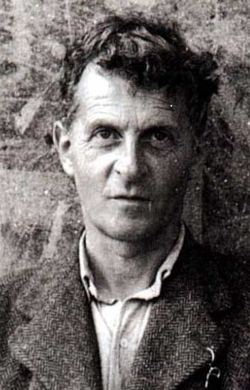
And yet in a sense Wittgenstein’s thought has made very little impression on the intellectual life of this century. As he himself realised, his style of thinking is at odds with the style that dominates our present era. His work is opposed, as he once put it, to “the spirit which informs the vast stream of European and American civilisation in which all of us stand.” Nearly 50 years after his death, we can see, more clearly than ever, that the feeling that he was swimming against the tide was justified. If we wanted a label to describe this tide, we might call it “scientism,” the view that every intelligible question has either a scientific solution or no solution at all. It is against this view that Wittgenstein set his face.
Scientism takes many forms. In the humanities, it takes the form of pretending that philosophy, literature, history, music and art can be studied as if they were sciences, with “researchers” compelled to spell out their “methodologies”—a pretence which has led to huge quantities of bad academic writing, characterised by bogus theorising, spurious specialisation and the development of pseudo-technical vocabularies. Wittgenstein would have looked upon these developments and wept.
More here.
Brian Leiter in The Huffington Post:
Late Friday afternoon (August 22), the University of Illinois broke its three-week long silence on the controversy regarding the Chancellor's revocation of a tenured offer to Steven Salaita, who had accepted a faculty position in the American Indian Studies Program at the flagship campus at Urbana-Champaign. Chancellor Phyllis Wise and Board of Trustees Chairman Christopher Kennedy both issued statements explaining the revocation, but in terms far more alarming than the original decision itself. It is not an exaggeration to say that the Chancellor and the Board of Trustees have now declared that the First Amendment does not apply to any tenured faculty at the University of Illinois.
A bit of background to Friday's bombshell statements. Last October, Professor Salaita, then teaching at Virginia Tech, accepted a tenured offer from the Urbana-Champaign campus. He went through the regular appointments process at the University of Illinois, and received approval by the relevant departments and deans after a review of his scholarship and teaching. The offer, which he accepted, was conditional on approval by the Board of Trustees. Such approval clauses are typical in all teaching contracts and had, previously, been pro forma at Illinois, as they are at all serious universities: it is not the job of the Board of Trustees of a research institution to second-guess the judgment of academics and scholars. Well before the Board took the matter up, even University officials were describing Salaita as a faculty member, and he moved to Illinois and was scheduled to teach two classes this fall.
Salaita also has a Twitter account. “Tweets” are limited to 140 characters, so the medium is conducive primarily to spontaneous and superficial commentary. As a Palestinian-American and scholar of colonialism, Salaita tweeted extensively about the Israeli attack on Gaza. Contrary to the initial misrepresentations put into circulation by far right websites, none of the tweets were either anti-semitic or incitements to violence. Some were vulgar, some juvenile, some insulting, some banal. The First Amendment unequivocally protects Salaita's right to express every one of those opinions on a matter of public concern, and to do so, if he wants, with vulgarity and insults. As a matter of American constitutional law, this is not a close case.
More here.
Amar Sindhu in Herald:

Amar Sindhu: Does creativity need ideology?
Fahmida Riaz: Once creativity expands beyond the very personal, almost biological paradigms, it seeks some ground to stand upon. Creativity is very often rooted in some idea. Our folk songs and stories do not seem to be ideological but they seem to have ideas, when looked at closely. The question of ideology is raised mostly in the context of progressive literature that sees individuals in a web of external circumstances and class conflicts. Literary creativity does not have to emanate from this consciousness, nor does this consciousness hamper creativity. In the 20th century, great writers such as Pablo Neruda, Paul Nizan, Nazim Hikmet, Faiz Ahmed Faiz and Gabriel García Márquez declared themselves to be Marxists. An artist like Pablo Picasso, who revolutionised the world of painting, was a member of the Communist party of France. On the other hand, two literary giants before these writers, Leo Tolstoy and Dostoyevsky, saw the individual and the society in the context of Christian teachings and sought the answers of all human problems in Christ. You may notice, though, that too was a kind of ideology.
More here.
Mary Beth McCauley in The Christian Science Monitor:

Krista Tippett, host of the award-winning public radio show and podcast “On Being,” which takes up questions of religion and meaning, is alarmed. This, she says, is “the first generation of humans in any culture who didn’t inherit a religious identity.” But even while parents who have distanced themselves from their faith traditions are hesitant to pass that religion on to their children, science seems to take up the cause, as it unearths a host of practical benefits of religious practice. Everything from the physical effects of a heightened immune response to social benefits like closer interpersonal ties and better behavior in teens, is linked to the state of being religious. Is there a way parents can overcome their personal ambivalence about religion in order for their children to have its benefits?
More here.
October, Month Without Gods
The Japanese think this is the month-without-gods.
They celebrate it this way. They don’t alliterate October
with gold falling from the fragile trees,
or with revolutions that changed history.
October, like a truce. Like an absence of everything
that exceeds limits. May it be for us
liberation. Because now they don’t exhibit
the relentless naked gods of summer,
the too many gods, and so much remains
for the child of winter to be born,
and our sight doesn’t reach any further, from this
month of distances, month of far aways,
imperfect, attained, fortuitous. If only it would be
like this for us. Without the eight million
gods that hide in the city or in the forest,
the scales coincide with our statures.
Let us be carried away by our premonitions.
Let us write things with small letters.
Let us celebrate October for its absence of gods.
Let us enjoy its name because it is only a number
in a truncated series. And forgotten. It is October.
We have thirty days all to ourselves.
by Juan Antonio González-Iglesias
from Circumference Magazine
translated from Spanish by Curtis Bauer
Sam Leith in The Guardian:
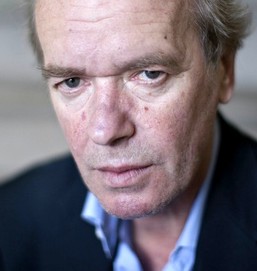
This is Amis in combat stance, the position he has occupied for as long as most of us can remember. There is no living British writer who garners as much attention as Amis; so much of it hostile; and so much of that hostility, circularly, arising from the attention itself. He pushes back.
With a new novel coming – this month's heavily embargoed Auschwitz book The Zone of Interest – the circus starts up again. Amis occupies a really peculiar position in our national life. He is the object of envy, contempt, anger, disapproval, theatrical expressions of weariness – but also of fascination. Has there in living memory been a writer whom we (by which I mean the papers, mostly) so assiduously seek out for comment – we task him to review tennis, terrorism, pornography, the state of the nation – and whom we are then so keen to denounce as worthless? In recent years his public interventions on everything from Islamist terror to population demographics have caused mini shitstorms; and critics seem to take a particular, giant-killing glee in slamming his fiction. Setting out to write a retrospective essay on his work and reputation, the implied title you find yourself reaching for is “in defence of … “
It's as if, and in answer to some inchoate public need, we demand of Amis that he say things in public so we can all agree on what an ass he is. He has spoken in the past – surly/amused – of an “eisteddfod of hostility”, as if his detractors were the excitable participants in a provincial arts festival.
Why the eisteddfod? Why him? I think it has to do with the way we have positioned him, and – to an extent – with the way he has positioned himself.
More here.
Tom Holland in The Spectator:

Bardaisan himself was a one-man monument to Mesopotamian multiculturalism. A Jewish convert to Christianity, a Platonist fascinated by the wisdom of the Brahmins, an inhabitant of the border zone between the Roman East and the Iranian empire of the Parthians, he stood at the crossroads where antiquity’s most potent traditions met and intermingled. Just how far the process of blending rival faiths could be taken was best illustrated by a man born in Mesopotamia a few years before Bardaisan’s death: a soi-disant prophet called Mani. Brought up within a Christian sect that practised circumcision, held the Holy Spirit to be female, and prayed in the direction of Jerusalem, he fused elements of Christianity with Jewish and Zoroastrian teachings, while also claiming, just for good measure, to be the heir of the Buddha. Although Mani himself would end up executed by a Persian king, his followers were nothing daunted. Cells of Manichaeans were soon to be found from China to Carthage. Syncretic as their religion was, and global in its ambitions, Manichaeism was a classic Mesopotamian export of the age.
More here.
Brian Merchant in Motherboard:
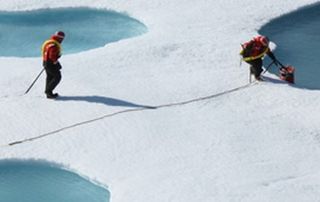
That paradox is central to understanding the concept of climate engineering, which scares just about everybody who actually works on it. But so does the prospect that humanity might not reduce its carbon emissions in time to stave off catastrophic global warming.
“We have to decide what it would mean if humans were to try to take control of the world's climate,” said Dr. Mark Lawrence, the scientific director of the Institute for Advanced Sustainability Studies, who delivered the opening remarks.
As such, the first two days of the Climate Engineering Conference 2014 offers what we could plausibly consider an accurate snapshot of the current state of geoeningeering: Interested scientists are calling for more research and proposing new ideas for climate control; public institutions and politicians are weary of getting too involved; humanitarian groups are worried about the ramifications; and legal scholars are already declaring the most ambitious geoengineering proposals “ungovernable.”
And a few staunch advocates want to put the pedal down, hard.
Regardless, more parties than ever are taking seriously the notion that geoengineering may become a reality.
More here.