On the 75th anniversary of The Wizard of Oz, remembering that there’s no place like home – and nothing like leaving it

Morgan Meis in The Smart Set:
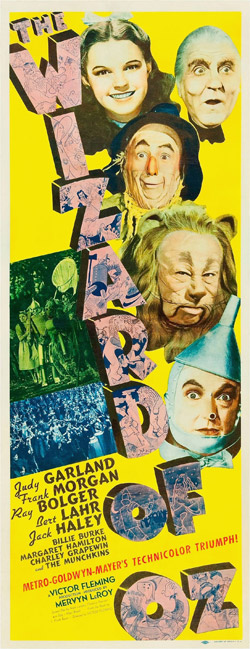
IC_MEIS_WIZARD_AP_001Salman Rushdie wrote an amusing little book in 1992. The title of the book is The Wizard of Oz. It’s about the famous movie with Judy Garland’s Dorothy and Toto and the Wicked Witches, East and West. The movie The Wizard of Oz is celebrating its 75-year anniversary this month. For three-quarters of a century, this unusual movie has been infecting the brains of young people all over the world. Rushdie was one of them. At age ten, Rushdie wrote his first story. He called it “Over the Rainbow.” Strange to think that there is a direct line from The Wizard of Oz to Rushdie’s now-classic tale of the partition of India, Midnight’s Children (1980).

Rushdie is an unabashed lover of the film. Call the film, he writes, “imaginative truth. Call it (reach for your revolvers now) art.” Rushdie also has strong opinions about what this artful film is and is not about. It is not about going home. Yes, Dorothy frequently talks about going home. After her house falls on the Wicked Witch of the East, the munchkins and the Good Witch Glinda tell her to go home immediately. She isn’t safe in Oz, they tell her, not with the Wicked Witch of the West still lurking about. So Dorothy follows the Yellow Brick Road in order to find the Wizard, who will help her return to her home in Kansas. At the end of the movie, she clicks her ruby slippers together and repeats, “There’s no place like home, there’s no place like home.” In a movie that Rushdie says is not about going home, there is quite a lot of home-talk.

But that’s not, says Rushdie, the real story. “Anybody,” he writes, “who has swallowed the screenwriters’ notion that this is a film about the superiority of ‘home’ over ‘away’, that the ‘moral’ of The Wizard of Oz is as sickly-sweet as an embroidered sampler — East, West, home’s best — would do well to listen to the yearning in Judy Garland’s voice, as her face tilts up towards the skies.”

Point taken. Garland’s Dorothy does yearn and tilt as she sings her famous song.

More here.
Tuesday, August 12, 2014

Maryam Mirzakhani wins Fields Medal

Bjorn Carey at the Stanford website:

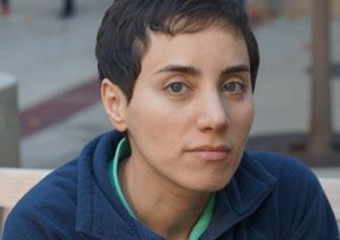
ScreenHunter_741 Aug. 13 11.56Maryam Mirzakhani, a professor of mathematics at Stanford, has been awarded the 2014 Fields Medal, the most prestigious honor in mathematics. Mirzakhani is the first woman to win the prize, widely regarded as the “Nobel Prize of mathematics,” since it was established in 1936.

“This is a great honor. I will be happy if it encourages young female scientists and mathematicians,” Mirzakhani said. “I am sure there will be many more women winning this kind of award in coming years.”

Officially known as the International Medal for Outstanding Discoveries in Mathematics, the Fields Medal will be presented by the International Mathematical Union on Aug. 13 at the International Congress of Mathematicians, held this year in Seoul, South Korea. Mirzakhani is the first Stanford recipient to win this honor since Paul Cohen in 1966.

The award recognizes Mirzakhani's sophisticated and highly original contributions to the fields of geometry and dynamical systems, particularly in understanding the symmetry of curved surfaces, such as spheres, the surfaces of doughnuts and of hyperbolic objects. Although her work is considered “pure mathematics” and is mostly theoretical, it has implications for physics and quantum field theory.

More here.

It will be sunny one day

From Letters of Note:

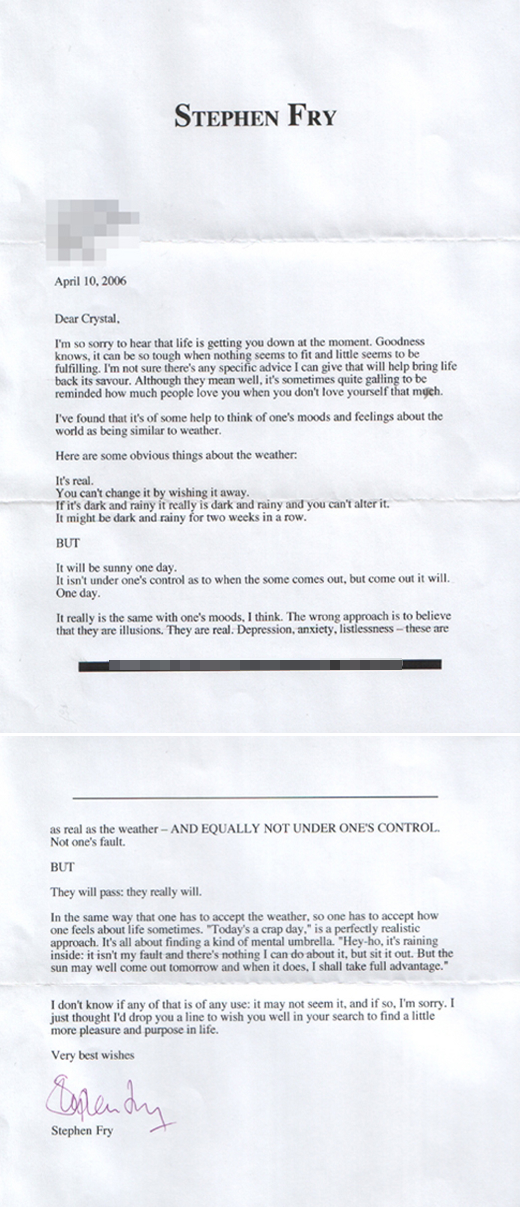
Early-2006, during a bout of depression, a young lady by the name of Crystal Nunn wrote a desperate letter to Stephen Fry. Says Crystal:

“I had no idea who to turn to. But I really needed someone to turn to and to ease the pain. So I wrote to Stephen Fry because he is my hero, and he has been through this himself. And low and behold, he replied to my letter, and I will love him eternally for this.”

Mr. Fry's wonderful reply can be seen below.

6918814422_f3942a23d8_o

More here.

The Glory of Math Is to Matter

Amir Alexander in Scientific American:

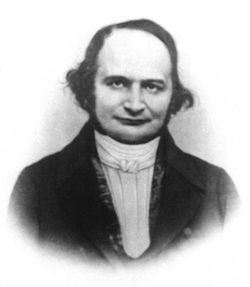
Carl_JacobiIn 1842, when the famed German mathematician Carl Gustav Jacobi was invited to speak to a scientific meeting in Manchester, he had a surprise in store for his English hosts. “It is the glory of science to be of no use,” he announced to the startled gathering of physical scientists. The true aim of science is “the honor of the human spirit,” and whether it turns out to be of any practical use matters not at all.

Jacobi made few converts that day. His declaration, he reported to his brother with satisfaction, “caused a vehement shaking of heads,” which was only to be expected from a crowd of men who were devoting their careers to improving industrial processes in the manufacturing capital of Europe. But things were different among Jacobi’s mathematical colleagues, who increasingly came to share his view that mathematical truths stood for themselves, and needed no further justification.

To be sure, no one (including Jacobi) denies that some fields of mathematics have proven extremely useful, and had made modern technology possible. But other fields, including some of the greatest mathematical discoveries ever, seem to serve no practical purpose whatsoever.

It was so from the beginning. The ancient science of geometry, as its name suggests, had its origins in the practical art of land measurement, but by the time Euclid codified it around 300 BCE it had strayed far from its roots.

More here.

Is Pakistan’s Democracy Under Threat?

Ahmed Humayun in Foreign Policy:

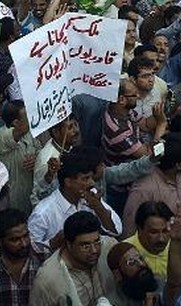
ScreenHunter_740 Aug. 12 17.33Although he won a big mandate last year at Pakistan's polls, Nawaz Sharif, the prime minister of Pakistan and head of the ruling party, the Pakistan Muslim league (PML-N), is under siege at home. The country's vociferous media is hyping up the clash between Sharif and Imran Khan, Sharif's foremost political challenger and the head of the Pakistan Tehrik-e-Insaf (PTI), who is organizing a “long march” on Islamabad on Pakistan's upcoming Independence Day on August 14. Meanwhile, Tahirul Qadri, the influential Pakistani-Canadian preacher, has announced a competing “Revolution” march on the same day to overthrow the political system. Widespread discontent at Sharif's performance in office to date and the determination of the security establishment to avoid ceding primacy to civilian rule has added to the sense of a looming political crisis.

Sharif made extravagant promises during the 2013 electoral campaign that have yet to be fulfilled. For example, the delivery of basic services remains dismal across the board — in particular, the severe energyshortage shows no sign of resolution. Another problem is that political power is excessively centralized. Sharif and his closest associates call the shots on all major initiatives, which has reduced the pool of available technocratic expertise and made the regime vulnerable to the charge of crony governance. Sharif himself has been disengaged from parliament, appearing a mere seven times in the national assembly over the course of the first parliamentary year. And much needed economic reforms that could result in job creation and significant economic growth — such as the widening of the tax base — have yet to be undertaken, in part due to the fear of political fallout.

More here.

obama and the ‘g’ word

Obama3Cynthia Haven at The Book Haven:

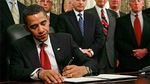
It was, perhaps, his most statesmanlike moment: a president brought to the decision he didn’t want to make, to defend a far-off nation he’d hoped was part of our nation’s past. “Earlier this week, one Iraqi cried that there is no one coming to help,”President Obama said in a somber statement delivered from the State Dining Room. “Well, today America is coming to help.” The New York Times described the situation with a certain amount of prissiness:

Speaking at the White House on Thursday night, Mr. Obama also said that American military aircraft had dropped food and water to tens of thousands of Iraqis trapped on a barren mountain range in northwestern Iraq, having fled the militants, from the Islamic State of Iraq and Syria, who threaten them with what Mr. Obama called “genocide.”

Dropping the “g” word gives gravitas to any presidential statement. What Mr. Obama “called” genocide presumably included not only the attempt to wipe the small tribe of Yezidis off the face of the earth by allowing them to die of thirst and hunger on a mountain, but also the attempt to erase 2,000 years of Christian history in Iraq, along with its Chaldean, Assyrian, and other adherents (some of whom are the last speakers of Aramaic anywhere – we wrote about that here), along with the massacre of hundreds of young Shia men at Takrit, with more, much more, to come.

more here.

West of the Revolution: An Uncommon History of 1776

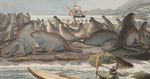
Sea_lionsAndrew Graybill at The American Scholar:

For years, Claudio Saunt vividly recalled the summer of 1976, when as an eight-year-old boy he went to see an enormous birthday cake that had traveled cross-country to his hometown of San Francisco in honor of the U.S. Bicentennial. The cake, purportedly the world’s largest confection, stood three stories tall, weighed 35,000 pounds, and was festooned with scenes from the American Revolution. But as Saunt, now a professor of history at the University of Georgia, explains in his marvelous new book, he was betrayed by his memory. From contemporary accounts, he has learned that the cake was actually a thoroughly local affair, created by a pastry chef to celebrate the Bay Area’s own 200-year anniversary, traced to the establishment of a Spanish outpost there in 1776. As Saunt puts it: “San Francisco’s history was at such odds with the narrative being celebrated for the national Bicentennial that my fourth-grade imagination turned the cake into a tribute to events in Boston, Philadelphia, and elsewhere along the East Coast.”

West of the Revolution is Saunt’s attempt to take in what was happening at other places in North America at the moment that the 13 colonies—which together represent just four percent of the continental landmass—were declaring their independence from England.

more here.

joseph epstein’s literary eduction

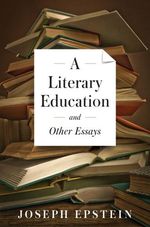
331x500xsledge_a_literary_education_cover.jpg,qitok=ICN3crSx.pagespeed.ic.diUvvineelJohn S. Sledge at Virginia Quarterly Review:

On the page, Epstein aspires to be one of the “laughing skeptics” and mostly succeeds. He is mistrustful of “large ideas, and especially idea systems,” but his touch is light, and he dishes out the bons mots without meanness or acerbity. One may not always agree with his judgments, but they are rendered with art and wit. For example, his definition of a “middlebrow” is “anyone who takes either Woody Allen or Spike Lee seriously as an artist.” Contemporary poetry is “slightly political, heavily preening, and not distinguished enough in language or subtlety of thought to be memorable.” He likes Henry James (though his enthusiasm for The Princess Casamassima strikes me, a student of James myself, as somewhat unusual), Willa Cather, and Ralph Ellison. Held in low regard, “second- or third-rate writers,” are Kurt Vonnegut, Toni Morrison, Jack Kerouac, and Adrienne Rich.

In his essay “What to Do about the Arts?” (1995), originally published inCommentary, Epstein relates the story of how, after Bill Clinton’s first inauguration, he was contacted by a British journalist for an opinion about the now-late poet and memoirist Maya Angelou. The man was surprised when Epstein said that he had no opinion about Angelou because he didn’t read her and knew no one who did.

more here.

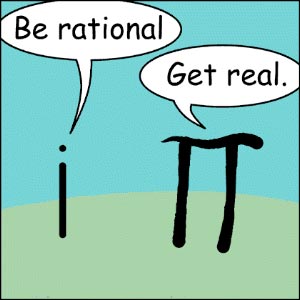
If I Reacted to Other People’s Careers the Way They React to Me Becoming a Mathematician

Jordy Greenblatt in Put It All On Red:

Math-cartoonYou’re a doctor? I don’t really know anything about medicine, but can you explain exactly how the endocrine system works in two minutes or less?

You’re a writer? I had a terrible writing teacher in high school. I bet I wouldn’t like you.

You’re a carpenter? You must be super good at carpentering.

You’re a singer? I stopped singing in 11th grade. The last song I sang was… hmmmmm… let’s see… Mozart’s Requiem. I wasn’t very good at that song.

More here. [Thanks to Jennifer Oullette.]

‘Humans of New York’ Is Suddenly a War Report From Iraq

Emily Dreyfuss in Wired:

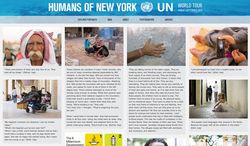
HONY-UN-660x386My favorite thing on the internet might be your favorite thing, too. As of right now 8.8 million people “like” it on Facebook. Humans of New York, the photo blog and Facebook page run by Brandon Stanton, is a bulwark of hope in what sometimes feels like an onslaught of despair. And as of yesterday, it’s operating from a warzone. In case you’re not familiar, Brandon takes a photo of a stranger on the street (usually in New York City, but notably sometimes as far away as Iran) and posts a snippet of conversation with the subject. Somehow this snapshot manages to capture a whole life, and with it parts of our lives, too, our hopes and dreams and sorrows.

…That’s why right now Brandon is travelling with the U.N. on a World Tour. This is not the first time he has partnered with the U.N.: he spoke at the 37th UNIS-UN conference last year. Brandon announced this trip on Wednesday, writing: “The point of the trip is not to “say” anything about the world. But rather to visit some faraway places, and listen to as many people as possible.” While visiting 10 countries, Brandon will be helping to promote the eight Millennium Development Goals that U.N. member states hopes to achieve by 2015, among them eradicating child poverty and hungry and encouraging universal primary education. Commenters have suggested he name the tour Humans of the World, but Brandon is the first to point out that it “would be rather foolish to claim that these portraits and stories somehow represent ‘the world,’ or humanity as a whole.” But, like the snapshots he shares, this glimpse at a part will speak volumes about the whole. He writes, “we hope this trip may in some way help to inspire a global perspective, while bringing awareness to the challenges that we all need to tackle together.” Two days ago he traveled to Iraq. Yesterday morning EST he posted three photos from Irbil, in Kurdistan. Two such photos broke my (and 8 million other people’s) heart. One shows a smiling man in a wheel chair, his underdeveloped legs resting atop a box. This is the caption:

“My happiest moments are whenever I see my mother happy.”
“What’s the happiest you’ve ever seen her?”
“When I was a child, some German doctors told us that I could have a surgery in Italy, and my legs would work again. She was so happy she started crying. But I never had the money to go.”

The next photo is a close up of the man’s phone, his hands and feet out of focus in the background. On the screen is an image he photoshopped of his face onto a healthy body, “to see what I would look like.”

More here.

an Improvisational Genius, Forever Present in the Moment

A O Scott in The New York Times:

WILLIAMSobit-master675Some years ago, at a party at the Cannes Film Festival, I was leaning against a rail watching a fireworks display when I heard a familiar voice behind me. Or rather, at least a dozen voices, punctuating the offshore explosions with jokes, non sequiturs and off-the-wall pop-cultural, sexual and political references. There was no need to turn around: The voices were not talking directly to me and they could not have belonged to anyone other than Robin Williams, who was extemporizing a monologue at least as pyrotechnically amazing as what was unfolding against the Mediterranean sky. I’m unable to recall the details now, but you can probably imagine the rapid-fire succession of accents and pitches — macho basso, squeaky girly, French, Spanish, African-American, human, animal and alien — entangling with curlicues of self-conscious commentary about the sheer ridiculousness of anyone trying to narrate explosions of colored gunpowder in real time. Very few people would try to upstage fireworks, and probably only Robin Williams could have succeeded. I doubt anyone asked him for his play-by-play, an impromptu performance for a small, captive group, and I can’t say if it arose from inspiration or compulsion. Maybe there’s not really a difference. Whether or not anyone expected him to be, and maybe whether or not he entirely wanted to be, he was on.

…Janet Maslin, reviewing his standup act in 1979, cataloged a tumble of riffs that ranged from an impression of Jacques Cousteau to “an evangelist at the Disco Temple of Comedy,” to Truman Capote Jr. at “the Kindergarten of the Stars” (whatever that was). “He acts out the Reader’s Digest condensed version of ‘Roots,’ ” Ms. Maslin wrote, “which lasts 15 seconds in its entirety. He improvises a Shakespearean-sounding epic about the Three Mile Island nuclear disaster, playing all the parts himself, including Einstein’s ghost.”

More here.

Monday, August 11, 2014

Sunday, August 10, 2014

Isis consolidates

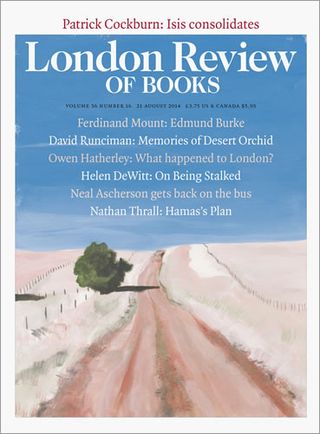
Patrick Cockburn in the London Review of Books:

Cov3616As the attention of the world focused on Ukraine and Gaza, the Islamic State of Iraq and Syria (Isis) captured a third of Syria in addition to the quarter of Iraq it had seized in June. The frontiers of the new Caliphate declared by Isis on 29 June are expanding by the day and now cover an area larger than Great Britain and inhabited by at least six million people, a population larger than that of Denmark, Finland or Ireland. In a few weeks of fighting in Syria Isis has established itself as the dominant force in the Syrian opposition, routing the official al-Qaida affiliate, Jabhat al-Nusra, in the oil-rich province of Deir Ezzor and executing its local commander as he tried to flee. In northern Syria some five thousand Isis fighters are using tanks and artillery captured from the Iraqi army in Mosul to besiege half a million Kurds in their enclave at Kobani on the Turkish border. In central Syria, near Palmyra, Isis fought the Syrian army as it overran the al-Shaer gasfield, one of the largest in the country, in a surprise assault that left an estimated three hundred soldiers and civilians dead. Repeated government counter-attacks finally retook the gasfield but Isis still controls most of Syria’s oil and gas production. The Caliphate may be poor and isolated but its oil wells and control of crucial roads provide a steady income in addition to the plunder of war.

The birth of the new state is the most radical change to the political geography of the Middle East since the Sykes-Picot Agreement was implemented in the aftermath of the First World War. Yet this explosive transformation has created surprisingly little alarm internationally or even among those in Iraq and Syria not yet under the rule of Isis. Politicians and diplomats tend to treat Isis as if it is a Bedouin raiding party that appears dramatically from the desert, wins spectacular victories and then retreats to its strongholds leaving the status quo little changed. Such a scenario is conceivable but is getting less and less likely as Isis consolidates its hold on its new conquests in an area that may soon stretch from Iran to the Mediterranean.

More here.

Leo Tolstoy Creates a List of the 50+ Books That Influenced Him Most

Colin Marshall in Open Culture:

Tolstoy1War and Peace, Anna Karenina, The Death of Ivan Ilyich — many of us have felt the influence, to the good or the ill of our own reading and writing, of Leo Tolstoy. But whose influence did Leo Tolstoy feel the most? As luck would have it, we can give you chapter and verse on this, since the novelist drew up just such a list in 1891, which would have put him at age 63. A Russian publisher had asked 2,000 professors, scholars, artists, and men of letters, public figures, and other luminaries to name the books important to them, and Tolstoy responded with this list divided into five ages of man, with their actual degree of influence (“enormous,” “v. great,” or merely “great”) noted. It comes as something of a rarity, up to now only available transcribed in a post at Northampton, Massachusetts’ Valley Advocate:

WORKS WHICH MADE AN IMPRESSION

Childhood to the age of 14 or so

The story of Joseph from the Bible – Enormous

Tales from The Thousand and One Nights: the 40 Thieves, Prince Qam-al-Zaman – Great

The Little Black Hen by Pogorelsky – V. great

Russian byliny: Dobrynya Nikitich, Ilya Muromets, Alyosha Popovich. Folk Tales – Enormous

Puskin’s poems: Napoleon – Great

Age 14 to 20

Matthew’s Gospel: Sermon on the Mount – Enormous

Sterne’s Sentimental Journey – V. great

Rousseau Confessions – Enormous

Emile – Enormous

Nouvelle Héloise – V. great

Pushkin’s Yevgeny Onegin – V. great

More here.

World War I — the war that inspired innovative art

Hillel Italie in Dawn:

ScreenHunter_738 Aug. 10 16.20In the summer of 1914, with the war in Europe just two weeks old, Henry James knew that something had been lost forever.

“Black and hideous to me is the tragedy that gathers, and I’m sick beyond cure to have lived on to see it,” the American author, an expatriate in London at the time, wrote to a friend. “You and I, the ornaments of our generation, should have been spared this wreck of our belief that through the long years we had seen civilization grow and the worst become impossible. … It seems to me to undo everything, everything that was ours, in the most horrible retroactive way.”

James died in 1916, two years before the armistice was declared between the allies and the Germans, and the wreckage of World War I was beyond even his imagination. Millions were dead, empires dissolved, centuries-old beliefs upended. Many survivors wondered how the world had been caught up in a war fought not for any identifiable cause, but because no one knew how to stop it.

Prolonged conflicts destroy the worlds they were born in, and few did so as thoroughly and as terribly as World War I, which began 100 years ago this month. Among writers, World War I changed both the stories they told and how they told them. Artists in general left behind an extraordinary legacy of painting, music, literature and film and many of the defining achievements of a movement, Modernism, that challenged our very identities and raised questions still being asked today.

More here. [Thanks to Muneeza Shamsie.]