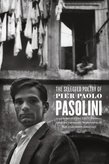
Pasolini’s seductive utopian vision

Cover00Adam Thirlwell at Bookforum:

Everything Pasolini did, he did as a poet. But what was it, precisely, that Pasolini did? Born in 1922, he began his career writing poetry in Friulian, his native language. Then he moved to Rome, where he wrote novels, this time exploring a dense Roman argot. And then came the movies of the ’60s and ’70s, including Mamma Roma, Teorema, and the trilogy of adaptations from Boccaccio, Chaucer, and the Arabian Nights, ending in his masterpiece of degradation, Salo. His atmosphere was constant scandal, and he added to that scandal with his essays in the high-end newspapers: small doses of acerbic thinking. But although he might have enjoyed using crazily various modes, he also had a certain style. In his movies, he loved fusing the hieratic with the everyday. And in his writing, too, he liked combining two things that don’t usually go together: a classical form or tone that could absorb its squalid subjects. His best poetry is a kind of diary written in long slabs and sequences—he called these poems poemetti, longer than a poesia, shorter than a poema—meditations on whatever he was thinking about, where the syntax is strung out along the terza-rima form (Dante’s meter!) in a papery festoon of thinking.

What Pasolini was thinking about, perhaps, is what now makes him seem—like so many products of the radical ’60s and ’70s—slightly dusty, as if from a time capsule. The deep aim of all his writing was as messy and outdated as utopia.

more here.

is it good to commemorate?

Snyder_cc_468wTimothy Snyder at Eurozine:

Perhaps above all, Auschwitz is resonant because it has come to stand for the depths of a fallen civilization. It is seen as evil, but also as modern. It reveals a tragic flaw. For this reason, its liberation by soldiers who seem to dialectically represent a healthy and victorious civilization is all the more poignant. If the Soviets freed Auschwitz, imply the civilizers, then they must have stood for values opposite to those of the Nazis who built it. Although many of the prisoners who awaited the Red Army at Auschwitz were not in fact Jewish, they have come to stand for those Jews who awaited the coming of the Soviets as their only chance for survival. The liberation of Auschwitz thus fits perfectly the civilizers' assumptions and literary needs, wedding as it does the emotionally irresistible force of the desperate hopes of Jewish survivors to the implicit notion that civilization itself has returned and triumphed.

This tempting literary move can only be made if prior references to Soviet power and policy are absent. Thus one can read a library of books about the Holocaust without learning that the Holocaust began in doubly-occupied lands where the German invasion of 1941 undid Soviet structures established after the Soviet occupation of 1939 in Poland or 1940 in the Baltics, that Soviet power was present everywhere the Holocaust took place, either immediately after or (usually) both before and after the mass murder of the Jews.

more here.

in the DFW archives

FP_MILEY_DFWBOOK_CO_002Mike Miley at The Smart Set:

To give you an idea of how concerned Wallace was about being unable to live up to the image of “DFW,” one of his books in the HRC library is On Writer’s Block. That’s not a typo: David Foster Wallace, author of the 600,000-word maximalist opus Infinite Jest, owned a book about overcoming writer’s block. Several of his letters to Don DeLillo express his envy of writers like William T. Vollmann and Joyce Carol Oates, who had the ability to crank out a new novel what seemed like every six months while Wallace struggled to produce a novel each decade. These letters even pepper DeLillo with amateurish questions such as “Do you have like a daily writing routine?” And this was after he’d published Infinite Jest!

Wallace relays his struggle to produce work in a consistent and disciplined manner in a letter to DeLillo: “… it’s frustrating to feel that I’m getting mature and more disciplined in some areas of adult life and yet still seem a slave to my moods and emotions when it comes to work.” Later in the same letter, Wallace even relates the shame of how private and isolating this struggle actually is when he describes the “sad manically charming and loquacious letters” he receives “from young writers who struggle” with writer’s block “and tell me that they regard me as some paragon of steady drive and discipline, which letters I try to answer politely but they make me feel fucked-up and Unknown.”

more here.

The Theft That Made The ‘Mona Lisa’ A Masterpiece

From the archives of NPR:

Ap110112031056_wide-443079141b63f0fbfe795bed6d0bbc5b2375ae84-s40-c85If you were standing outside the Louvre in Paris on the morning of Aug. 21, 1911, you might have noticed three men hurrying out of the museum.

They would have been pretty conspicuous on a quiet Monday morning, writer and historian James Zug tells weekends on All Things Considered host Guy Raz. “Sunday night was a big social night in Paris,” he says, “so a lot of people were hung over on Monday morning.”

The men, three Italian handymen, were not hungover. But they might have been a little tired. They'd just spent the night in an art-supply closet.

And on that morning, with the Louvre still closed, they slipped out of the closet and lifted 200 pounds of painting, frame and protective glass case off the wall. Stripped of its frame and case, the wooden canvas was covered with a blanket and hustled off to the Quai d'Orsay station, where the trio boarded a 7:47 a.m. express train out of the city.

They'd stolen the “Mona Lisa.”

Before its theft, the “Mona Lisa” was not widely known outside the art world. Leonardo da Vinci painted it in 1507, but it wasn't until the 1860s that critics began to hail it as a masterwork of Renaissance painting. And that judgment didn't filter outside a thin slice of French intelligentsia.

“The 'Mona Lisa' wasn't even the most famous painting in its gallery, let alone in the Louvre,” Zug says.

More here.

Wednesday, August 20, 2014

Salman Rushdie on Kazuo Ishiguro

Salman Rushdie in The Globe and Mail:

ScreenHunter_753 Aug. 20 21.02‘I was very consciously trying to write for an international audience,” Kazuo Ishiguro says of The Remains of the Day in his Paris Review interview. “One of the ways I thought I could do this was to take a myth of England that was known internationally – in this case, the English butler.”

“Jeeves was a big influence.” This is a necessary genuflection. No literary butler can ever quite escape the gravitational field of Wodehouse’s shimmering Reginald, gentleman’s gentleman par excellence, saviour, so often, of Bertie Wooster’s imperiled bacon. But, even in the Wodehousian canon, Jeeves does not stand alone. Behind him can be seen the rather more louche figure of the Earl of Emsworth’s man, Sebastian Beach, enjoying a quiet tipple in the butler’s pantry at Blandings Castle. And other butlers – Meadowes, Maple, Mulready, Purvis – float in and out of Wodehouse’s world, not all of them pillars of probity. The English butler, the shadow that speaks, is, like all good myths, multiple and contradictory. One can’t help feeling that Gordon Jackson’s portrayal of the stoic Hudson in the 1970s TV series Upstairs, Downstairs may have been as important to Ishiguro as Jeeves: the butler as liminal figure, standing on the border between the worlds of “Upstairs” and “Downstairs,” “Mr. Hudson” to the servants, plain “Hudson” to the gilded creatures he serves.

Now that the popularity of another television series, Downton Abbey, has introduced a new generation to the bizarreries of the English class system, Ishiguro’s powerful, understated entry into that lost time to make, as he says, a portrait of a “wasted life,” provides a salutary, disenchanted counterpoint to the less sceptical methods of Julian Fellowes’s TV drama. The Remains of the Day, in its quiet, almost stealthy way, demolishes the value system of the whole upstairs-downstairs world.

More here.

the genius of the local historical society museum

PI_GOLBE_HISTSOC_FT_002Stefany Anne Golberg at The Smart Set:

In Richfield Springs, New York, in the summer of 2013, I stopped into the local historical society just around closing time. I asked the Museum Assistant, Mr. Hazelton — a man in his 70s or thereabouts — if I could have a brief look around. Mr. Hazelton told me, in true historical society fashion, that this was impossible, as the museum was almost closed. Then he told me I could stay five minutes and, also in true historical society fashion, offered to show me around. We went through all the newspaper clippings taped to the walls, and the Richfield Springs miscellany encased beneath them. I saw a miniature version of the famous Richfield Springs clock, and an assortment of Richfield Springs commemorative mugs. By the time Mr. Hazelton had introduced me to most of the Richfield Springs citizens in the high school yearbooks dating from the 1940s, it was well past closing time. Having reached the end of the single room that comprised the Richfield Springs Historic Association Museum, Mr. Hazelton offered me some candy. He told me about himself, about his wife and children, and then about his children’s children. It was near dark when Mr. Hazelton ran out of talking and presented his sketches of barns. The sketches had been individually mounted on white-and-purple notecards by Mrs. Hazelton herself. Each one was signed by Mr. Hazelton and dated. And so, this is another kind of art you can find in a historical society: an ephemeral art of now, created by none other than the Museum Assistant himself, for the benefit of his own museum.

more here.

Just what is it that makes today’s eco-terrorists so appealing?

EcoterrorBill Morris at The Millions:

Night Moves, the latest movie from Kelly Reichardt, joins a chorus of films and books that have spent the past several decades posing an intriguing question. To paraphrase the great English pop artist Richard Hamilton, the question is this: Just what is it that makes today’s eco-terrorists so different, so appealing?

The operative word here is appealing because Reichardt and company are drawn to something in the character of people who are willing to break the law in order to perform a service they see as vital to mankind and the planet. This moral ambiguity – the willingness to do wrong in order to do right – is a large part of the eco-terrorist’s appeal. Yet this is also where things get complicated. In Night Moves, the lofty ideals of the eco-terrorists become as compromised and distorted as those of the villains they are trying to fight. Try as they might to see the world as a simple black-and-white Manichaean snapshot, Reichardt’s characters keep getting sucked into pools of gray, those murky zones of moral ambiguity that have a way of perverting even the noblest of intentions.

more here.

The Allure of the Archives

9780300176735Brenda Wineapple at Threepenny Review:

The kick of research—not self-evident, by any means—is the subject of Farge’s marvelous book. Behind it lies the goal of history, which is “the understanding of a time and a world.” And what better way to open a dialogue between present and past than to find the past bundled together in a packet of old papers? Director of Research in Modern History at the Centre National de la Recherche Scientifique in Paris and the author of numerous books on eighteenth-century France, Farge explains how and why the historian is tempted to touch—and listen to—those “rags of realities” frequently stored in the repositories we know as archives: a library, a research facility, a local historical society, a hospital, a convent, a church, even a crematorium. (I spent one particularly productive afternoon, years ago, in an office at the Flanner and Buchanan Crematoria in Indianapolis, where I copied out old family recipes for apple crisp.) The archives may contain letters, transcripts, oral histories, photos, passports, paintings, and journals, along with what Farge calls “captured speech,” which, in snatches, allows us to hear what was going on beneath or beyond the official account of an era.

“The judicial archives, in a sense, catch the city red-handed,” she says. “When reading the police records, you can see to what extent resistance, defiance, and even open revolt are social facts.” People have to explain themselves in court. They lie, they plead, they confess, and they stonewall.

more here.

100 funny jokes by 100 comedians

From The Telegraph:

TonyHancockhat_2903337k“I don't want any publicity – you get too many begging letters. If they're anything like the ones I send out I don't want to know!” Tony Hancock (1924-1968)

'I knew a transsexual guy whose only ambition is to eat, drink and be Mary.' George Carlin(1937-2008)

'My grandmother started walking five miles a day when she was 60. She's 97 now and we don't know where the hell she is.' Ellen DeGeneres (January 26 1958-)

'A man can sleep around, no questions asked, but if a woman makes nineteen or twenty mistakes she's a tramp.' Joan Rivers (June 8 1933-)

'A few decades ago we had Johnny Cash, Bob Hope and Steve Jobs. Now we have no Cash, no Hope and no Jobs. Please don't let Kevin Bacon die.' Bill Murray (September 21 1950-)

'If something about the human body disgusts you, the fault lies with the manufacturer.' Lenny Bruce (1925-1966)

More here.

Microbiome science needs a healthy dose of scepticism

William P. Hanage in Nature:

CommentExplorations of how the microscopic communities that inhabit the human body might contribute to health or disease have moved from obscure to ubiquitous. Over the past five years, studies have linked our microbial settlers to conditions as diverse as autism, cancer and diabetes. This excitement has infected the public imagination. 'We Are Our Bacteria', proclaimed one headline in The New York Times. Some scientists have asserted that antibiotics are causing a great 'extinction' of the microbiome, with dire consequences for human health1. Companies offer personalized analysis of the microbial content of faecal samples, promising consumers enlightening information. Separate analyses from the same person can, however, vary considerably, even from the same stool sample. Faecal transplants have been proposed — some more sensible than others — for conditions ranging from diabetes to Alzheimer's disease. With how-to instructions proliferating online, desperate patients must be warned not to attempt these risky procedures on themselves. Microbiomics risks being drowned in a tsunami of its own hype. Jonathan Eisen, a microbiologist and blogger at the University of California, Davis, bestows awards for “overselling the microbiome”; he finds no shortage of worthy candidates. Previous 'omics' fields have faltered after murky work slowed progress2. Technological advances that allowed researchers to catalogue proteins, metabolites, genetic variants and gene activity led to a spate of associations between molecular states and health conditions. But painstaking further work dampened early excitement. Most initial connections were found to be spurious or, at best, more complicated than originally believed.

The history of science is replete with examples of exciting new fields that promised a gold rush of medicines and health insights but required scepticism and years of slogging to deliver even partially. As such, the criteria for robust microbiome science are instructive for all researchers. As excitement over the microbiome has filtered beyond academic circles, the potential mischief wrought by misunderstanding encompasses journalists, funding bodies and the public. Here are five questions that anyone conducting or evaluating this research should ask to keep from getting carried away by hype.

More here.

The Coming Race War Won’t Be About Race

Kareem Abdul-Jabbar in Time:

ScreenHunter_752 Aug. 20 12.59The U.S. Census Report finds that 50 million Americans are poor. Fifty million voters is a powerful block if they ever organized in an effort to pursue their common economic goals. So, it’s crucial that those in the wealthiest One Percent keep the poor fractured by distracting them with emotional issues like immigration, abortion and gun control so they never stop to wonder how they got so screwed over for so long.

One way to keep these 50 million fractured is through disinformation. PunditFact’s recent scorecard on network news concluded that at Fox and Fox News Channel, 60 percent of claims are false. At NBC and MSNBC, 46 percent of claims were deemed false. That’s the “news,” folks! During the Ferguson riots, Fox News ran a black and white photo of Dr. Martin Luther King, Jr., with the bold caption: “Forgetting MLK’s Message/Protestors in Missouri Turn to Violence.” Did they run such a caption when either Presidents Bush invaded Iraq: “Forgetting Jesus Christ’s Message/U.S. Forgets to Turn Cheek and Kills Thousands”?

How can viewers make reasonable choices in a democracy if their sources of information are corrupted? They can’t, which is exactly how the One Percent controls the fate of the Ninety-Nine Percent.

More here.

Wednesday Poem

Fern Hill

Now as I was young and easy under the apple boughs About the lilting house and happy as the grass was green, The night above the dingle starry, Time let me hail and climb Golden in the heydays of his eyes, And honoured among wagons I was prince of the apple towns And once below a time I lordly had the trees and leaves Trail with daisies and barley Down the rivers of the windfall light.  And as I was green and carefree, famous among the barns About the happy yard and singing as the farm was home, In the sun that is young once only, Time let me play and be Golden in the mercy of his means, And green and golden I was huntsman and herdsman, the calves Sang to my horn, the foxes on the hills barked clear and cold, And the sabbath rang slowly In the pebbles of the holy streams.  All the sun long it was running, it was lovely, the hay Fields high as the house, the tunes from the chimneys, it was air And playing, lovely and watery And fire green as grass. And nightly under the simple stars As I rode to sleep the owls were bearing the farm away, All the moon long I heard, blessed among stables, the nightjars Flying with the ricks, and the horses Flashing into the dark.  And then to awake, and the farm, like a wanderer white With the dew, come back, the cock on his shoulder: it was all Shining, it was Adam and maiden, The sky gathered again And the sun grew round that very day. So it must have been after the birth of the simple light In the first, spinning place, the spellbound horses walking warm Out of the whinnying green stable On to the fields of praise.  And honoured among foxes and pheasants by the gay house Under the new made clouds and happy as the heart was long, In the sun born over and over, I ran my heedless ways, My wishes raced through the house high hay And nothing I cared, at my sky blue trades, that time allows In all his tuneful turning so few and such morning songs Before the children green and golden Follow him out of grace,  Nothing I cared, in the lamb white days, that time would take me Up to the swallow thronged loft by the shadow of my hand, In the moon that is always rising, Nor that riding to sleep I should hear him fly with the high fields And wake to the farm forever fled from the childless land. Oh as I was young and easy in the mercy of his means, Time held me green and dying Though I sang in my chains like the sea.

by Dylan Thomas
from The Poems of Dylan Thomas
published by New Directions. Copyright © 1952

Muslim Zion: Pakistan as a Political Idea

Hassan Javid in Dawn:

51svY0qVmxL._SY344_BO1,204,203,200_For Devji, Pakistan represents an example of Zionism, which he interprets as being a political form in which national identity is defined primarily by religion. In this respect, so the argument goes, Pakistan bears a close resemblance to Israel; both nations were created amidst the decline of the British Empire, they ostensibly represented homelands for minorities fleeing real and perceived persecution, and they came into being with the transfer of large populations into territories that had previously not been inhabited by them.

Viewed through this lens, nationalism in Israel and Pakistan was not rooted in claims about specific territorial boundaries or even ethnic and linguistic groupings; instead, it decoupled the idea of the nation from its traditional markers, basing itself instead on the existence of a religious community, bound together by common beliefs that transcended questions of territory, language and ethnicity. All Jews were, and are, welcome to settle in Israel regardless of their previous territorial affiliations and, in 1947, the same was true of Pakistan with respect to the subcontinent’s Muslim population. If, as Benedict Anderson argues, all nations are essentially “imagined communities” in which identity and solidarity are constructed by the propagation of shared cultural values through a common linguistic medium within a defined territory, the Israeli and Pakistani nations were imagined primarily as religious communities superimposed onto relatively arbitrary physical spaces.

Comparing Pakistan with Israel in this fashion is not new. Indeed, as Devji himself mentions near the start of the book, no less a personage than General Ziaul Haq noted the similarities between the two countries in 1981.

More here.

Tuesday, August 19, 2014

Print Less but Transfer More

Helo

Mark Blyth and Eric Lonergan in Foreign Affairs (registration required):

Rather than trying to spur private-sector spending through asset purchases or interest-rate changes, central banks, such as the Fed, should hand consumers cash directly. In practice, this policy could take the form of giving central banks the ability to hand their countries’ tax-paying households a certain amount of money. The government could distribute cash equally to all households or, even better, aim for the bottom 80 percent of households in terms of income. Targeting those who earn the least would have two primary benefits. For one thing, lower-income households are more prone to consume, so they would provide a greater boost to spending. For another, the policy would offset rising income inequality.

Such an approach would represent the first significant innovation in monetary policy since the inception of central banking, yet it would not be a radical departure from the status quo. Most citizens already trust their central banks to manipulate interest rates. And rate changes are just as redistributive as cash transfers. When interest rates go down, for example, those borrowing at adjustable rates end up benefiting, whereas those who save — and thus depend more on interest income — lose out.

Most economists agree that cash transfers from a central bank would stimulate demand. But policymakers nonetheless continue to resist the notion. In a 2012 speech, Mervyn King, then governor of the Bank of England, argued that transfers technically counted as fiscal policy, which falls outside the purview of central bankers, a view that his Japanese counterpart, Haruhiko Kuroda, echoed this past March. Such arguments, however, are merely semantic. Distinctions between monetary and fiscal policies are a function of what governments ask their central banks to do. In other words, cash transfers would become a tool of monetary policy as soon as the banks began using them.

Other critics warn that such helicopter drops could cause inflation. The transfers, however, would be a flexible tool. Central bankers could ramp them up whenever they saw fit and raise interest rates to offset any inflationary effects, although they probably wouldn’t have to do the latter: in recent years, low inflation rates have proved remarkably resilient, even following round after round of quantitative easing. Three trends explain why.

More here.

Conversation with Agnes Varda

La-point-courte

Susan Kouguell in IndieWire, the discussion between Varda and Jean Michel Frodon:

Frodon: There was an important event in the history of world cinema — the New Wave. Just before the official opening of the Locarno Festival we screened “The 400 Blows,” but actually you started the New Wave with your film”La Point Courte,” which was quite original, stunning, and unlike all the others. You were no film buff, you were a woman, not a cinephile and being a woman with quite unique characteristics.

Varda: I’m troubled with the term “New Wave”. The New Wave included a number of young, new filmmakers but to me, there was the group the Cahiers du Cinema critics who loved American films, among them Truffaut. And like me, not knowing anything about filmmaking, were Jacques Demy, Chris Marker, and me. We were farther to the left than the others. These people were grouped in the same category as if we were a group. I felt different from the Cahiers du Cinema movement. I had no knowledge of French and American cinema, and I thought structure was more important than the way the films were shot.

My references were not from film. For example: When people would put their hands on their knees, I called that an “Egyptian shot,” or I would say, “Face” rather than “close up.” I knew nothing about film jargon.

Frodon: You did photography and theatre so you were in an artistic circle.

Varda: The theatre-goers, do not necessarily go to movies and vice versa. Actually the disciplines are quite separate. I watched many theatre plays but I didn’t know about cinema. I went to a lot of museums. I read a lot. I had my diploma. I took a year off just to read. I got up at nine in the morning, and read all afternoon as if I was going to school. I would read great classics. You don’t have time to read at school. This helped me a lot to think.

More here.

Alex Gourevitch on Thomas Paine

1-2-1B8D-25-ExplorePAHistory-a0m5l9-a_349

Over at The Junto:

It’s important to be clear about what private property meant to Paine. It meant the right to keep the full fruits of one’s labor—which is one meaning it still has today. Inequality was justifiable for him if it made everybody better off with respect to their fundamental interests.[1] But he saw that the current defense of private property created poverty, a poverty that had never before existed.[2] So it is possible, given the enormous productivity of a modern society, based on private property, for everyone to live better lives, not just secure from absolute poverty but for even the worst off to enjoy relative prosperity.

Paine took the communist challenge to heart, but in a way that aimed to defend private property. The introduction of Agrarian Justice names Babeuf directly, and the pamphlet itself makes an important change from the public works scheme in Rights of Man to a ‘National Fund’ that pays every adult enough money to be able to buy some land and tools. Paine accepted Babeuf’s argument that, in the natural state, it’s not just that nobody was poor but that everyone enjoyed a natural independence—and they should have a right to that independence under modern conditions as well.

Even though Paine says he is defending the principle of private property, he is driven to say, in Agrarian Justice, that “personal property is the effect of society; and it is as impossible for an individual to acquire personal property without the aid of society, as it is for him to make land originally… All accumulation, therefore, of personal property, beyond what a man’s own hands produce, is derived to him by living in society; and he owes on every principle of justice, of gratitude, and of civilization, a part of that accumulation back again to society from whence the whole came.”

Why add gratitude to justice? I think it’s because Paine sees that private property is not just a matter of rights and legitimate coercion: it is a form of social relationship.

More here.

Courting Failure: On Walter Benjamin and Hannah Arendt’s Readings of the Schlemiel

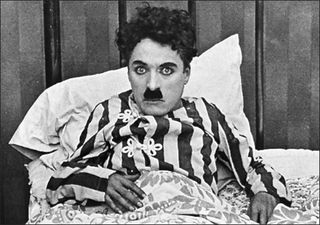
Charlie-chaplin

Menachem Feuer in Berfrois:

As human beings we have to “court” failure. This term suggests two things: on the one hand, it suggests dating and becoming intimate with someone in a formal, old-fashioned way; on the other hand, it suggests that we just don’t experience something, we judge it. Taken together, we can say that in courting failure, one gets to know it in an intimate way and will have to, in the end, judge it. When we judge failure, when we court it, we ascribe meaning to it. But, to be sure, there is a kind of danger to such courting. Courting failure can impair judgment and could lead to problems. But, then again, courting failure could also lead to a teaching moment and help us to understand ourselves, the world, and, for some existential theologians, the meaning of faith.

Failure can be tragic, but it can also be comic. The difference between the two types of failure could be understood through tragedy and comedy. In the former, the tragic hero is blind to his tragic flaw; and because he or she does nothing to change it, this tragic character has a bad (“tragic”) end.

It contrast, the comic character has a flaw that he or she either corrects or lives with. The end of such characters, however, isn’t tragic; it is a happier (or a better) ending of sorts. But sometimes this ending, because it is deprived of what we honor most, is sad. However, comedy – and the failure it courts – can also give us hope.

Sometimes these two theatrical modes find a correlate in life. And sometimes scholars will use comedy to better understand their own lives and the world they live in. We find such a correlate in the work of Hannah Arendt and Walter Benjamin that pertains to the schlemiel. As Jews who were exiled from Germany, who experienced the failure of liberalism and humanism in Germany, and witnessed the rise of rabid anti-Semitism, they courted failure. Their lives were uncertain. But of the two, Benjamin’s life was more uncertain. And for the two of them, the Jewish comic character otherwise known as the schlemiel was of great interest. It spoke to Jewishness, failure, exile and hope.

More here.

the idea of a critical theory

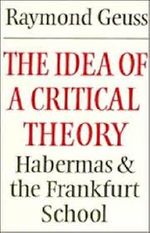
UrlRaymond Geuss at The Point:

At the beginning of the nineteenth century Hegel wrote that every philosopher is a child of his time and none can jump over his own shadow: every philosophy, then, is “its time grasped in a concept.” In the twentieth century Adorno took up this idea again when he spoke of the irreducible “kernel of time” embedded in the center of any philosophical view, and of the “temporal index” of truth. Whatever these rather difficult doctrines mean, they clearly are not intended to imply that at any given time all opinions are equally true.

I started a small book in Heidelberg, Germany in 1973 and finally finished it in 1980 at the University of Chicago; The Idea of a Critical Theory was published by Cambridge University Press in late 1981. Looking back at the text from the present—from 2013 and my home on this small island off the northwest coast of Europe—I think I can begin to see rather more clearly than I could then some of the relevant features of the historical context within which it was conceived and executed. To return for a moment to Hegel, who is the major spiritual presence hovering over this book—and whose work is the more important for understanding what I was trying to do for not being mentioned at all in the main text—the reader will recall that he also holds that philosophy is essentially retrospective, a reflection of a historical moment or movement that when it finally takes philosophical form is essentially already over. This doctrine marks a distinction between what is “really” happening in the political, social and economic world and the subsequent reflection of this in philosophy (religion, art, law, etc.).

more here.