Men and Intimacy, Physical and Conversational

by Samir Chopra

ScreenHunter_2988 Mar. 12 09.23A couple of years ago, I participated in a radio discussion on ‘Male Intimacy,’ hosted by Natasha Mitchell on the Australian Broadcasting Corporation’s show Life Matters. Natasha had invited me on to offer the ‘alternative perspective’ of an immigrant who had lived in India, the US, and briefly, in Australia. (Audio is available; I go on at the 20 minute mark; the whole show is worth a listen.)

While on air, when speaking about the cross-cultural differences in male intimacy I had experienced in my three ‘homes,’ I noted that growing up in India meant being socialized in a domain of relationships with men where physical contact was relatively unproblematic: I put my arms around my male friends’ shoulders, did not rigorously negotiate inter-personal physical space, and demonstrated affection and companionship through a variety of physical gestures—including hugs. (Avuncular affection almost always took these forms.) As the time approached for my move to the US, I was warned—by those Indians who had preceded me and were now already resident in the US—to not expect such ‘intimate’ contact when I crossed the waters, to desist from such overt displays of friendship and affection in my relationships with American men. Those warnings spoke to a culture that set much store by the careful maintenance of a physical and emotional space between its male members; ‘keep your distance’ applied to many dimensions of social interactions. I took these warnings to heart. There was no reason to disbelieve them; moreover, I was keen to ‘fit in,’ to not ‘stick out,’ to not take the risk of being called a ‘homo’ or a ‘fag’—as seemed to be the fate of those who transgressed in this domain. This was the 1980s; America seemed—from a distance—to be suffering a national crisis of masculine insecurity. I suffered from my own variant of it.

So the manner of my relationships with men changed once I moved to the US; besides the obvious psychosocial distance pertaining to matters of familial and filial structure, and political and cultural tastes and inclinations, I found men in my new home structured and conducted their relationships and friendships with each other quite differently. American men were not physically demonstrative in their claims of friendship; they did not hug their male friends; they did not put arms around male friends; they carefully established the requisite physical space between themselves and their friends. Immigration induced many changes in the qualitative and quantitative nature of my personal and social relationships with men and women alike; the parameters of male relationships in my new home denied me a very particular—and much desired when missed—kind of emotional sustenance.

Read more »

When the Pentagon Looked to Chomsky’s Linguistics for their Weapons Systems

by Chris Knight

6 I00009x5EnlIDhh0 (2)

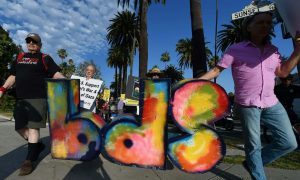
Students protesting against military research at MIT in 1969.

Noam Chomsky is the world’s most prominent anti-militarist campaigner and, wearing a different hat, the acknowledged founder of modern scientific linguistics. Any attempt to understand Chomsky’s huge influence on modern thought must appreciate the connection between these two roles. And to do this we must begin with a paradoxical fact: Chomsky has spent his career in the Massachusetts Institute of Technology, working in what was originally a military lab. As he himself says about MIT in the 1960s:

[It] was about 90 per cent Pentagon funded at that time. And I personally was right in the middle of it. I was in a military lab. If you take a look at my early publications, they all say something about Air Force, Navy, and so on, because I was in a military lab, the Research Lab for Electronics [RLE].

The Pentagon showed a keen interested in linguistics during this period. Colonel Gaines of the US Air Force recalled why during an interview in 1971. Having referred to the military’s computerised systems of command and control, both for defense against nuclear missiles and for use in Vietnam, he complained about the difficulties of teaching computer languages to military personnel. “We sponsored linguistic research”, he explained, “in order to learn how to build command and control systems that could understand English queries directly.”

If Chomsky’s linguistics was being funded for this purpose, it seems all the more remarkable that Chomsky ended up publicly opposing the Vietnam War and denouncing the very military institutions that were sponsoring his research.

Modestly, Chomsky has always downplayed any moral dilemmas, suggesting that the military had no interest in his work. But I have recently come across restricted-access documents which refer to Chomsky as a “consultant” to a project funded by the Air Force in order “to establish natural language as an operational language for command and control.”

Read more »

Can moral virtues become outdated?

by Emrys Westacott

UnknownA virtue is a quality that people consider valuable, admirable, or desirable. Human beings exhibit various kinds of virtues, many of which are specific to particular roles or activities. A strong throwing arm is a virtue in a baseball player. A good memory is a virtue in a stage actor. Some qualities, however, such as courage, kindness, or generosity, are typically viewed as moral virtues.

It isn't easy to specify just what makes a virtue a moral virtue. Like certain talents, qualities such as empathy or cheerfulness may be gifts of nature or ingrained by a certain upbringing, and they can also be deliberately cultivated. So the difference between moral and non-moral virtues doesn't lie in their origin, or in the degree to which one is responsible for possessing them.

Moral virtues do tend to be qualities that it is thought good for everyone to have; but that is also true of such things as intelligence or physical fitness. In general, though, we think of particular skills as valuable for some people who engage in particular tasks, while moral virtues are qualities that it is good for anyone and everyone to have. They are those excellences that help one to be a good human being (rather than just a good x) and to live a good life. Something like this underlies the way Socrates talks about virtue in Plato's dialogues.

These days, we tend to think of moral virtues as traits that directly affect our dealings with others; they are traits that make someone a more valuable colleague, neighbor, friend, companion, or compatriot, or fellow citizen. If we adopt Peter Singer's notion of expanding the circle of moral concern, we will also count among "others" humanity as a whole, and at least some non-human animals. But philosophers, like Aristotle, the Epicureans, and the Stoics conceive of moral virtues more broadly still, as including traits that have to do with how fulfilling a life one leads. Thoreau, for instance, who could reasonably be described as a modern stoic, views curiosity about the natural world, or an ability to appreciate beauty, as moral virtues in this sense.

Can a moral virtue become outdated? However one conceives of the moral virtues, this is an interesting question to ponder.

Read more »

Almost no one actually believes Fake News. So what’s the problem?

by Thomas R. Wells

Hillary-pizza465The statistics are shocking. A Russian troll farm created false anti-Clinton stories and distributed them on platforms like Facebook and Twitter. As many as 126 million Facebook users may have encountered at least one piece of Russian propaganda; Russian tweets received as many as 288 million views. The Russians, just like Trump’s campaign itself, leveraged the adtech infrastructure developed by social media companies like Facebook, Google, and Twitter to identify and target those most receptive to their lies and provocations.

What is going on? Is this something new? Does it matter?

I. Do People Believe Fake News?

One popular interpretation of what is going on is that social media and its associated adtech have isolated us in filter bubbles and made us newly vulnerable to politically or commercially motivated lies. The bubble is a controlled information environment based on what we want to hear and what adbuyers want people like us to believe. Organisations that know how to use this – whether a Russian troll farm or the company hired by the Brexit campaign – can exercise enormous power over the information we are exposed to and thus our beliefs about the world.

I disagree. I think very few people actually believe fake news. Rather, they indulge in believing that they believe it. People’s relationship to such beliefs is much more like the way they relate to icecream than the enlightenment idea of respecting objective truth. Consider Pizzagate, a recent very famous example of fake news.

At the end of October 2016 an anti-Clinton conspiracy theory started circulating on fringe rightist social media and fake news websites like Infowars. Russian troll accounts seem to have been among those helping the story spread. Over the next month, millions of Americans heard or read that top members of the Democratic Party were running a child sexual slavery ring from the basement of a pizza restaurant in Washington DC.

Read more »

The Speed of Cavalry Camels

by Holly A. Case

900_Camel cavalry

Wilhelm Kotarbiński, Camel Cavalry (1848-1921)

"People who were not born then will find it difficult to believe, but the fact is that even then time was moving faster than a cavalry camel….But in those days, no one knew what it was moving towards. Nor could anyone quite distinguish between what was above and what was below, between what was moving forward and what backward."

So wrote Robert Musil in Man Without Qualities, describing the atmosphere in turn-of-the-century Vienna.

*

The historian Carl Schorske used Musil's "cavalry camel" passage to open the third chapter in his famous Fin-de-siècle Vienna. Written over the 1960s and 1970s, Schorske's book explained why the intricacies of Viennese high culture should concern readers of his own time, in which "liberals and radicals, almost unconsciously, adapted their world-views to a revolution of falling political expectations."

Now a mood of pessimism—sometimes of impotence, sometimes of rigid defensiveness, sometimes of surrender—settled over an intelligentsia that, whether centrist or radical, liberal or Marxist, had for several decades been united in social optimism.

Schorske noted how some liberals who had never given a whit for religion became enamored with "neo-orthodox Protestantism," and how "patrician wisdom" overtook "ethical rationalism." In short, what had once been left behind was laid in front like new track.

*

A while ago I went to see Black Panther. The best part was hearing the audience address the screen as though the characters could hear them. It reminded me of the descriptions of cinema's earliest viewers, who fled from their seats at the sight of an oncoming train on the screen.

We have a president who watches the news and calls into the news and tweets the news and is the news. So perhaps King T'Challa does hear. I feel like he even said as much at some point, in response to an outcry from the audience.

*

Apparently, a good many clock radios in Europe are running three to six minutes slow these days. The German press calls it "Weckergate" (Alarm clock-gate). It has something to do with a conflict between Kosovo and Serbia over payments for electricity in areas of Kosovo where Serbs are in the majority. Somehow this makes a lot of clocks run slow, including German ones.

A day after "Alarm clock-gate" swept the German headlines, it hit the Austrian ones. The day after that, the English-language ones.

Read more »

POLITICS FOR BEAUTIFUL PEOPLE

560by Richard King

There's disagreement about who first described politics as "show business for ugly people": some commentators attribute the zinger to Jay Leno, others to political consultant Paul Begala. But there is broad agreement that whoever it was identified a genuine phenomenon. Politics in the era of mass communication has indeed become more "mediated" – as focused on personalities as it is on ideology and policy, and a prey to the dark arts of image-making and spin. The successful modern politician knows that in order to be successful s/he must defer to the media consultant and submit to the stylistic makeover. Above all, s/he knows to stick to the script.

Now, however, we have a different phenomenon – not new, exactly, but newly prominent: the political celebrity. Actors and other media personalities are increasingly engaged in awareness-raising, social media campaigns and activism, and the news media's appetite for their interventions is huge. When celebrities speak out, their words are reported, analysed, criticised, celebrated. If politics is show business for ugly people, show business is looking more and more like politics for beautiful people.

In the event, last Sunday's Oscars ceremony was a more muted affair, politically speaking, than previous recent industry gatherings, perhaps because the organisers of Time's Up and its analogues are aware that the law of diminishing returns may soon kick in, if it hasn't already. But the broader trend is conspicuous. From the celebrity envoy or "goodwill ambassador" to the "controversial" acceptance speech to the red-carpet anti-fashion statement, the idea that Hollywood and the media more broadly have a responsibility to deal with issues of social justice is now utterly mainstream.

The intersection of showbiz and activism is by no means a new phenomenon. Jane Fonda's opposition to the Vietnam War, Harry Belafonte's involvement in the civil rights movement, and Charlton Heston's advocacy on behalf of the National Rifle Association are just a few examples of celebrities lending their imprimaturs to issues that are important to them. Nor is this an unwelcome phenomenon, necessarily. It isn't incumbent on anyone to shut up about the state of the world just because they have money in the bank and a state-of-the-art home-security system, though an intelligent analysis will account for the skewed perspective such privileges tend to engender. Yes it can be irritating to hear ditsy A-listers wax political about topics they'd never heard of until the day before yesterday. But these aren't crimes against humanity. And, really, Clint Eastwood's heart to heart with an empty chair was no more embarrassing, at the end of the day, than American Sniper.

Read more »

Sunday, March 11, 2018

How ‘the Kingfish’ Turned Corporations into People

Adam Winkler in the New York Review of Books:

GettyImages-109501625When the Supreme Court first began to breathe life into the First Amendment in the early twentieth century, the speakers who inspired the newfound protections were politically persecuted minorities: socialists, anarchists, radicals, and labor agitators. Today, however, in the aftermath of the 2010 Supreme Court ruling in Citizens United v. Federal Election Commission, which held that corporations have the same right as individuals to influence elections, the First Amendment is used by wealthy and powerful business interests seeking to overturn food-labeling laws, securities disclosure laws, and campaign finance regulations. Yet the seeds of this transformation were planted decades ago in a different Supreme Court case—though one eerily evocative of the Trump era—involving a blustery, dough-faced politician who railed against “fake news.”

Huey Long was Trump before Trump. The fiery populist governor elected on the eve of the Great Depression had an aggressive agenda to make Louisiana great again—and little tolerance for dissent. Long set up a state board to censor newsreels and another to decide which newspapers would be allowed to print profitable government notices. When the student paper at Louisiana State University published an unflattering editorial about him, an outraged Long—referring to himself, as autocrats often do, in the third person—sent in the state police to seize copies, saying he wasn’t “going to stand for any students criticizing Huey Long.”

After Louisiana’s larger daily newspapers came out against him, “the Kingfish” declared war. “The daily newspapers have been against every progressive step in the state,” Long said, “and the only way for the people of Louisiana to get ahead is to stomp them flat.” To do so, in 1934 Long’s allies enacted a 2 percent tax on the advertising revenue of the state’s largest-circulation newspapers. Long said the tax “should be called a tax on lying, two cents per lie.”

More here.

Tending the Digital Commons: A Small Ethics toward the Future

Alan Jacobs in The Hedgehog Review:

28188286432_3353c1c7ed_bFacebook is unlikely to shut down tomorrow; nor is Twitter, or Instagram, or any other major social network. But they could. And it would be a good exercise to reflect on the fact that, should any or all of them disappear, no user would have any legal or practical recourse. I started thinking about this situation a few years ago when Tumblr—a platform devoted to a highly streamlined form of blogging, with an emphasis on easy reposting from other accounts—was bought by Yahoo. I was a heavy user of Tumblr at the time, having made thousands of posts, and given the propensity of large tech companies to buy smaller ones and then shut them down, I wondered what would become of my posts if Yahoo decided that Tumblr wasn’t worth the cost of maintaining it. I found that I was troubled by the possibility to a degree I hadn’t anticipated. It would be hyperbolic (not to say comical) to describe my Tumblr as a work of art, but I had put a lot of thought into what went on it, and sometimes I enjoyed looking through the sequence of posts, noticing how I had woven certain themes into that sequence, or feeling pleasure at having found interesting and unusual images. I felt a surge of proprietary affection—and anxiety.

Many personal computers have installed on them a small command-line tool called wget, which allows you to download webpages, or even whole websites, to your machine. I immediately downloaded the whole of my Tumblr to keep it safe—although if Tumblr did end up being shut down, I wasn’t sure how I would get all those posts back online. But that was a problem I could reserve for another day. In the meantime, I decided that I needed to talk with my students.

I was teaching a course at the time on reading, writing, and research in digital environments, so the question of who owns what we typically think of as “our” social media presence was a natural one. Yet I discovered that these students, all of whom were already interested in and fairly knowledgeable about computing, had not considered this peculiar situation—and were generally reluctant to: After all, what were the alternatives?

More here.

The Grim Conclusions of the Largest-Ever Study of Fake News

Robinson Meyer in The Atlantic:

Lead_960“Falsehood flies, and the Truth comes limping after it,” Jonathan Swift once wrote.

It was hyperbole three centuries ago. But it is a factual description of social media, according to an ambitious and first-of-its-kind study published Thursday in Science.

The massive new study analyzes every major contested news story in English across the span of Twitter’s existence—some 126,000 stories, tweeted by 3 million users, over more than 10 years—and finds that the truth simply cannot compete with hoax and rumor. By every common metric, falsehood consistently dominates the truth on Twitter, the study finds: Fake news and false rumors reach more people, penetrate deeper into the social network, and spread much faster than accurate stories.

“It seems to be pretty clear [from our study] that false information outperforms true information,” said Soroush Vosoughi, a data scientist at MIT who has studied fake news since 2013 and who led this study. “And that is not just because of bots. It might have something to do with human nature.”

The study has already prompted alarm from social scientists. “We must redesign our information ecosystem in the 21st century,” write a group of 16 political scientists and legal scholars in an essay also published Thursday in Science. They call for a new drive of interdisciplinary research “to reduce the spread of fake news and to address the underlying pathologies it has revealed.”

More here.

Art and Activism

Adam Kirsch in Harvard Magazine:

AlanIn the autumn of 1924, Alain Locke was enjoying the beauties of San Remo, Italy. But his mind and heart were back home in the United States—specifically, in Harlem, which was fast becoming the unofficial capital of black America. Locke—A.B. ’08, Ph.D. ’18—39 years old and a professor at Howard University, had been a leading light of the African-American intellectual world for almost 20 years, ever since he became the first black student to receive a Rhodes Scholarship. Now he was engaged in guest-editing a special issue of a magazine called Survey Graphic that would be devoted to Harlem. He enlisted as contributors some of the nation’s leading scholars and creative writers, black and white—from the historian Arthur Schomburg and the anthropologist Melville Herskovits to the poets Countee Cullen and Claude McKay. The issue was shaping up to be a major event: a quasi-official announcement of what would come to be known as the Harlem Renaissance.

Now, vacationing in Italy, Locke set to work on his own contribution, an essay that would explain the meaning of this cultural moment. Like so many American writers, he found that being in Europe freed him to think in new ways about his country. (In the same year, Ezra Pound moved to Rapallo, where he would carry on his campaign against the status quo in American poetry.) The Harlem Renaissance, for Locke, was another expression of the modernist spirit; and modernism was a revolution in society as well as in art. For black America, it took the form of an intellectual liberation that, he believed, would be a precursor to social change.

The title of Locke’s essay, “The New Negro,” heralded that revolution. “The younger generation,” he announced, “is vibrant with a new psychology, the new spirit is awake in the masses.” The key to this newness, he argued, was a rejection of the old American way of thinking which made “the Negro…more of a formula than a human being—a something to be argued about, condemned or defended, to be ‘kept down,’ or ‘in his place’, or ‘helped up.’” Rather than being the object of others’ discourse, African Americans—and particularly, for Locke, African-American artists and intellectuals—were insisting on what a later generation would call “agency,” the right to be the protagonists of their own history. “By shedding the old chrysalis of the Negro problem,” Locke wrote, “we are achieving something like a spiritual emancipation…the decade that found us with a problem has left us with only a task.” With the Survey Graphic issue—which would later be expanded into a landmark book, The New Negro—Locke was positioning himself as the philosopher and strategist of a movement.

More here.

Fully Automated Luxury Socialism: The Case for a New Public Sector

Andrew Elrod in Dissent:

NewThere is a little-remembered scene in Joan Didion’s “Slouching Towards Bethlehem,” published fifty years ago last August, where the writer, sleuthing through the menagerie of San Francisco’s counterculture, finds herself in the fleeting company of semi-professional political organizers. Didion, after talking to the groupies at a Grateful Dead rehearsal in Sausalito, feeding hamburgers to a runaway teen couple, and listening to hippies romanticize living “organically” off the land, eating “roots and things,” ends up at the apartment of Arthur Lisch, who is on the payroll of the American Friends Service Committee. When she arrives, Lisch is phoning VISTA (Volunteers in Service to America), one of the agencies created by the Economic Opportunity Act of 1964, to secure government funding for his group and their activities. The influx of teenage homelessness, he says, is creating a social crisis verging on riot. As he coaxes and counsels, a hippie sits in their living room in a psychedelic daze. Mrs. Lisch feeds their children while two Diggers cut up pounds of meat for “the daily Digger feed in the park.” But Lisch, it seems, is driven by a vision beyond bohemia. He “does not seem to notice any of this,” Didion writes. “He just keeps talking about cybernated societies and the guaranteed annual wage and riot on the Street, unless.”

The scene is worth remembering, not only for its portrayal of the diligent and tenuous work of movement building, but for its vision of the future. Today cybernation and the guaranteed annual wage—rebranded as the universal basic income—are having their renaissance. In March 2016 General Motors bought a self-driving-vehicle startup for $1 billion; in October, Qualcomm spent $47 billion on an automobile-chip company, one of several multibillion dollar deals over the past couple of years that saw semiconductor and software companies absorb leading firms in the auto-parts market. “This is almost something that should be a mission of the human species, instead of a company,” says one software executive of driverless cars. In the Harvard Business Review, MIT techno-evangelists Andrew McAfee and Erik Brynjolfsson coo over the falling price of “industrial-grade ML [machine learning] deployments,” in everything from audio and visual recognition to accounting and financial services.

More here.

Sunday Poem

"Optimism is difficult to keep, yet, after all this, it persists."
……………………………………………………. — Vytrvalý Nádej
Frog!…

Abstract in nature, yet so very important to it. He is the warning sign,
the innervision to peace or self-destruction. Calmly and confidently in
eyes wide open he watches and protects the inner being of innocence
and the beauty of nature inspires him to love and give. He is not ugly!
And the prince is not a prince. But he can be crazy like a poet
clinging to the words of Gods and Demons and the drama of your
sneers and snickers of him. This is love for all of you stuck in
boredom and the intense madness of our darkside. In the danger of
the Forest he does not seperate his emotions. He struggles mightily to
control his mind is open to suggestions if you really want to be
human. Lean on me, he expresses sincerely, lean on me. The water
has stopped breathing. The air is bleeding confusion. The Earth is
beginning to swallow up the young. The threats of mass murder and
extinction are all around him. But yet, he sits there as constant as
ever, on that log, on that water, in that Forest, hoping, dreaming, and
manifesting the reality that humility is a blessing and evil… cannot win!

by Umar Bin Hassan
from Poetry International Web

Saturday, March 10, 2018

We Can Learn Things When We’re Out There: A Conversation with William T. Vollmann

Hannah Jakobsen in the Los Angeles Review of Books:

HANNAH JAKOBSEN: You’ve had a lot of unusual experiences — taken up arms with the mujahedeen in Afghanistan, been a war correspondent, and hopped freight trains, to name a few. How have you chosen to do the things you’ve done, and how have they informed your writing?

PhpThumb_generated_thumbnailWILLIAM T. VOLLMANN: I think there are two reasons to look for experiences. One is to go out and have some experience that you’re curious about and keep an open mind and then decide what you’re going to do with it, and that was what Thoreau always recommended. He said it’s so important that we never let our knowledge get in the way of what’s really much more helpful, which is our ignorance. As long as we remember that we’re ignorant, we can learn things when we’re out there in the world. When I’ve ridden the freight trains, I’ve tried to keep that in mind. I don’t know where I’m going, what I’m going to see, who I’m going to meet, and so I just try to be open, like a child. And then I have some chance of actually learning what reality is.

The other way to go is when I have some situation in my mind that I’m going to write about, and I want to make it as vivid as I can, and so I want to go out and gather information, or local color, or a whole experience for the thing that I’m writing. So for instance, are you familiar with my “Seven Dreams” series?

More here.

When Twenty-Six Thousand Stinkbugs Invade Your Home

Kathryn Schulz in The New Yorker:

180312_r31631-toutOne October night a few years back, Pam Stone was downstairs watching television with her partner, Paul Zimmerman, when it struck her that their house was unusually cold. Stone and Zimmerman live just outside Landrum, South Carolina, in an A-frame cabin; upstairs in their bedroom, French doors lead out to a raised deck. That week, autumn had finally descended on the Carolinas, killing off the mosquitoes and sending nighttime temperatures plummeting, and the previous evening the couple had opened those doors a crack to take advantage of the cool air. Now, sitting in front of the TV, Stone suddenly realized that she’d left them open and went up to close them.

Zimmerman was still downstairs when he heard her scream. He sprinted up to join her, and the two of them stood in the doorway, aghast. Their bedroom walls were crawling with insects—not dozens of them but hundreds upon hundreds. Stone knew what they were, because she’d seen a few around the house earlier that year and eventually posted a picture of one on Facebook and asked what it was. That’s a stinkbug, a chorus of people had told her—specifically, a brown marmorated stinkbug. Huh, Stone had thought at the time. Never heard of them. Now they were covering every visible surface of her bedroom.

“It was like a horror movie,” Stone recalled. She and Zimmerman fetched two brooms and started sweeping down the walls. Pre-stinkbug crisis, the couple had been unwinding after work (she is an actress, comedian, and horse trainer; he is a horticulturist), and were notably underdressed, in tank tops and boxers, for undertaking a full-scale extermination. The stinkbugs, attracted to warmth, kept thwacking into their bodies as they worked.

More here.

At Yale, we conducted an experiment to turn conservatives into liberals; the results say a lot about our political divisions

John Bargh in the Washington Post:

ScreenHunter_2986 Mar. 10 19.06Conservatives, it turns out, react more strongly to physical threat than liberals do. In fact, their greater concern with physical safety seems to be determined early in life: In one University of California study, the more fear a 4-year-old showed in a laboratory situation, the more conservative his or her political attitudes were found to be 20 years later. Brain imaging studies have even shown that the fear center of the brain, the amygdala, is actually larger in conservatives than in liberals. And many other laboratory studies have found that when adult liberals experienced physical threat, their political and social attitudes became more conservative (temporarily, of course). But no one had ever turned conservatives into liberals.

Until we did.

In a new study to appear in a forthcoming issue of the European Journal of Social Psychology, my colleagues Jaime Napier, Julie Huang and Andy Vonasch and I asked 300 U.S. residents in an online survey their opinions on several contemporary issues such as gay rights, abortion, feminism and immigration, as well as social change in general. The group was two-thirds female, about three-quarters white, with an average age of 35. Thirty-percent of the participants self-identified as Republican, and the rest as Democrat.

But before they answered the survey questions, we had them engage in an intense imagination exercise.

More here.