Tom Whipple in More Intelligent Life:
 This story begins nearly four billion years ago, when the Earth was just another rock in just another solar system. In a pool of sludge on that rock, something astonishing happened. A long stringy molecule found a way to copy itself. Similar molecules would later carry the code that would enable life forms to grow, digest, run, breathe, read, launch rockets to the Moon. But for now, that molecule only knew how to do a single, important thing – to reproduce. This was the moment that life emerged. Since then, as each living organism has multiplied, the codes of life have altered by the tiniest increments generation after generation, stretching across time. Most of these mutations have had little impact. Very, very occasionally, they have been extraordinarily useful. The sum of millions of minuscule modifications over billions of generations has given some organisms the ability to survive in water, land, ice or the desert. They have helped them to beat disease, to be stronger, faster, fly. Across the aeons of biological time, this process has led one particular organism – us – to grow large brains, develop opposable thumbs and communicate complex ideas. We’ve mastered fire, tools, technology. In the great span of evolution, this transformation happened a mere split second ago. Degree by degree we continue to change.
Six years ago a group of those highly evolved organisms worked out how to shrink evolutionary time. Scientists in laboratories on either side of the Atlantic discovered a way to manipulate the blind stumblings of random mutations. Through meticulous trial after trial and not a little fortune, they found a way to edit the code of life – to tweak the information that makes our eyes blue, muscles strong or IQs high. Humans had advanced so far that we were finally able to control our own evolution.
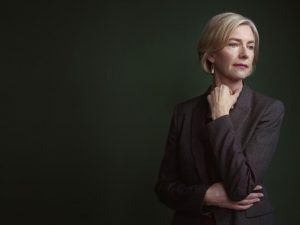
Jennifer Doudna, one of those scientists, was not the first to edit genes or genetically modify an organism. But the tool that her team discovered made a previously painstaking and expensive process simpler and usable by almost anyone. Entire PhDs were once spent changing a single gene to make one mutant mouse for research. The eureka moment came in 2012. Doudna remembers the instant when she realised what she had found. She was in her office high above San Francisco bay and her postgraduate student, Martin Jinek, was at the whiteboard. “It was a beautiful California day. I was looking across and seeing the Golden Gate Bridge,” says Doudna, gesturing towards the window: “The sun was streaming in, Martin was writing at the whiteboard.” Stroke by stroke he began sketching a simplified version of a previously obscure molecular mechanism that bacteria use to fight infection. The device had an ungainly name, CRISPR-Cas9. But realisation now dawned that its function was supremely elegant: it chopped up the DNA of invading viruses. What made that discovery important was that the tool could also be programmed to cut up DNA of any kind. Doudna’s team had worked out how to edit the genome of every living thing – even humans.
More here.

 The
The Pankaj Mishra and Nikil Saval discuss V.S. Naipaul in n+1:
 Few nations have been as obsessed with their status in the world as Great Britain. Not surprisingly, the
 From the start of the Russia investigation, President Trump has been working to discredit the work and the integrity of the special counsel, Robert Mueller; praising men who are blatant grifters, cons and crooks; insisting that he’s personally done nothing wrong; and reminding us that he hires only the best people.
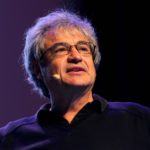 Quantum mechanics and general relativity are the two great triumphs of twentieth-century theoretical physics. Unfortunately, they don’t play well together — despite years of effort, we currently lack a completely successful quantum theory of gravity, although there are some promising ideas out there. Carlo Rovelli is a pioneer of one of those ideas, loop quantum gravity, as well as the bestselling author of such books as
  Arsenic
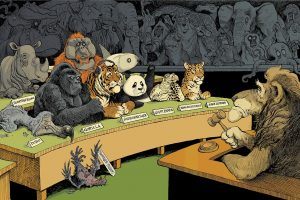 It’s a hot and humid afternoon in the suburbs of Washington DC, and Bob Watson is looking worried. The renowned atmospheric chemist sits back on a bench in his yard, hemmed in by piles of paperwork. He speaks with his characteristic rapid-fire delivery as he explains the tensions surrounding the international committee he helms. The panel is supposed to provide scientific advice on one of the world’s most intractable problems — the
 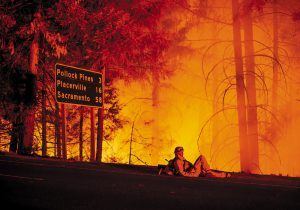 On the northwestern edge of Los Angeles, where I grew up, the wildfires came in late summer. We lived in a new subdivision, and behind our house were the hills, golden and parched. We would hose down the wood-shingled roof as fire crews bivouacked in our street. Our neighborhood never burned, but others did. In the Bel Air fire of 1961, nearly five hundred homes burned, including those of Burt Lancaster and Zsa Zsa Gabor. We were all living in the “wildland-urban interface,” as it is now called. More subdivisions were built, farther out, and for my family the wildfire threat receded.
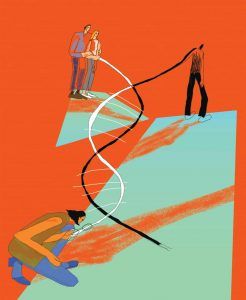 Last year, I did what 12 million people from all over the world have done and surrendered my spit to a home DNA-testing company. I hoped a
 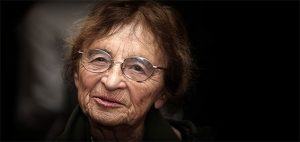 Agnes Heller*: I do not like the term populist as it is used in the context of Viktor Orban, because it does not say anything. Populists rely typically on poor people. Orban uses nationalistic vocabulary and rhetoric, he mobilizes hatred against the stranger and the alien, but it has nothing to do with populism. It has to do with the right-wing, but this is also questionable, because Orban is a man who is interested only in power.
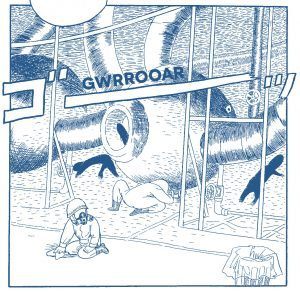 In October 2011, seven months after the tsunami and meltdowns, a second collection of the artist’s work was published in Japan, again to much acclaim. Titled Deep Sea Fish (Shinkaigyō), the volume reprinted stories that Katsumata drew in the 1980s about the disposable laborers who clean and maintain Japan’s nuclear power plants, as well as others he wrote in the 1970s dealing (sometimes indirectly) with the way industrialization had upended the Japanese countryside, creating a new class of alienated immigrants in the cities and a world of vanishing fables in the interior. This juxtaposition reflects the trajectory of the artist’s own life. He was born and raised in a farming village named Kahoku-cho, located on the Kitakami River just north of the major port city of Ishinomaki in northern Japan. Here, he spent his non-school hours reading comics and tending the family cows. After graduating high school in 1962, Katsumata moved to Tokyo to take up a job selling high-end laboratory equipment for a subsidiary of Hitachi. In 1965, he entered Tokyo University of Education, got a degree in physics, and began a master’s in nuclear physics, but quit in 1971 to focus full-time on cartooning.
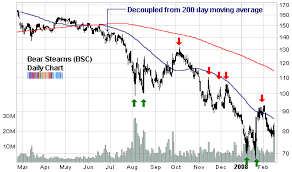 IT’S BEEN TEN YEARS NOW
 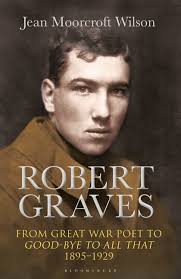 Graves’s life was, in every sense, chaotic, but purposely so. He believed that ‘tranquillity’ (the Wordsworthian recipe) narcotises true poetry. The poet, like the kettle, must boil to produce. A few weeks before Graves started on Good-bye to All That, Riding enlarged the ménageto quatre with an Irish literary adventurer. It went all wrong and she jumped out of a fourth-floor window in Hammersmith. Graves followed suit. Both survived.
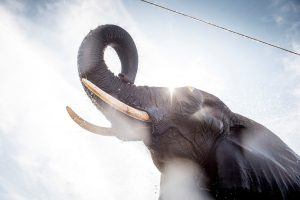 Elephants ought to get a lot of cancer. They’re huge animals, weighing as much as eight tons. It takes a lot of cells to make up that much elephant. All of those cells arose from a single fertilized egg, and each time a cell divides, there’s a chance that it will gain a mutation — one that may lead to cancer. Strangely, however, elephants aren’t more prone to cancer than smaller animals. Some research even suggests they