
by Pranab Bardhan
 In contrast with other genres in literature, in crime fiction, which mainly started in the mid-19th century, women writers (and even women sleuths) became active around the same time as male writers and sleuths in their stories. By some accounts around the middle of 1860’s, both the first modern detective novels (by female as well as male writers in US, UK and France) and the first professional female detectives in them (one Mrs. G— in one case, Mrs. Paschal in another, both working for the British police) appeared. Most of us, of course, are more familiar with characters in the Golden Age of crime fiction of the 1920’s and the 1930’s, particularly, Agatha Christie’s Miss Jane Marple and Dorothy Sayers’ Harriet Vane. The number of female writers and sleuths has proliferated in recent decades. It goes without saying that not all of the female crime novelists come out as feminists, and that some male writers can do feminist crime novels quite well.
Yet the stereotypical case of male crime novels has involved women as femme fatales (usually creatures born of male anxiety), or more often as victims of horrendous crimes, with a common display of vicarious eroticism over mangled beautiful female bodies. In more recent years we have met other creatures of male fantasy, like the freelance superwoman sleuth (and computer hacker) with a traumatized past, Lisbeth Salander, in the Swedish international best-selling Millennium series, that started in 2005 with The Girl with the Dragon Tattoo by Stieg Larsson, and continued after his death by David Lagercrantz, stories full of rape, murder, vengeance and computer hacking of dire secrets. (On computer hacking, a worthy successor of Lisbeth in sheer technical virtuosity is a brilliant female black teenager, Sam Morpeth, in Christopher Brookmyre’s recent thriller, The Last Hack; all through her dangerous heroic exploits she, however, never forgets to take care of a younger sister with learning disabilities while the mother is in prison). Read more »

 Sughra Raza. Untitled; Arnold Arboretum, Boston, March, 2020.
 The “Consequence Argument” is a powerful argument for the conclusion that, if determinism is true, then we have no control over what we do or will do. The argument is straightforward and simple (as given in the Stanford Encyclopedia of Philosophy):
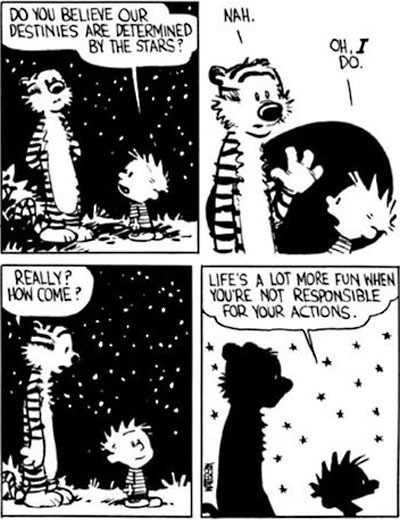 What can I make of these decisions emerging out of the blue, which I appear to act upon “freely?” What are the consequences of how I choose to react to them? Although these are vague philosophical musings, let’s look instead at the science of it all. I’m a layman, neither scientist nor philosopher, but as we are rediscovering, scientists are a less fuzzy lot than philosophers. I’m more likely to ask the woman with the medical degree about the true meaning of my dry cough than to ask philosopher

 For the same reason as large parts of the world, I spend even more time indoors these days than I already would. One thing I have been doing is rereading the Harry Potter books – or paying Stephen Fry to read them to me.
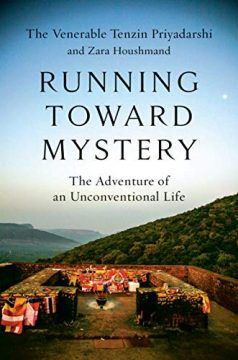 In the memoir, Running Toward Mystery: The Adventure of an Unconventional Life, the Venerable Tenzin Priyadarshi chooses to become a monk at the peak of his youthful potential. He rejects the spiritual path as a mere life enhancer and encourages readers to embark on a more totalizing journey of self-actualization. By embracing mystery, as opposed to cultural explanations, we can arrive at deeper questions. This wish bookends this carefully written memoir, which is co-authored by Zara Houshmand. Despite an already crowded landscape of books depicting religious quests and spiritual advice- both classics and new works – this book is bound to be widely read if for no other reason than Priyadarshi’s current role as a thought leader while serving as the first Buddhist chaplain at Massachusetts Institute of Technology (MIT).

 Among other things Covid-19 is a moral crisis. It requires suspending the usual rules about who deserves what, firstly because it is impossible for many of us to pay what we owe in these conditions, and secondly because of the priority of the humanitarian duty to save as many lives as possible. Nevertheless we must not forget about justice. In particular we must make sure that the costs of this crisis are not born disproportionately by the poor, those least able to afford the burden but also least able to escape it.
 The current Covid 19 pandemic is undoubtedly a disaster for millions of people: for those who die, who grieve for the dead, who suffer through a traumatic illness, or who, suddenly lacking work and income, face the prospect of dire poverty as the inevitable recession kicks in. And there are other bad consequences that one might not describe as ‘disastrous” but which are certainly significant: the stress experienced by all those providing care for the sick; the interruption in the education of students; the strain put on families holed up together perhaps for months on end; the loneliness suffered by those who are truly isolated; and the blighted career prospects of new graduates in both the public and the private sectors.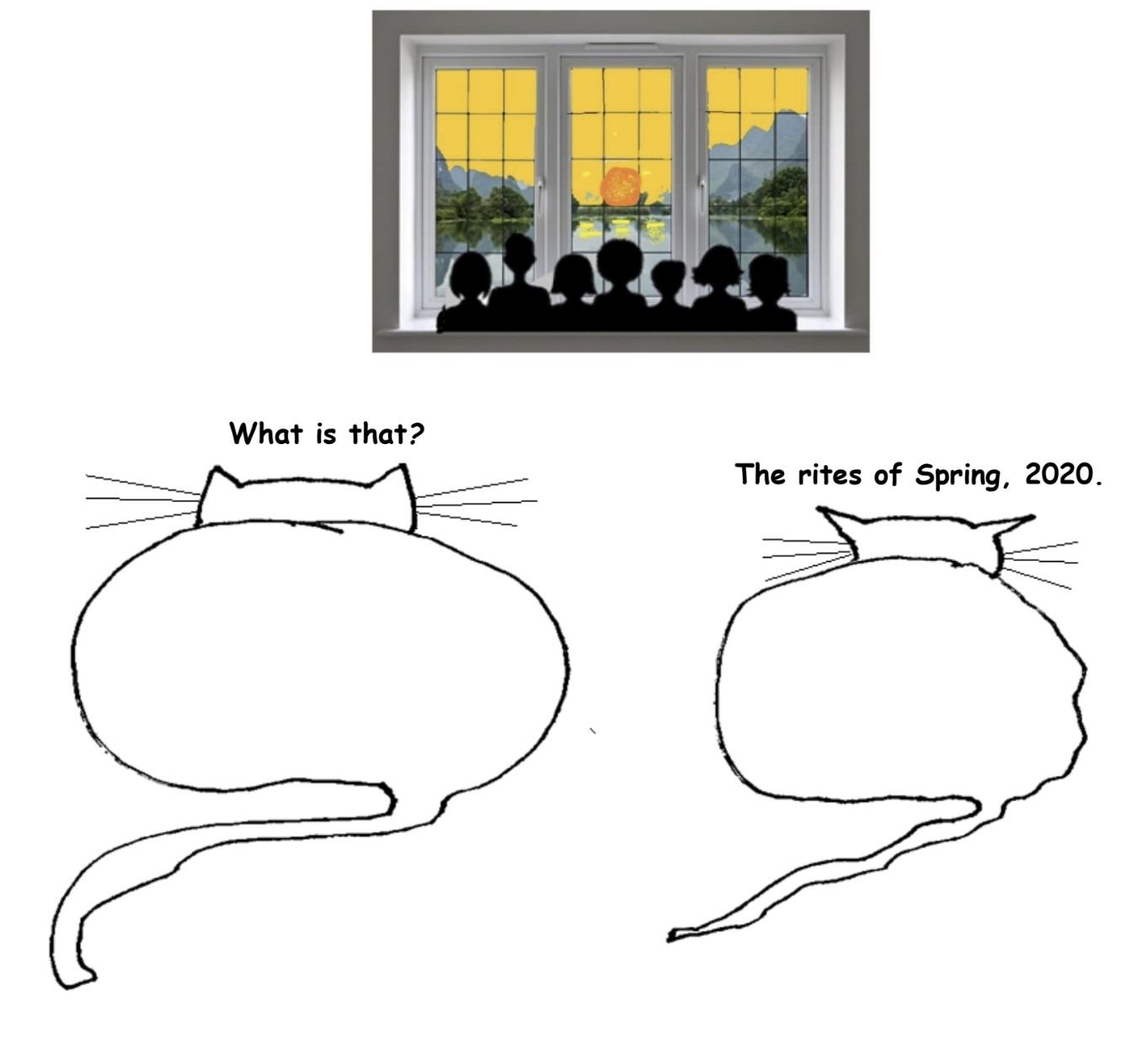
 The coronavirus amounts to an ongoing, real-world experiment in societal response to an international calamity. The pandemic will be studied for decades, but COVID has already taught us much about the relationship between science and decision-making.