Tuesday Poem

Selection

I have seen a deer with antlers tipped in gold,
and it was the most beautiful thing that I can imagine.
By daylight the antler’s branches burned like tallow candles
burning in darkness. In darkness they burned like branching stars.

It could be that somewhere near there’s a river of running gold,
where the deer, stooping its head to drink, was gilt by chance.
But I have been looking for that river all my life,
and though the sun throws coins, they sink out of sight in the water.

You might think this was a dream, but no: here is the dream.
The deer stood constellated above me as I slept,
and said, with its golden tongue, I grow the gold from inside,
according to the laws of natural selection.

The gold draws hunters to me, drawn to me above all,
and meek as I am, I am the first and most readily martyred.
The rewards due to the martyr are greater than you can imagine,
and so I thrive, and so I am selected for.

I would have thought endurance in this world, I said,
is what selection means, and whatever comes afterward
cannot flow backward to favor any living things.
That shows what you know, said the deer, and I awoke.

by Jeff Dolven
from
The Yale Review
Sunday, October 3, 2021

Social Media as the “False Representative Class”

Justin E. H. Smith in his Substack newsletter Hinternet:

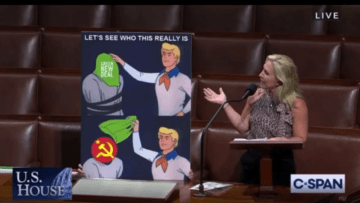
Social media have gutted institutions: journalism, education, and increasingly the halls of government too. When Marjorie Taylor Greene displays some dumb-as-hell anti-communist Scooby-Doo meme before congress, blown up on poster-board and held by some hapless staffer, and declares “This meme is very real”, she is channeling words far, far wiser than the mind that produced them. We’re all just sharing memes now, and those of us who hope to succeed out there in “reality”, in congress and classrooms and so on, momentarily removed from our screens and feeds, must learn how to keep the memes going even then. “Real-world” events, in other words, are staged by the victors in our society principally with an eye to the potential virality of their online uptake. And when virality is the desired outcome, clicks effected in support or in disgust are all the same. Thus the naive idea that AOC wore her “Tax the Rich” gown to a particular event attended by a select crowd within a well-defined physical space completely distorts the motivation behind the gesture, which was, obviously, to make waves not during, but immediately after, the event, not for the people at the event, but for all the people who were not invited.

More here.

In Topology, When Are Two Shapes the Same?

Kevin Hartnett in Quanta:

Topologists study the properties of general versions of shapes, called manifolds. Their animating goal is to classify them. In that effort, there are a few key distinctions. What exactly are manifolds, and what notion of sameness do we have in mind when we compare them?

Here are the basic differences.

Manifolds can be shapes of any dimension, from zero-dimensional points to one-dimensional lines to two-dimensional surfaces (like the surface of a ball) to 100-dimensional spaces (and beyond) that are hard to picture but as mathematically real as anything else. Mathematicians study them because, among other reasons, three- and four-dimensional manifolds provide the setting of our lives.

More here.

What Is Literature For?: A Symposium on Angus Fletcher’s “Wonderworks”

Keith P. Mankin (and also Ed Simon, Erik J. Larson, and Angus Fletcher) in the Los Angeles Review of Books:

There is great emotional weight in literature. Anyone who has cried for the death of Old Yeller, laughed at the antics of Lucky Jim, or been thrilled by the adventures of Simon Templar can attest to that simple fact. What has never been simple is understanding why a string of written words can create such an emotional response, or possibly more important, why some strings achieve it so much more effectively than others.

Angus Fletcher’s breathtaking book Wonderworks: The 25 Most Powerful Inventions in the History of Literature attempts to explain that very thing. With degrees in both English Literature and Neuroscience, Dr. Fletcher explores the intersection of two fields that, on their face, have little overlap. His book follows a linear and roughly chronological narrative of literary innovation from the standpoint of a reader’s emotional response. At the same time, he peers into the central nervous system at each milepost to find out what biological and biochemical action may be governing those emotions. Intriguingly, he has also found a parallel and almost linear narrative of our knowledge of the way the brain works, furthering his argument that the two functions are intertwined.

More here.

I Hope You Enjoy My Subtitles and Dubs—Then Forget I Exist

David Buchannan in Zocalo Public Square:

I’m an audiovisual translator, which means that I—and others like me—help you understand the languages spoken on screen: You just click that little speech bubble icon in the bottom-right corner of your preferred streaming service, select the subtitles or the dub, and away you go. These scripts are all written by someone like myself, sitting quietly at a computer and spending day after day trying to figure out, “What are they actually saying here?”
I decided to become an audiovisual translator because it allows me to combine cinema and French culture, my two favorite things. But there is also something about the anonymity of the work that appeals to me, which is the name of the game for our craft. As Bruce Goldstein, director of repertory programming at New York’s Film Forum, put it in The Art of Subtitling, “Good subtitles are designed to be inconspicuous, almost invisible.”

More here.

Should scientists run the country?

Philip Ball in The Guardian:

How many lives would have been saved in the pandemic if the UK government had truly “followed the science”? The question is unanswerable but hardly academic. We cannot accurately quantify how many lives were lost by the politically driven delays to lockdown in the first and second waves, but the number is not small. So would we have done better simply to put scientists in charge of pandemic policy? Might we hand over climate change policy to them, too? In fact, would their evidence-based methods make them better leaders all round? How much say scientists should have in running society has been debated since the dawn of science itself. Francis Bacon’s utopian Bensalem in his 1626 book New Atlantis is a techno-theocracy run by a caste of scientist-priests who manipulate nature for the benefit of their citizens. Enthusiasm for technocracies governed by scientists and rooted in rationalism flourished between the world wars, when HG Wells advocated their benefits in The Shape of Things to Come.

But while post-second world war issues such as nuclear power, telecommunications and environmental degradation heightened the demand for expert technical advice to inform policies, the UK government’s first official scientific adviser, Solly Zuckerman, appointed in 1964 by Harold Wilson, stressed the limits of his role. “Advisory bodies can only advise,” he said. “In our system of government, the power of decision must rest with the minister concerned or with the government as a whole. If scientists want more than this then they’d better become politicians.”

That remains the common view today: scientists advise, ministers decide.

More here.

‘A revolutionary posture’: Singer Dar Williams takes a stand for optimism

Stephen Humphries in The Christian Science Monitor:

On the cover of her new album, Dar Williams stands on a floating platform in a lake. A breeze ripples the water so that it’s as wrinkled as elephant skin. As Ms. Williams gazes toward an unseen horizon, her scarlet shawl flutters behind her like a vapor trail. The atomistic image is metaphorical. Ms. Williams says the photo, taken by a drone, makes her look like a red dot destination marker on a map. The album, debuting Oct. 1, is titled “I’ll Meet You Here.” “Somehow we have to figure out how to continue to meet the moment and meet one another,” even when we seem to be stranded, explains the folk singer in a phone call.

Ms. Williams’ songs often illustrate how human connections can be a bridge across troubled waters. In 2017, the songwriter wrote a book about solving social problems by finding common ground. “What I Found in a Thousand Towns” examines local communities that have been revitalized by disparate citizens who’ve banded together in collective pursuits. Ms. Williams’ 10th album goes one step further. It posits that social connections can empower individuals to tackle global issues such as climate change. “The things I love about her songwriting are all on this album,” says songwriter Maia Sharp, who shares a similar literate, lyrical sensibility on her latest album, “Mercy Rising.” “I just thoroughly enjoyed it, from a thinker’s perspective, from an emotional perspective. She hits on familiar heartfelt subjects and themes, but operates in a completely unique way. … It’s very layered, and I always get a little more from it every time I hear it.”

More here.

Sunday Poem

Dothead

Well yes, I said, my mother wears a dot.
I know they said “third eye” in class, but it’s not
an eye eye, not like that. It’s not some freak
third eye that opens on your forehead like
on some Chernobyl baby. What it means
is, what it’s showing is, there’s this unseen
eye, on the inside. And she’s marking it.
It’s how the X that says where treasure’s at
is not the treasure, but as good as treasure.—
All right. What I said wasn’t half so measured.
In fact, I didn’t say a thing. Their laughter
had made my mouth go dry. Lunch was after
World History; that week was India—myths,

caste system, suttee, all the Greatest Hits.
The white kids I was sitting with were friends,
at least as I defined a friend back then.
So wait, said Nick, does your mom wear a dot?
I nodded, and I caught a smirk on Todd—
She wear it to the shower? And to bed?—
while Jesse sucked his chocolate milk and Brad
was getting ready for another stab.
I said, Hand me that ketchup packet there.
And Nick said, What? I snatched it, twitched the tear,
and squeezed a dollop on my thumb and worked
circles till the red planet entered the house of war
and on my forehead for the world to see
my third eye burned those schoolboys in their seats,
their flesh in little puddles underneath,
pale pools where Nataraja cooled his feet.

by Amit Majmudar
from Dothead
Alfred A. Knopf, Inc, 2016

Saturday, October 2, 2021

How Milton Friedman Aided and Abetted Segregationists in His Quest to Privatize Public Education

Nancy MacLean over at INET:

The year 2021 has proved a landmark for the “school choice” cause as Republican control of a majority of state legislatures combined with pandemic learning disruptions to set the stage for multiple victories. Seven U.S. states have created new “school choice” programs and eleven others have expanded current programs, with laws that authorize taxpayer-funded vouchers for private schooling, provide tax credits, and authorize educational savings accounts to invite parents to abandon public schools.

“School choice” sounds like it offers options. But my new INET Working Paper shows that the whole concept, as first implemented in the U.S. South in the mid-1950s in defiance of Brown v. Board of Education, aimed to block the choice of equal, integrated education for Black families. Further, Milton Friedman, soon to become the best-known neoliberal economist in the world, abetted the push for private schooling that states in the U.S. South used to evade the reach of the ruling, which only applied to public schools. So, too, did other libertarians endorse the segregationist tool, including founders of the cause that today avidly pushes private schooling. Among them were Friedrich Hayek, Murray Rothbard, Robert Lefevre, Isabel Patterson, Felix Morley, Henry Regnery, trustees of the Foundation for Economic Education (FEE), and the William Volker Fund, which helped underwrite the American wing of the Mont Pelerin Society, the nerve center of neoliberalism.

Friedman and his allies saw in the backlash to the desegregation decree an opportunity they could leverage to advance their goal of privatizing government services and resources. Whatever their personal beliefs about race and racism, they helped Jim Crow survive in America by providing ostensibly race-neutral arguments for tax subsidies to the private schools sought by white supremacists.

More here.

Are we heading for a new era of “stagflation”?

James Meadway in New Statesman:

Stagflation”, an appropriately ugly word coined in the 1970s to describe the grisly combination of high inflation and low growth that afflicted that decade, is making a return to economic discussion. Nouriel Roubini, the “Doctor Doom” credited with predicting the 2008 financial crash, has suggested that the “mild stagflation” of earlier this year could be followed by a more serious recurrence in the future. As I’ve written in the New Statesman over the past 18 months, endemic Covid alone would be enough to drive up costs and therefore prices across the world. The economic outlook is uniformly grim – perhaps more so than even Roubini thinks.

First, while inflation is higher than it has been, and is likely to remain so, this is not the result of the extraordinary expansion of the money supply over the past year, as most “inflation hawks” have argued. Their theory seems simple – more money chasing the same goods makes prices go up – but in reality the volumes of Quantitative Easing (QE) cash that central banks such as the Bank of England have issued since early last year have made their way into different forms of hoarding, rather than spending.

The British government has spent, for example, extraordinary amounts on the furlough scheme and, in effect, paid for it with QE. But with households having saved an estimated £200bn since the start of the pandemic, that money is not entering the wider economy and so is having limited impact on prices. The injection of QE into the financial system has only caused prices to rise in specific markets – helping to support rising house prices in the UK and US stock markets.

The causes of the current general rise in prices are more serious, and harder to solve. The supply chain disruptions caused by Covid are obvious contributing factors, with the shock of lockdowns and factory closures last year still making their way through the system. But the ongoing, and perhaps permanent, impact of Covid as the virus becomes endemic – with people continuing to fall ill, being forced to self-isolate, and the extra costs and hassles of performing many economic activities – will result in significant costs across the economy.

More here.

The True Foucault

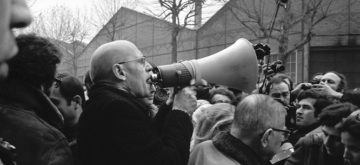
Michel Foucault and Jean Paul Sartre demonstrate in front of the entrance of factories Renault to protest against Pierre Overney’s assassination (Photo by Josee LorenzoINA via Getty Images)

Michael C. Behrent in Dissent:

Suddenly, it seems, everyone has a lot to say about Michel Foucault. And much of it isn’t pretty. After enjoying a decades-long run as an all-purpose reference point in the humanities and social sciences, the French philosopher has come in for a reevaluation by both the right and the left.

The right, of course, has long blamed Foucault for licensing an array of left-wing pathologies. Some conservatives have even made Foucault a catchall scapegoat for ills ranging from slacker nihilism to woke totalitarianism. But a strange new respect is emerging for Foucault in some precincts on the right. Conservatives have flirted with the notion that Foucault’s hostility to confessional politics could make him a useful shield against “social justice warriors.” This presumption was strengthened during the COVID-19 pandemic, when Foucault’s critique of “biopolitics”—his term for the political significance assumed by public-health and medical issues in modern times—provided a handy weapon for attacking liberal fealty to scientific expertise.

As Foucault’s standing has climbed on the right, it has fallen on the left. A decade ago, left attention focused on whether Foucault’s discussions of neoliberalism in the 1970s suggested that his philosophical commitments harmonized with the emergent free-market ideology: hostile to the state, opposed to disciplinary power, and tolerant of behaviors previously deemed immoral. (In full disclosure, I contributed to this debate.) Recently, the locus of the leftist critique has, like its conservative counterpart, shifted to cultural politics. Thus the social theorists Mitchell Dean and Daniel Zamora maintain that Foucault’s politicization of selfhood inspired the confessional antics of “woke culture,” which seeks to overcome societal ills by making the reform of one’s self the ultimate managerial project. At the same time, Foucault’s standing has suffered a debilitating blow in the wake of recent claims that he paid underage boys for sex while living in Tunisia during the 1960s. These charges have brought new attention to places in his writing where—like some other radicals of his era—he questioned the need for a legal age of consent.

More here.

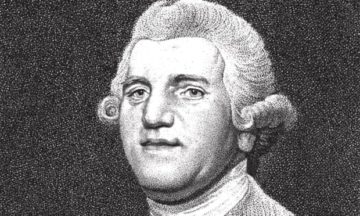
Josiah Wedgwood: The Radical Potter

Rowan Moore at The Guardian:

There are designers and there are designers. There are those who create beautiful objects and invent new techniques, some who transform taste, some who make a good business out of what may or may not be great products, some whose greatest talents are in selling. Josiah Wedgwood (1730-95) was all of the above, and more.

It wasn’t just that he endlessly experimented with chemicals and minerals, and with kiln temperatures and firing times, to revolutionise the ceramic industry, or that he had a sharp and exacting eye for the elegance of the vases and dinner services and medallions that his company made, but also that he pioneered new ways of getting them to buyers all over the world, of marketing them, of product placement and branding. He became very rich as a result.

more here.

‘Cloud Cuckoo Land’ By Anthony Doerr

Marcel Theroux at the NYT:

“Cloud Cuckoo Land,” a follow-up to Doerr’s best-selling novel “All the Light We Cannot See,” is, among other things, a paean to the nameless people who have played a role in the transmission of ancient texts and preserved the tales they tell. But it’s also about the consolations of stories and the balm they have provided for millenniums. It’s a wildly inventive novel that teems with life, straddles an enormous range of experience and learning, and embodies the storytelling gifts that it celebrates. It also pulls off a resolution that feels both surprising and inevitable, and that compels you back to the opening of the book with a head-shake of admiration at the Swiss-watchery of its construction.
The novel follows five characters in three different historical epochs, who at first seem like the protagonists of separate books.

more here.

The Conservatives Dreading—And Preparing for—Civil War

Emma Green in The Atlantic:

“Let me start big. The mission of the Claremont Institute is to save Western civilization,” says Ryan Williams, the organization’s president, looking at the camera, in a crisp navy suit. “We’ve always aimed high.” A trumpet blares. America’s founding documents flash across the screen. Welcome to the intellectual home of America’s Trumpist right.

As Donald Trump rose to power, the Claremont universe—which sponsors fellowships and publications, including the Claremont Review of Books and The American Mind—rose with him, publishing essays that seemed to capture why the president appealed to so many Americans and attempting to map a political philosophy onto his presidency. Williams and his cohort are on a mission to tear down and remake the right; they believe that America has been riven into two fundamentally different countries, not least because of the rise of secularism. “The Founders were pretty unanimous, with Washington leading the way, that the Constitution is really only fit for a Christian people,” Williams told me. It’s possible that violence lies ahead. “I worry about such a conflict,” Williams told me. “The Civil War was terrible. It should be the thing we try to avoid almost at all costs.”

That almost is worth noticing. “The ideal endgame would be to effect a realignment of our politics and take control of all three branches of government for a generation or two,” Williams said. Trump has left office, at least for now, but those he inspired are determined to recapture power in American politics.

More here.

How Science Conquered Diphtheria, the Plague Among Children

Perri Klass in Smithsonian:

Even Noah Webster, that master of words, did not have a name for the terrible sickness. “In May 1735,” he wrote in A Brief History of Epidemic and Pestilential Diseases, “in a wet cold season, appeared at Kingston, an inland town in New-Hampshire, situated in a low plain, a disease among children, commonly called the ‘throat distemper,’ of a most malignant kind, and by far the most fatal ever known in this country.” Webster noted the symptoms, including general weakness and a swollen neck. The disease moved through the colonies, he wrote, “and gradually travelled southward, almost stripping the country of children….It was literally the plague among children. Many families lost three and four children—many lost all.” And children who survived generally went on to die young, he wrote from his vantage point of more than half a century later. The “throat distemper” had somehow weakened their bodies.

In 1821, a French physician, Pierre Bretonneau, gave the disease a name: diphtérite. He based it on the Greek word diphthera, for leather—a reference to the affliction’s signature physical feature, a thick, leathery buildup of dead tissue in a patient’s throat, which makes breathing and swallowing difficult, or impossible. And children, with their relatively small airways, were particularly vulnerable.

…Then, toward the end of the 19th century, scientists started identifying the bacteria that caused this human misery—giving the pathogen a name and delineating its poisonous weapon. It was diphtheria that led researchers around the world to unite in an unprecedented effort, using laboratory investigations to come up with new treatments for struggling, suffocating victims. And it was diphtheria that prompted doctors and public health officials to coordinate their efforts in cities worldwide, taking much of the terror out of a deadly disease.

More here.