
Endling
There’s a man who cares
for the last snail of its kind,
Achatinella apexfulva, knows precisely
how much moisture, shade and light
it needs to thrive while it spends
its dwindling time in a glass cabinet.
Don’t think about what you can start,
think about what you can end was the advice
I heard on a time management podcast
while slicing bananas
for my daughter’s breakfast.
The banana comes from Guatemala
where its kind is plagued
by the Fusarium fungus to a possible
almost certain if-it-continues
at-this-rate extinction.
I’ve never been to Guatemala,
seen a rotting banana plant, or touched
a snail’s glossy shell of the kind
that resembles the palette
of a chocolate box— dark brown, chestnut,
white, the occasional splash of mint.
I watch my daughter collect stones
in her plastic bucket, clinking them beside her
as she runs smiling from one corner
of our yard to another — impossible to say
 In the last few years, I have had dozens of conversations with leaders of companies and nonprofit organizations about the illiberalism that is making their work so much harder. Or rather, I should say I’ve had one conversation—the same conversation—dozens of times, because the internal dynamics are so similar across organizations. I think I can explain what is now happening in nearly all of the industries that are creative or politically progressive by telling you about what happened to American universities in the mid-2010s. And I can best illustrate this change by recounting the weirdest week I ever had in my 26 years as a professor.
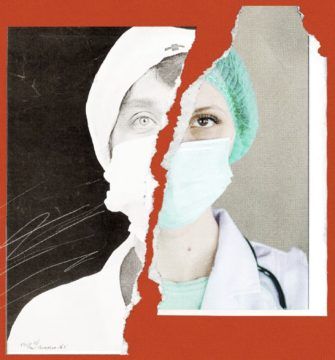 America’s frustrating inability to learn from the recent past shouldn’t be surprising to anyone familiar with the history of public health.
  In case we wonder why not all of us have healthy, sustaining, lifelong friendships, this issue offers some answers to the riddle of why and how friendships, begun in such pleasure and good faith, can derail so catastrophically.
 The United States began bombing the border zone, then known as the Federally Administered Tribal Areas (FATA), in 2004, ostensibly to combat al-Qaeda and the Taliban. It has bombed the area at least 430 times, according to the London-based Bureau of Investigative Journalists, and killed anywhere between 2,515 to 4,026 people.
 The term ‘atheist’ can be just as ambiguous as ‘religious’ and ‘God’. In the 17th century, it was essentially an all-purpose word used against anyone whose view of God departed from orthodoxy – much in the way that ‘communist’ was (and is) used in the USA to cast aspersion on political opponents (and much in the way that ‘Spinozist’ was used in the early modern period after Spinoza’s works were posthumously published and condemned). But Spinoza does not only dismantle the orthodox notion of a personal God, which he regards as a source of human misery. He also famously refers to ‘God or Nature’ (Deus sive Natura), which suggests that God is nothing but nature, and that ‘God’ can broadly be construed to refer both to the visible cosmos and to the unseen but fundamental power, laws and principles that govern it. And this, to me at least, looks like true atheism. In Spinoza’s view, all there is is nature. There is no supernatural; there is nothing that does not belong to nature and that is not subject to its causal processes.
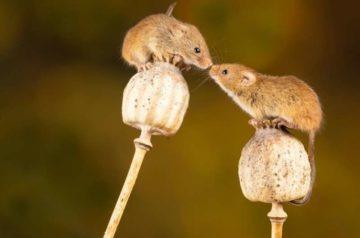 “Normal behavior and physiology depends on a near 24-hour circadian release of various hormones,” said Jeff Jones, who led the study as a postdoctoral research scholar in biology in Arts & Sciences and recently started work as an assistant professor of biology at Texas A&M University. “When hormone release is disrupted, it can lead to numerous pathologies, including affective disorders like anxiety and depression and metabolic disorders like diabetes and obesity.
 Urging the German people to “stop the steal,” Donald J. Trump claimed that he was elected Chancellor of Germany over the weekend. Trump said that, once the official vote tallies have been recounted, it will be clear that he won the German election by a “landslide.” Reflecting on his purported win, Trump said,
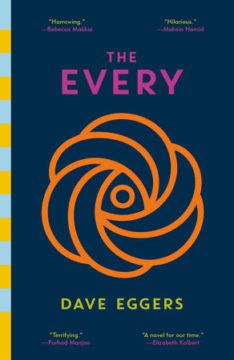 Dave Eggers’s newest book,
  In the question to understand the biology of life, we are (so far) limited to what happened here on Earth. That includes the diversity of biological organisms today, but also its entire past history. Using modern genomic techniques, we can extrapolate backward to reconstruct the genomes of primitive organisms, both to learn about life’s early stages and to guide our ideas about life elsewhere. I talk with astrobiologist Betül Kaçar about paleogenomics and our prospects for finding (or creating!) life in the universe.
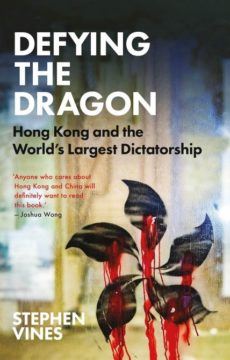 “Leave? Certainly not. This Brit is staying” wrote journalist Stephen Vines in July 1997. Vines had given up his full-time position at the Observer in London to be stationed in Hong Kong on a part-time basis in 1987. At the time of the Handover, Vines had been living and working in Hong Kong as a journalist and businessman for ten years. He had faith in the people of Hong Kong, in the energy and audacity of the city. He believed that it was “foolish to jump before being pushed,” referring to those who had made plans to leave the city before the governance of the territory was returned to China. Vines kept his resolution and stayed in Hong Kong for another 24 years, constantly reporting on the business, finance, and politics of this city for a wide range of local and international media outlets. In 2021, he paid homage to the people of Hong Kong with his new book, Defying the Dragon: Hong Kong and the World’s Largest Dictatorship. In August, two months after the book’s publication, Vines ended his 34-year-long sojourn in the city and departed for London.
 “WORRYING SEEMS ABOUT
  In 2018, Jennifer Culverson was at home in Charleston, South Carolina, when she was violently assaulted by her then-boyfriend. (Culverson’s name has been changed to protect her identity.) Her attacker overpowered her and battered her head against the floor with such force that it caused a traumatic brain injury. In the weeks and months that followed, Culverson couldn’t walk or get out of bed. She had trouble putting words together and her speech was slurred.
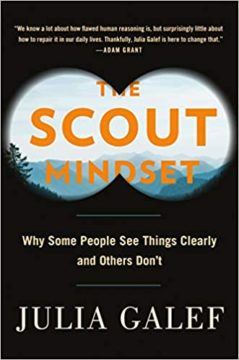 Reading between the lines, I think she learned pretty much the same thing a lot of the rest of us learned during the grim years of the last decade. Of the fifty-odd biases discovered by Kahneman, Tversky, and their successors, forty-nine are cute quirks, and one is destroying civilization. This last one is confirmation bias – our tendency to interpret evidence as confirming our pre-existing beliefs instead of changing our minds. This is the bias that explains why your political opponents continue to be your political opponents, instead of converting to your obviously superior beliefs. And so on to religion, pseudoscience, and all the other scourges of the intellectual world.