by Tim Sommers
I’m not really interested in magic. But I am interested in crime. So, recently while reading a discussion of close-in magic by neuroscientists I perked up when they got to the question of how criminals, and others of questionable character (like magicians), steal wristwatches right off their victims’ wrist without being detected. (Still relevant? Wrist watch wearing, admittedly, is way down from its peak in the 1950s, but a third of adult males still wear one every day – and then there’s smartwatches, step counters, etc.)
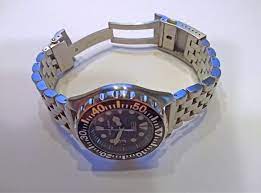
Apparently, there’s a skill and a trick involved in stealing a watch. The skill is to learn to undo the clasp using just your middle and pointer fingers, while simultaneously shaking hands with someone. Sure, that’s quite a skill to master, but I was more curious about how you then yank a watch off someone’s wrist without them noticing – particularly a watch with a “deployant clasp” that doesn’t open all the way. (See image above.)
Here’s what you do. You just clap the person on the shoulder at the same moment you yank off the watch. Apparently, this works. It’s all about distraction. Magicians have a fancy word for distraction. They call it “misdirection.” Personally, I find this irritating. I’ll stick with distraction.
Here’s another example of distraction from a magician. Before the start of a magic show I was dragged to, the audience was encouraged to come on stage and examine this large container to make sure it was real, solid, and had no trap door or hidden egress. Right before the show started the container was turned around by assistants, then closed. When the show opened, the container was turned back around, opened, and the magician stepped out to thunderous applause.
The crazy part is how the trick works. Having the audience check it out ahead of time was just a distraction. When they turned the container around, before they closed the door, the magician strolled casually out of the wings and climbed inside in full-view of the audience. I saw it clearly because I knew it was going to happen (because I had read a book the magician had written). But shouldn’t everyone have seen it? (Don’t even get me started on the “Invisible Gorilla.”)
Which brings me to my old roommate Nick. Read more »

 Every generation, when it reaches a certain age, makes two proclamations: Saturday Night Live used to be funnier, and “kids these days” are lazy and stupid.
 I think of Pearl S. Buck and end up thinking of William F. Buckley. I think of
  In late March the United Nations adopted a landmark
 The term “gastronomy” has no agreed-upon, definitive meaning. Its common meaning, captured in dictionary definitions, is that gastronomy is the art and science of good eating. But the term is often expanded to include food history, nutrition, and the ecological, political, and social ramifications of food production and consumption. For my purposes, I want to focus on the conventional meaning of gastronomy for which that dictionary definition will suffice.

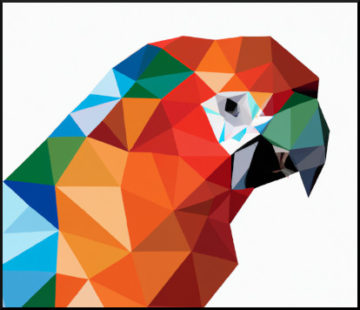 One of the most interesting debates within the larger discussion around large language models (LLMs) such as GPT-4 is whether they are just mindless generators of plausible text derived from their training – sometimes termed “

 Misha Japanwala. Breastplate, ca. 2018.
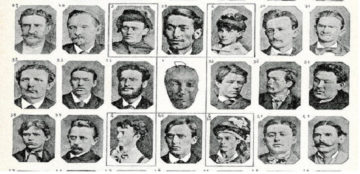 When they arrived in the U.S., Southern Italians brought with them the sense that they’d been branded as underdogs, that they belonged and would forever belong to a lower class, but the birth of the Italian-American gangster was rooted in attitudes toward the Mezzogiorno that dated back far earlier. After Italy was unified under Vittorio Emanuele II in 1861, a new national government imposed Piedmont’s centralized administrative system on the South, which led to violent rebellion against State authority. Politicians and intellectuals took pains to deflect responsibility for what they saw as the “barbarism” of the Mezzogiorno, and were particularly receptive to theories that placed the blame for the South’s many problems on Southern Italians’ own inborn brutishness. The decades following Unification saw the nascent fields of criminal anthropology and psychiatry establish themselves in the universities of Northern Italy; implementing the pseudosciences of phrenology and anthropometry in their search for evolutionary remnants of an arrested stage of human development manifested in the people of the Mezzogiorno, they used various instruments to measure human skulls, ears, foreheads, jaws, arms, and other body parts, catalogued these, and correlated them with undesirable behavioral characteristics, inventing in the process a Southern Italian race entirely separate from and unrelated to a superior Northern race and officially confirming the biological origins of Southern “savagery.”