by Barbara Fischkin
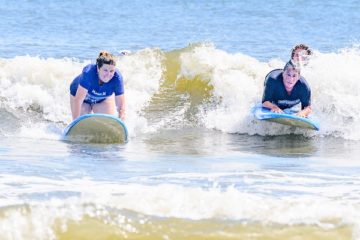
Photo by Bob Arkow
Deep Water Background
For an opus on surfing, I recommend Barbarian Days: A Surfing Life by William Finnegan. I am humbled each time I pick up this book. Four summers ago, at 64, I decided to try to surf. People who do not surf, and even some who do, are impressed when I mention this, as if any day now I will be gliding upright over sky-high waves and onto the shore. The truth: For me this is a very minor undertaking and would not even qualify as a hobby. In other words: It is something to sneeze at. I have yet to stand up on a surfboard.
I can get on two knees, briefly and occasionally crouch on one foot while supported by the other knee. Then splash, I fall backwards into the water. Backwards is the correct way to fall. You can see the board before it bangs you in the head. With any luck you can then grab its rim or use the leash—presumably still attached around your ankle—to pull the board towards you and safely away from other surfers. I congratulate myself for, at the least, being able to fall off a surfboard well.
Finnegan writes that if you want to be an accomplished surfer, you must start by the time you are fourteen, at the latest. The exact quote: “People who tried to start at an advanced age, meaning over fourteen, had, in my experience, almost no chance of becoming proficient, and usually suffered pain and sorrow before they quit. It was possible to have fun, though, under supervision, in the right conditions…”
I agree, with some caveats. Read more »
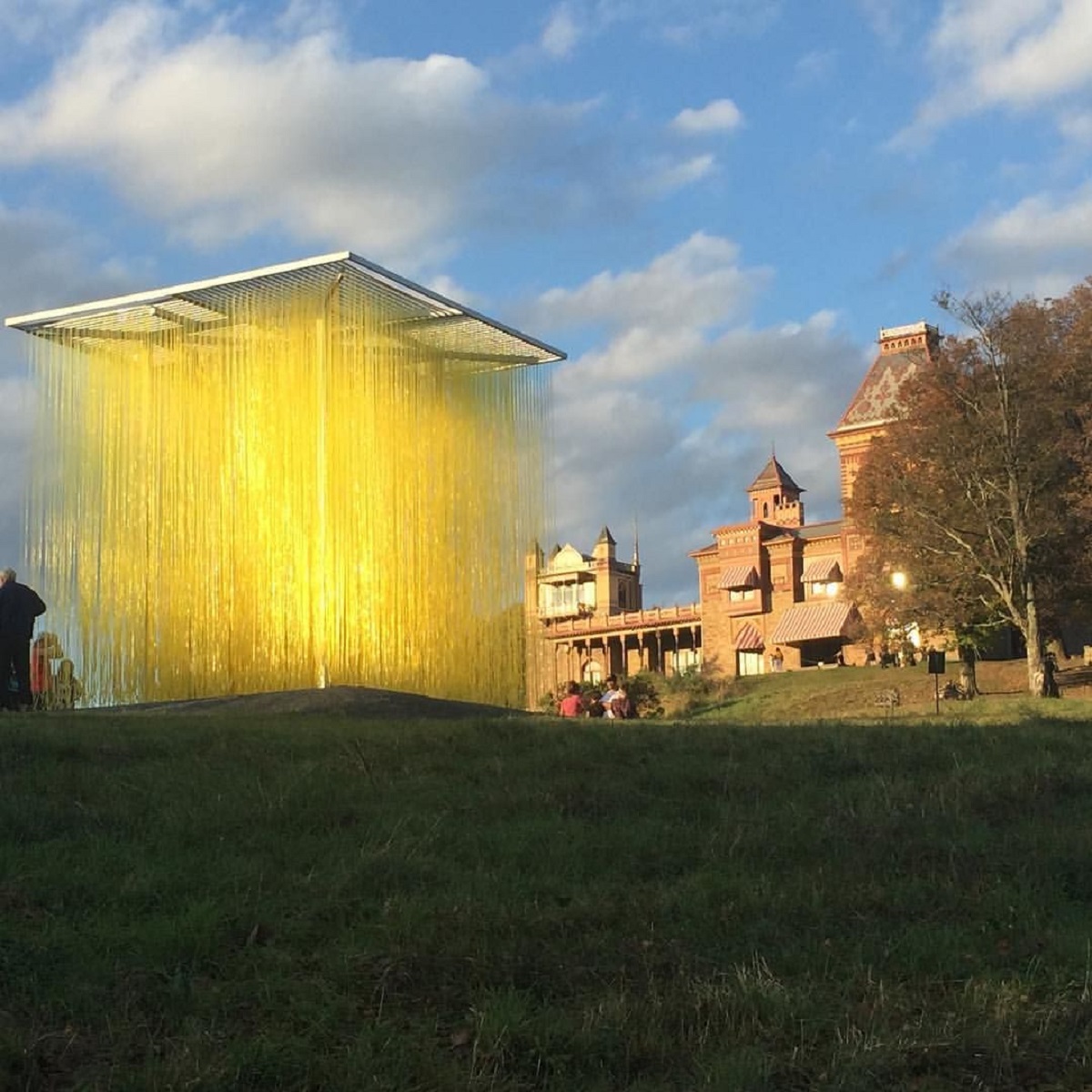 Jesus Rafael de Soto. Penetrable, at Olana State Historical Site, New York.


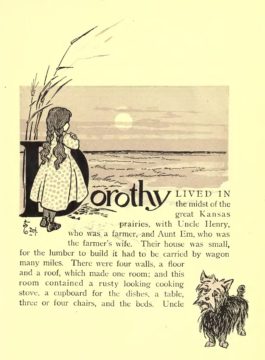 On a small paper bag maybe from a bookstore, one side Romeo’s soliloquy, “But soft! What light from yonder window breaks?” On the other side, these words: “Dorothy lived in the midst of the great Kansas prairies, with Uncle Henry, who was a farmer, and Aunt Em, who was the farmer’s wife. Their house was small, for the lumber to build it had to be carried by wagon many miles. There were four walls, a floor and a roof, which made one room; and this room contained a rusty looking cook stove, a cupboard for the dishes, a table, three of four chairs, and the beds. Uncle Henry and Aunt Em had a big bed in one corner, and Dorothy a little bed in another corner. There was no garret at all, and no cellar–except a small hole dug in the ground, called a cyclone cellar, where the family could go in case one of those great whirlwinds arose, mighty enough to crush any building in its path. It was reached by a trap-door in the middle of the floor, from which a ladder
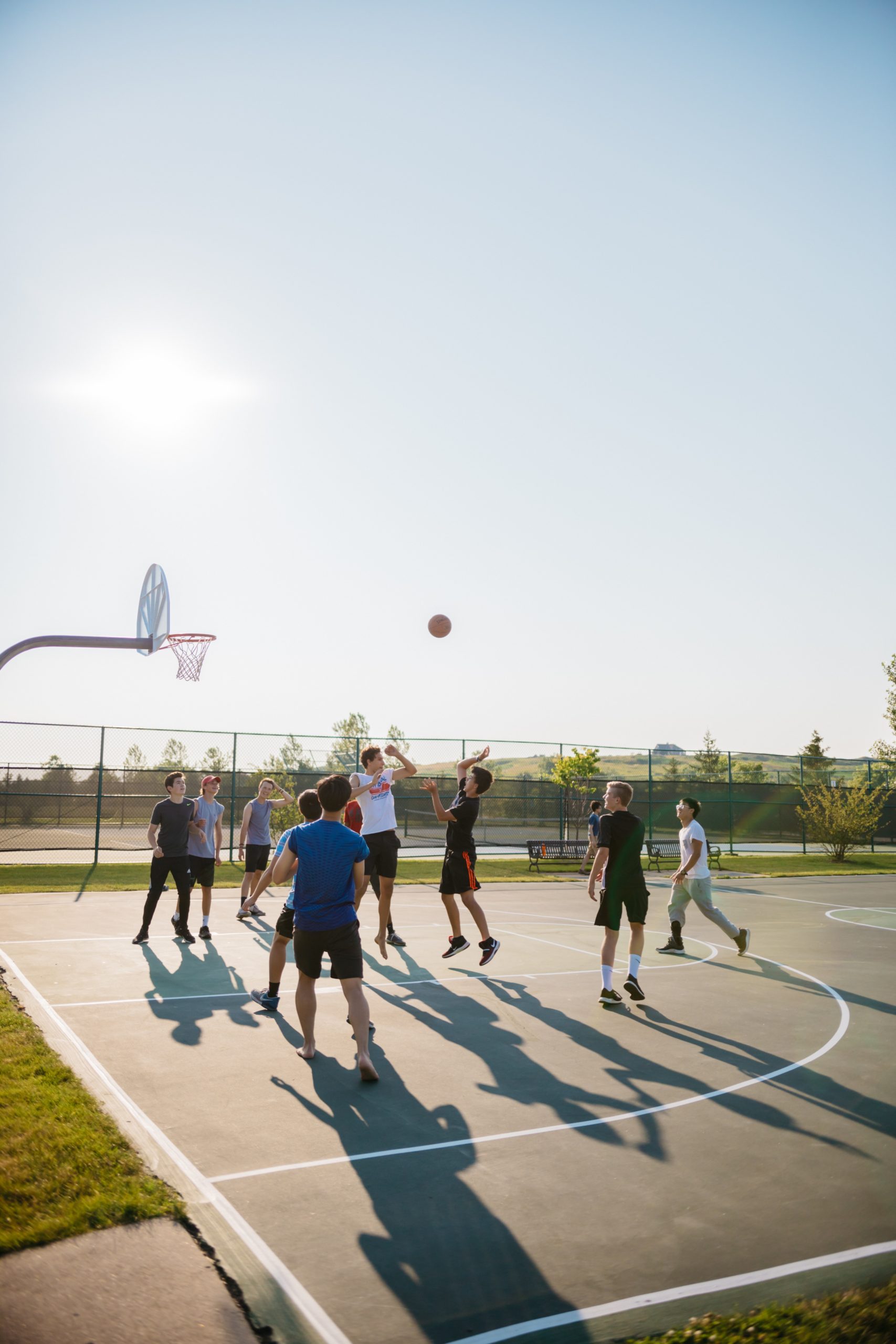 I’ve recently started playing pickup basketball again. When I was younger, I played basketball all the time. At two or three years old, we had a toy hoop with a bright orange rim, white backboard, blue pole, and black base. It was, I believe, a “Little Tikes” brand hoop; I’ve just looked it up online, and my research seems to confirm this. In any case, I will now remember it this way—the vague memory I hold has solidified into one canonical version. But it might have been a different brand, the base of the hoop might have been a different color.

 I’ve been visiting Ontario this month. Which is a wildly non-specific thing to say, since the province of Ontario, though only the second largest of Canada’s constituent divisions, boasts a surface area greater than those of Germany and Ukraine combined. But while I would normally designate as my destination the city in Ontario in which I mean to stay during my annual visit to my home and native land—as for instance Toronto, the provincial capital, where I went to high school and university; or Kingston, once Canada’s Scottish-Gothic capital, where my brother has settled with his family—the particular reason for this year’s sojourn, which began with a brief visit to relatives in Montreal, was my niece’s wedding, on August 12, celebrated at her fiancé’s family home in Frankford, with guests put up in the towns surrounding that hamlet on the River Trent, in Hastings County, the second largest of Ontario’s 22 “upper-tier” administrative divisions. Which all feels to me quite uncannily foreign, not to say unutterably vague. Hence simply: I’ve been visiting Ontario this month.
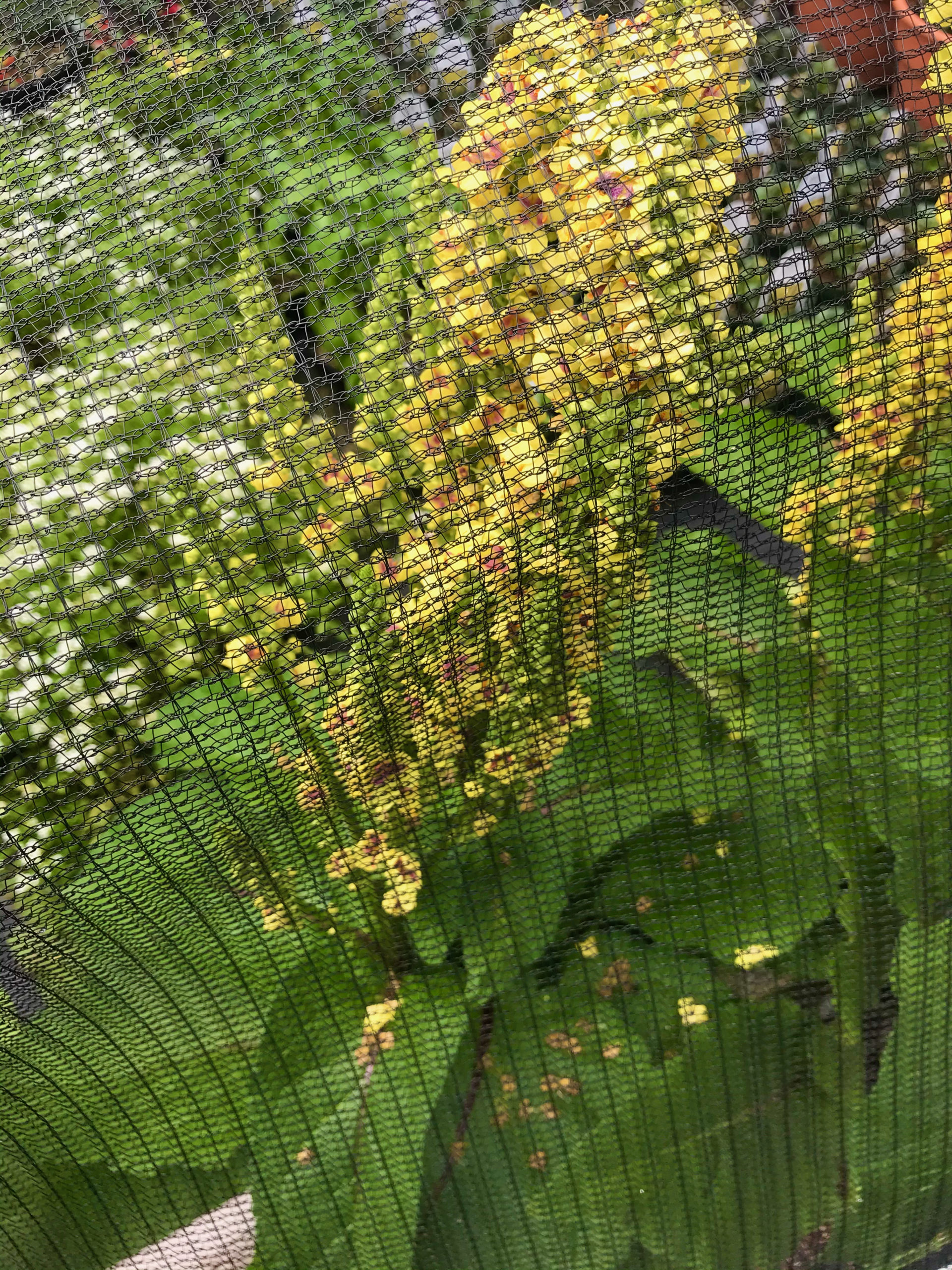 Sughra Raza. Untitled, July 2020.
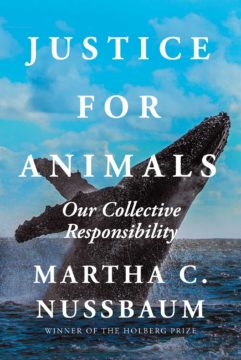 The cover of Martha Nussbaum’s Justice for Animals (2023) shows a humpback whale breaching: a magnificent sight, intended to evoke both respect for the animal’s dignity, and interest in its particular forms of behavior. Here is a creature which has moral standing, without being a direct mirror of our human selves.