by Sue Hubbard
Ai Weiwei: Royal Academy, London until 31th December 2015
William Kentridge: Marian Goodman Gallery until 24th October 2015


by Sue Hubbard
Ai Weiwei: Royal Academy, London until 31th December 2015
William Kentridge: Marian Goodman Gallery until 24th October 2015
by Justin E. H. Smith

1.
‘Gypsy’ is a classic misnomer, a deformation of ‘Egyptian’, arising from a long-discredited theory that the people it denotes had wandered from that country into the Levant, Anatolia, the Balkans, and finally Europe proper. It gives us the French gitane, glamorized in a brand of cigarette, and the Italian gitano. There is the alternative generic term tsigane, which yields Zigeuner in German, ţigani in Romanian, and so on, and which likely arises from a Byzantine Greek word for fortune tellers (or, perhaps, for untouchables). These are exonyms, and they are considered derogatory, though as with any insult much depends on who is uttering them, in what tone and for what purpose. When in 2007 the Romanian president Traian Băsescu called a reporter a ţigancă împuţită (a stinking Gypsy), to unexpected outrage, he was plainly only using the adjective to make explicit what he already felt to be packed into the noun.
In recent years, ‘Roma’ (along with ‘Rom’ and ‘Rrom’ and the adjectival ‘Romani’) has gained currency, in part as a way of freeing the people it describes from the history of connotations, mostly negative, that have congealed around ‘Gypsy’, and in part to provide a cohesion at the global scale that is lacking in the various regional designations. ‘Roma’ is the term we are now obliged to use, and the term I shall use here, even though it is far from universally satisfactory. For one thing, it is a masculine plural noun: it means ‘the Romani men’, or, perhaps, ‘the Romani husbands’. Moreover, its resemblance to various other geographical terms from the region –notably the name of the capital of Italy, and of the country of Romania (which, like an ancient road, does lead back to Rome, the city of Romulus)– is only a coincidence. Yet, like the English ‘niggardly’, ‘Roma’ invites misunderstanding. Grassroots organizations of Romanians have even petitioned the European Parliament to ban it, in the hope of distancing themselves from their fellow citizens who, they believe, are tarnishing their reputation throughout Europe. And indeed many Western Europeans do have trouble grasping the difference in question, and lack the patience to stop and dwell on etymologies.
Key
.
dangling from a ring my finger hooked
and drew from a jean pocket
is a burnished brass key warn smooth
from the ten thousand times
I put it to this lock and turned
to hear the delicious click
of entering home,
the place filled with
you
.
by Jim Culleny
9/18/15
by Akim Reinhardt

The Syrian refugee crisis is the worst refugee crisis since World War II.
It's all over the place. Just google the words “worst refugee crisis.” Don't even put “Syria” or “WWII” in the search bar. What follows is a string of mainstream media articles labeling the current Syrian refugee crisis as the worst since the big deuce. It has become conventional wisdom.
But is the flood of humanity currently vacating Syria really the worst refugee crisis of the last 70 years?
The United Nations High Commission on Refugees estimates that about 4,000,000 Syrian refugees have now left their homeland. Millions more are Internally Displaced Persons (IDPs), people who have abandoned their homes but remain in Syria.
This is a formidable number, marking the Syrian exodus as certainly one of the worst refugee crises since World War II. And it may yet get worse. But is it actually the worst?
by Evert Cilliers aka Adam Ash

Forgive me for the following rant, but someone has to express the righteous rage of an actual human being of common humanity at the current GOP horrorshow. Nobody in our media will do that for you. Molly Ivins is no longer with us. Don't expect a living political pundit to engage with our politicians on a basis of actual human feelings.
So here goes, my corrective to the usual political punditry.
Let me ask: is this what our politics has come to, when a once great party (Lincoln, Theodore Roosevelt, Eisenhower) fields a big bunch of presidential contenders — eleven! — who are all of them such truly stupid and horrible people, they're unworthy of being humans, let alone politicians?
After I’d sat myself down at my computer on Tuesday morning, and after I’d checked in at my blog, New Savanna, and at Facebook, I zoomed here to 3QD, as I often do, and saw a link to an article about a Robert Frost poem. I, being an American citizen in good standing, know a bit about Frost. He’s sort of the Walt Disney of American poetry, him and Carl Sandburg, but apparently Frost had a nasty side as well. He’s not our nation’s kindly uncle. But then who knows what really goes on in the minds of those kindly uncles, eh?
This post had an intriguing title: “The Most Misread Poem in America”. Really? I gotta’ check that out. So I read the posted snippet, which was about “The Road Not Taken” – I’ve read that one, I think, said I to myself, but it’s not the one about miles to do until we eat? pray? love? one of those basic things – and then followed the link the full article, which is in the Paris Review. It’s by David Orr, poetry columnist for the New York Times Book Review, and is an excerpt from a book he’s devoted to that one poem.

It'll take a pretty determined individualist to take this road that's not been travelled in a looong time.
The common understanding, Orr tells us, is that the poem is about staunch individualism. Everyone else hightailed it down the popular road but me, individualist that I am, I took the less popular road, and it turned out darn well. That just won’t wash, not when you actually read the words carefully.
According to this reading, then, the speaker will be claiming “ages and ages hence” that his decision made “all the difference” only because this is the kind of claim we make when we want to comfort or blame ourselves by assuming that our current position is the product of our own choices (as opposed to what was chosen for us or allotted to us by chance). The poem isn’t a salute to can-do individualism; it’s a commentary on the self-deception we practice when constructing the story of our own lives. “The Road Not Taken” may be, as the critic Frank Lentricchia memorably put it, “the best example in all of American poetry of a wolf in sheep’s clothing.” But we could go further: It may be the best example in all of American culture of a wolf in sheep’s clothing.
I’ll buy that. But what if there’s something going on in the poem that isn’t adequately captured by limning its meaning?
by Matt McKenna
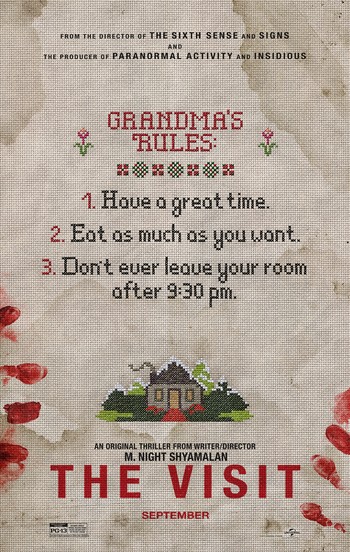
The Visit is shot in a faux-documentary style from the point of view of a teenage siblings, Becca and Tyler, who visit their grandparents for the very first time. We are told that long ago there was a falling out between their single mother and their grandparents, and this first meeting between grandchildren and grandparents is meant to be a moment of bonding and forgiveness for the estranged generations. Of course, The Visit being a horror film, everything goes spectacularly wrong as the kids witness creepy occurrences on their grandparents' remote farm.
by Brooks Riley
by Eric Byrd
His poetry emerges out of dreams – of a very special kind that abide wholly within the realm of art. (Blok, on Mandelstam)
Guy Davenport's essays are more read than his stories – and so would begin a critical lament, if Davenport's use of the modes were more distinct; if his stories did not abide “wholly within the realm of art”; if his essays and reviews were less visionary, were mere journalism, Sunday summaries; if his early essays were not the soil of his late-blooming fiction. For Davenport, criticism carried the demands of storytelling, and vice-versa. Kafka, for instance, is as likely to figure in a story as to provide the subject of an essay. In his Paris Review interview Davenport said that the “The Hunter Gracchus,” his essay on Kafka's story, started out as a story, and “The Aeroplanes at Brescia,” his picture of Kafka's visit to an early exhibition of flying machines, and one of the wonders of Tatlin! (1974), started out as an essay. Of his compositions he concluded, “It's all one big happy family.” Tatlin! was Davenport's first collection of stories, and “The Aeroplanes at Brescia” the first story he'd written – aged forty-three – since some undergraduate Faulknerisms.
Davenport's critical prose is sibling to that of his onetime friend and fellow Pound disciple Hugh Kenner, whose The Pound Era Davenport hailed as a “new kind of book in which biography, history and analysis of literature are so harmoniously articulated that every page has a narrative sense.” Like The Pound Era, Davenport's early essays, collected in The Geography of the Imagination, vividly narrate influential encounters and pungently picture shocks of recognition. Degas, tracer of haunches equine and balletic, is awake all night with Muybridge's Zoopraxia, with its leaping nudes and galloping tarpans. Shelley and his guest, a literary banker, inspect a copy of Diodorus; both note the boastful inscription attributed to a pharaoh whose name a Greek source had garbled to “Ozymandias,” and they sit down to their respective sonnets.
by Samir Chopra
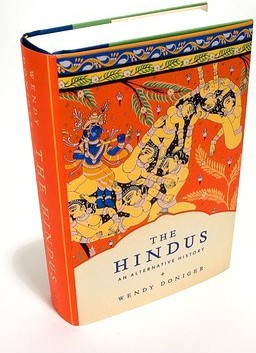
This dispute over Wendy Doniger's work is merely the latest instance of a long-running contestation of how best to study India and all things Indian.
The philosopher and statesman Sarvepalli Radhakrishnan noted in the preface to his two-volume opus Indian Philosophy (1923) that the “modern aesthete” dismissed Indian philosophy and its associated cultures as “chaotic clouds of vapor and verbiage”; he then moved on to provide a sympathetic explication of its central systems and principles that would be both comprehensible to the Western mind and suitably respectful of Indian philosophy's intellectual contributions to philosophical discourse at large. While comparisons with Western philosophy were unavoidable, they did not have to begin with the premise that Indian philosophy needed to merely play catch-up to it. In more recent times, the philosopher Daya Krishna sought to achieve, if not a synthesis, then at least a dialogue between Western and Indian philosophy that would show their mutual relevance, their ability to influence each other's most central debates, all the while emphasising the latter's distinctive formulation of classic philosophical problems.
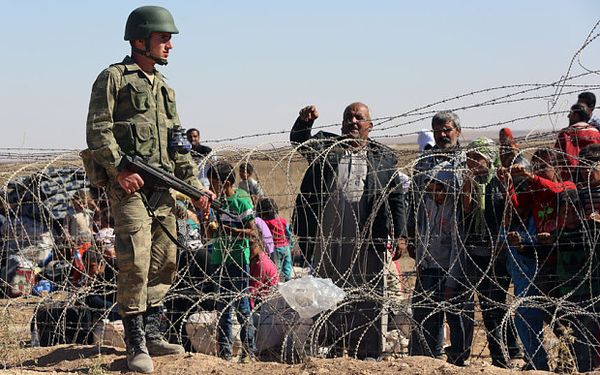
Feisal Hussain Naqvi
There, but for the grace of God…
In August 1947, my father’s family left behind all their belongings and fled to Pakistan, huddled on the top of a train. They were refugees.
In December 1947, my mother and her family were in what is now Slovenia. On the day after Christmas, they decided to make a run for Austria. Fortunately for them, the guards were too busy celebrating to notice my mother and her siblings creep across the border.
I am not just the child of two refugees. I am the child of two long lines of refugees.
My father’s family are Syeds, descendants of the Prophet. The family tree treasured by my father shows a path from Arabia to Iraq to Central Asia to Iran to India and then finally, to what is now Pakistan.
My mother’s father came from solid Germanic stock. But my mother’s mother came from a family which had converted from Judaism. While my father’s ancestors had been moving eastwards, my mother’s ancestors had headed westwards.
Given that anthropologists have fairly solid grounds for tracing humanity’s common roots back to the Olduvai Gorge in Kenya, it follows that everybody residing outside East Africa moved there at one point in time. In other words, at one time or another, we have all been refugees. If not us, then our parents. And if not them, then their parents. We would do well to remember that simple fact the next time we respond to the misery of others with anything other than compassion or empathy.
Feisal Hussain Naqvi studied Islamic history at Princeton before going on to study law at Yale. He is an advocate of the supreme court of Pakistan, as well as a columnist for various newspapers.
Robert Pinsky
There’s always a wagon or at least a wheelbarrow
full of treasures (a quilt, a silver cup,
the fading scent of home),
a car out of gas marooned in a ditch,
a horse (soon left behind), snow, a lot of snow,
too much snow, too much sun, too much rain,
and always that special slouch
as if leaning toward another, better planet,
with less ambitious generals,
less snow, less wind, fewer cannons,
less History (alas, there’s no
such planet, just that slouch).
That phrase “less History” with its capital letter, and “less ambitious generals” . . .
Robert Pinsky is an American poet, essayist, literary critic, and translator. From 1997 to 2000, he served as Poet Laureate Consultant in Poetry to the Library of Congress. Pinsky is the author of nineteen books, most of which are collections of his poetry. He teaches at Boston University.
Frans B. M. de Waal
Social Darwinism may be dismissed as old hat, a leftover of the Victorian era, but it’s still very much with us. A 2007 column by David Brooks in The New York Times ridiculed governmental support of the needy: “From the content of our genes, the nature of our neurons and the lessons of evolutionary biology, it has become clear that nature is filled with competition and conflicts of interest.”1 Conservatives love to think this, but it is not always how nature works. Nature is full of cooperative species. Taking care of each other, including sometimes outsiders, is part of the equation.
The refugee crisis is a test of the role of empathy in public policy. Do we care enough about the lives of other humans to welcome those who flee brutal warfare? There is always more involved than empathy, however. Empathy is a well-developed trait in most humans, but one that is conditional. It is subject to calculations and filters. We cannot empathize with everyone and everything equally. So apart from the “humane” reaction (a term based on the assumption that we are the only empathic species, which my work shows is false, since I consider empathy a general mammalian characteristic), there is also the more practical question of how we are going to take care of so many people and if there are alternatives, such as removing the causes for their migration.
The whole political dance around the topic is part of a long tradition of empathy affecting public policy. Another good example is the abolition of slavery (Abraham Lincoln was rather explicit about this), and also the healthcare debate in the US is one of empathy, asking the question how much we care about the health of low income citizens. Empathy is a major but poorly appreciated voice in political decision-making, and the glue of any society, even though it is never the only consideration, and always mixed with more hard-nosed economic and political considerations. The European Union is right to listen to this voice, and to counter xenophobic tendencies, which unfortunately are also part of human nature.
1David Brooks “Human Nature Redux” (New York Times, 17 February, 2007).
Frans B. M. de Waal is the Charles Howard Candler professor of Primate Behavior in the Emory University psychology department in Atlanta, Georgia, and director of the Living Links Center at the Yerkes National Primate Research Center.
by Scott F. Aikin and Robert B. Talisse
Consider the following exchanges.
Hypocrite: A father advises his daughter not to smoke, since it is addictive and causes lung disease. However, the father himself is a heavy smoker. And the daughter cannot help but notice this and point out her father's hypocrisy. On this basis, she rejects her father's advice.
Waffler: A candidate for public office has spoken on some issue many times, but her articulated view has changed over that time. Years ago, she was a staunch critic of some policy, but now she has come to support it. Her opponent seizes on this and points out her waffling on the matter. He holds that her inconsistency indicates that she is unprincipled.
Tu Quoque arguments are ad hominem strategies of criticism wherein a speaker's conclusion is criticized on the basis of the fact that the speaker has a record of inconsistency with the conclusion. The tu quoque may take the form of charges of hypocrisy when someone affirms a practical proposal that she has regularly failed to follow. The tu quoque also can arise when a speaker has not consistently held or articulated the same view in the relevantly similar contexts; the charge of flip-flopping is hence a version of the tu quoque. Given that tu quoque arguments belong to the ad hominem family, it is commonly held that tu quoque arguments are intrinsically fallacious; they are thought to suffer from failures of relevance. The fact that someone is a hypocrite doesn't mean he's wrong, and that someone's views have changed doesn't mean she isn't well-informed or worth hearing.
We've discussed elsewhere (here and here) the ways in which relevance problems for certain versions of the tu quoque might be resolved. Sometimes, it is indeed relevant that someone is a hypocrite or has an inconsistent track record on an issue; those facts may show that the person is insincere or has ideas that are not practicable. However, there is yet a further form of tu quoque argument which, given the right circumstances, is not only relevant, but presents exactly the correct critical point.
Football
the sheer brilliance of this game’s hook
amazes me—
it’s an homage to collision,
a demo derby of organs and bones,
of fans psyched to see some player’s
near-death experience, a feint game
of fine footwork leading to
victory through the skill to maim
all underlain with clever strategies
and agile trickers
backed by large men
and place kickers,
a mashup of history,
current events and premonition
played in ten yard lunges
down fields of broken bones,
bruised brains and
brute ambition
.Jim Culleny,
9/9/15
by Paul Braterman
Darrow: Did you ever discover where Cain got his wife?
Bryan: No, sir; I leave the agnostics to hunt for her.
Both sides, I will argue, were long-term loses in this exchange. But why were such matters being discussed in a Tennessee court of law in the first place?
The story so far: An extraordinary case indeed, where a school teacher, with the encouragement of his own superintendent, volunteers to go on trial in the State court for the crime of teaching from the State's approved textbook, and where that same superintendent will be the first witness called against him. And where a mere misdemeanour case, with a maximum penalty of $500, would attract the participation of William Jennings Bryan, former US Secretary of State, and Clarence Darrow, America’s most famous trial lawyer and agnostic.
In the run-up to the case, we even have the involvement of Billy Sunday, possibly the greatest of all pre-television evangelists, whose 18 day crusade in Memphis, Tennessee, was attended by some 200,000 people. Billy Sunday told his audiences that Darwin was an infidel: “To hell with the Modernists. Education today is chained to the devil's throne. Teach evolution? Teaching about pre-historic man? No such thing as prehistoric man.” (Billy Sunday aimed at a wide public. He hosted a “Negro Night”, which 15,000 attended. There was also a Klan Night.)
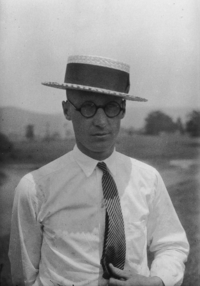
The facts were not in dispute. Scopes had of course taught evolution, although the law said he shouldn't. So it was really the law itself that was on trial. The ACLU was hoping to prove it unconstitutional because unreasonable, ambiguous, and an affront to freedom of conscience. Unreasonable because it opposed established science. Ambiguous because the Bible, to which it referred, was itself open to numerous interpretations. And an affront to freedom of conscience, because it imposed a preference for one religion (Christianity), and indeed one school of thought (the Fundamentalist) within that religion. These arguments were, according to the defence, fatal flaws in the prosecution indictment, which should therefore be quashed. The judge, however, was determined not to issue a ruling of that nature, and ordered the case to proceed. Now read on.
The defence case built on the above arguments. According to their interpretation of the statute, in order to be guilty Scopes would have had to do two separate things; (a) teach that humans were descended from lower animals, and (b) by that teaching, contradict the Bible. But the exact text of the Bible, how it should be understood, and even which books should be included in it were matters of controversy. The Bible was not a science textbook, and
[T]here is no more justification for imposing the conflicting views of the Bible on courses of biology than there would be for imposing the views of biologists on courses of comparative religion. We maintain that science and religion embrace two separate and distinct fields of thought and learning.
by Jonathan Kujawa
One hundred and fifty years ago atoms were mysterious things. They could only be studied indirectly. We knew about their interactions with each other as a gas, the frequencies of light they prefer to absorb and emit, and various other properties. Nowadays we can capture the image of a single hydrogen atom, but back then atoms could only be understood through the shadows they cast in the macro world.
At the time two explanations were in vogue. The atomists went with the ancient Greeks and viewed atoms as small billiard balls clacking against each other as they moved through empty space. This point of view worked great for explaining the behavior of gases, but didn't help much in explaining the intrinsic properties observed by chemists. On the other hand, the followers of the theory of Boscovich, an eighteenth century Jesuit, thought that atoms were points of force which alternately repelled and attracted each other depending on how close they were. This theory held promise for explaining the electromagnetic properties of atoms, but it also had its drawbacks.
On February 18, 1867 William Thomson (aka Lord Kelvin) read out his paper “Vortex Atoms” to the assembled members of the Royal Society of Edinburgh. In it he suggested a novel alternative to these two theories.
As everyone knew at the time, the universe was permeated by the luminiferous ether. Light traveled as a wave even through “empty” space and, well, waves travel through something, so what was that something? Luminiferous ether! It was a beautiful idea, but eventually the evidence piled up against the ether. The Michaelson-Morley experiment put a stake through its heart in 1887.
But in 1867 the luminiferous ether was widely considered a standard feature of the physical world. Taking his inspiration from recent work in hydrodynamics and, presumably, a fine pipe of tobacco, Lord Kelvin realized that instead of viewing atoms and the ether as two separate things, we could instead think of atoms as vortices in the ether itself. Specifically, he thought of each atom as a knotted tubular shape:
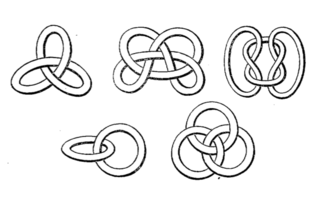
His theory neatly explained a wide variety of atomic phenomena. The rich variety of possible knots justified the wide variety of atoms, the fact that the type of knot is unchanged under small perturbations (after all, you can't turn the knots in Lord Kelvin's table from one into another without applying real violence) explains the robust stability of atoms, and knots will clearly vibrate at different frequencies from one another and so will naturally prefer to absorb and emit light energy at differing levels. For example, Thomson thought the two linked circles in the lower left might be the sodium atom because of sodium's two spectral lines.
by Jalees Rehman

The feedback from our children was quite mixed, ranging from polite questions such as “Do you know how long this will take?” to less polite snores. I had apparently not yet succeeded in my attempts to awaken their inner poet.
Our younger son was about eight years old, when we found out about a wonderful opportunity to inculcate the love of literature into our children: The Chicago Printers Row Literature Festival! I was especially excited by the fact that they would have a special “Lil' Lit” area, just for children. I convinced the whole family to go – promising to reward each kid with $5 if they accompanied us. I hoped that my poetry monologues had prepared the children for the poetic muses that they would encounter at the festival.
Even though it was early June, Chicago was experiencing one of its rare June Gloom weekends with cloudy, drizzly weather and frosty breezes. After exiting the parking garage, our kids tried to renegotiate the promised $5 reward in light of the unpleasant weather. I brushed off their whining and charged towards the long-awaited beacon of literary pleasure.
by Brooks Riley
(I began writing this article months ago, long before the refugee crisis.)
—Morgen! (Morning!)
—Guten Morgen! (Good morning!)
—Morgen zusammen! (Morning, you two!)
—Morgen Ihr zwei! (Morning, you two!)
—Kalimera! (Morning, in Greek)
—Servus! (Hi or bye, in leftover Latin from upper Bavaria)
—Buenos Dias! (Morning, in Spanish)
—Tag! (Good day, in North German)
—Einen wunderschönen guten Morgen! (A beautiful good morning!)

Giesing, with its Obergiesing and Untergiesing, is a now a melting pot of Munich—a quiet oasis of multicultural harmony. It’s always been a working-class neighborhood, not frequented by the grand, but also not ignored by the city fathers. Its 5-story balconied apartment complexes are spaciously nestled in lush green landscapes and along tree-lined streets. A vast elegant park provides meadows for dogs that need exercise and people who want a solitary walk or a picnic or a meditative sit on one of the many benches. Franz Beckenbauer, the second most famous German after Goethe, comes from Giesing, a paradise for families with limited means, born of functional, benign socialism, and a model of integration.
I’ve been sheltered all my life, isolated by acreage or a fine address. Even in New York, where I used to live, there was never a neighborhood feeling, even on the Upper West Side. New York is too big. The chances of seeing the same person on the street on consecutive days are slim. The chances of speaking to a stranger are nil. Los Angeles is worse–no one walks at all.
In Giesing, we know nearly everyone who passes by the café between 6:30 and 8 a.m. Even if they don’t stop to chat, they nod or greet us warmly. They come in all shapes, ages and backgrounds—from Africa, South America, Turkey, Asia, the Middle East, Eastern Europe, the Balkans, and Germany.
by Dwight Furrow

Love of wine is thus a useless passion, an arena of pure play, but therein lies its peculiar power. It joins the realm of those objects that express rather than perform–objects like old musical instruments, ancient manuscripts, childhood toys, or Grandma's jewelry. Useless but precious because of the experiences they enable.
When we are consumed by a useless passion, we become more attuned to the allusive meanings and hidden dimensions of the object of love. The object acquires an aura of mystery when unmoored from practical function and can serve as a universal talisman to which all sorts of meanings can be attached. Those moments in which we experience a useless passion and grasp the intrinsic, non-instrumental value of things are not only moments of pleasure but moments in which we glimpse a world of the imagination yet one in which matter resists conceptualization, the hard surfaces of reality resist manipulation because they have their own capacities and developmental direction, and meaning expands beyond what can be calculated or measured.
Among objects of love, wine has its own peculiar attractions. Wine, when considered aesthetically, brings traces of the sacred to our lives that are otherwise thoroughly enmeshed in practical tasks. The demand to slow down and savor opens a time and space in which we can be receptive to multiple ways of understanding the interplay between nature and culture because wine partakes of both.
by Brooks Riley

I can't recall now where I originally found this, but several years ago I stumbled on an interesting Japanese translation for the words shalom and salaam.
1) 平和 (対国、対神、対人) ・・・和平、和解 Peace (no conflict; no fighting)
2) 平安 (個人的)・・・平穏、無事、安心、安全 Inner peace and calm; no inner trouble
3) 繁栄 (商業的) Flourishing (business)
4) 健康 (肉体的、精神的) ・・・健全、成熟 Physical health
5) 充足 (生命的) ・・・満足、生きる意欲 Satisfaction, fullness, sufficiency
6) 知恵 (学問的) ・・・悟り、霊的開眼 Enlightenment, wisdom
7) 救い (宗教的) ・・・暗闇から愛の支配へ To be saved (by Love)
8) 勝利 (究極的) ・・・罪と世に対する勝利 Triumph (over evil)
Does shalom and salaam really embody all that the Japanese translator was suggesting above? I have no idea, but the proposed translation really struck me, I felt it captured the wonderfully generous spirit of hospitality that I experienced in the Middle East.
Like the Pax in the Catholic liturgy
Pax Domini sit semper vobiscum (The peace of the Lord be with you always)
It is a sign of goodwill for the other. But it is also, I am told, a reminder that we cannot flourish in the eyes of God unless we recognize him in the people around us. This greeting dates to very early times in the Christian church and is an ancient practice informed by the hospitality codes that have such deep roots in the cultures of the Middle East (among other places).
And best of all, it is traditionally delivered with a kiss on the cheek.
++
Almost two years ago to the day, I wrote here in these pages about what I considered to be the delusional liberal response to the crisis in Syria.
It was at that time that I became utterly fascinated by Derrida and Levinas' “ethic of hospitality.”
Derrida's work on this subject is rooted firmly in the work of the Lithuanian-born French philosopher Emmanuel Levinas. But Levinas himself was responding to –who else?– Heidegger.
(All roads lead to Heidegger).
Ah, herr Heidegger–he was so brilliant and yet how could a philosophical system that great have gone that awry? Levinas, who was Jewish, had a particularly strong complaint on this count.
Where did Heidegger go wrong? It is one of the great problems of modern Continental philosophy.