by Yohan J. John
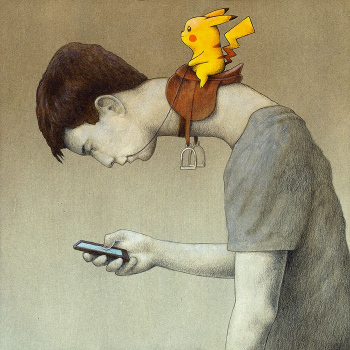
In the US, Pokémon GO now has more users than Twitter. And it only took them a few weeks to achieve this. Part of the draw of Pokémon seems to be nostalgia. The original game was introduced by Nintendo for the Game Boy in 1995. Since then it has morphed into a media empire, spanning anime, trading cards, toys and all manner of swag. The basic concept behind the game is quite simple: each player (or “Pokémon Trainer”) travels around a virtual world looking for Pokémon — cute “pocket monsters” with whimsical names like “Pikachu”, “Meowth” and “Bulbasaur”. The trainer captures a Pokémon by chucking a magical ball at it — it seems to work a bit like that spectre-snatching toaster from Ghostbusters. Various in-game resources must be used to 'level-up' the trainers and 'evolve' the Pokémon. The Pokémon trainers then compete in vicarious battles, pitting their Pokémon against each other.
No doubt nostalgia (or retromania) is a powerful cultural force these days, but I suspect that it was only the initial impetus for Pokémon GO's popularity. After all, many of the current players are kids who are too young to remember the early Pokémon games and TV shows (plus curious adults like me who were a little too old for them when they first came out). I suspect that Pokémon GO works because its gameplay combines some of the most powerful elements in modern gaming in a package that requires little or no skill.