by Jalees Rehman
On 5 November 2015, an iron ore tailings dam burst in Bento Rodrigues near the Brazilian city of Mariana, releasing 60 million cubic meters of a reddish-brown mud-flood. This toxic flood buried neighboring villages and flowed into the Rio Doce, contaminating the river with several hazardous metals including mercury, arsenic and chromium as well as potentially harmful bacteria. The devastating and perhaps irreparable damage to the ecosystem and human health caused by this incident are the reason why it is seen as one of the biggest environmental disasters in the history of Brazil. The German sociologist Stephan Lessenich uses this catastrophe as a starting point to introduce the concept of the Externalisierungsgesellschaft(externalization society) in his book Neben uns die Sintflut: Die Externalisierungsgesellschaft und ihr Preis ("Around us, the deluge: The externalization society and its cost").
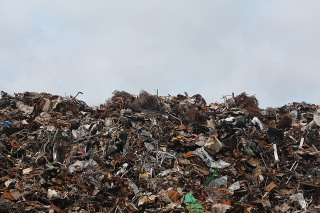
What is the externalization society? Lessenich uses this expression to describe how developed countries such as the United States, Japan and Germany transfer or externalize risks and burdens to developing countries in South America, Africa and Asia. The Bento Rodrigues disaster is an example of the environmental risk that is externalized. Extracting metals that are predominantly used by technology-hungry consumers in developed countries invariably generates toxic waste which poses a great risk for the indigenous population of many developing countries. The externalized environmental risks are not limited to those associated with mining raw materials. The developed world is increasingly exporting its trash into the third world.