by Paul North
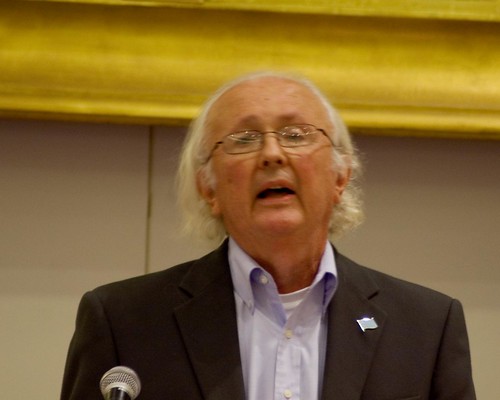
An informal talk before first-time college goers, the summer before their first year at an Ivy League university.
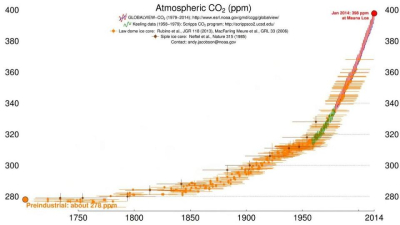
 How does it feel when your group's social practices bring the world to the brink of destruction? How does it feel when no one can legitimately deny this fact any longer? We haven't been closer to midnight on the nuclear doomsday clock since the H-Bomb was invented in 1953. We haven't seen this level of financial inequality between the vast majority and a small minority of wealth-holders since before the New Deal. The economy is deeply segregated by race and by gender. As a culture, almost to a person, we failed to admit to ourselves that the heat-trapping tendencies of carbon dioxide could lead to a cascade of negative effects. You are going to college on the eve of nuclear war, mass impoverishment, and climate disaster. What is college for? I give you three simple imperatives: be stupid, get lazy, and dream.
When I went to college at the end of the 1980s we weren't conscious of any of this. Sure, in pre-school we dove under desks during nuclear drills, but the end of the cold war seemed to promise us that we could pay attention to other things. For my group, that was the hangover from hippydom. We were revolutionaries. We practiced free thinking, listened to political music, protested. Art lead to emancipation, we thought.
Now the feeling is different. And yet, …
Why someone would even go to college on the eve of the apocalypse is a legitimate question, but since you decided to go, for complicated reasons I know, not all of which have to do with intellectual work—for some it is for economic reasons, for some social reasons, all of the reasons pretty compelling—since you decided to go to college for all of your many reasons, we will concentrate on another question. What are the virtues you can and should cultivate in college? Your first answer might be: excellence, leadership, and success. This is after all the Ivy League. And yet, even after all your hard work, you hear the hollow gong of these big empty words. They are of course codes for the social and economic advancement promised by an elite college. What does excellence mean? Saying "excellent" is something like recognizing an intrinsic value, demonstrated by schoolwork but residing somehow, mystically within you. It is a virtue that becomes a kind of substitute for social class. If you are excellent, legend has it, you don't have to be rich, or else you become rich, eventually, because of your excellence. Excellence is the highest position in a merit system (poor, mediocre, normal, good, and so on; D, C, B, A, and so on). Leadership refers to your position in relation to your peers, in social organizations, extra-curriculars, university committees, and the arts. There is a sense, unspoken, that the best among you or the ones with the most "excellence" should naturally acquire roles of power over others. And finally, "success"—academically success is just an abstract term for a high grade point average, which acts as a kind of currency, or so students think, with which to pay their way into the next level of the game.
No doubt you would agree: life is not a video game. Rewards aren't automatic, even if you are excellent, a leader, and have success. But I want to say more than this. On the eve of an apocalypse it isn't clear there will be a next level, or if you're not willing to be that pessimistic—who can say right now what that next level will or should be? College now, I want to propose, especially an elite place like this, is where you should put the future aside.
Read more »