
 by Leanne Ogasawara
Photographs by Tracey Parmley Nuki
1.
Back from three weeks on the road, I immediately consult my Japanese almanac. To my delight, I see we are now in the Time of White Dew (白露):
Falling just prior to the Autumnal Equinox, the sun is said to have passed the 165th solar degree on its journey south. Although the afternoons are still dominated by the lingering heat of August and September, Autumn-like weather can increasingly be felt, deepening with each passing rain shower, especially noticeable in the mornings and evenings as the equinox approaches.
It’s like clockwork. Every year, by mid-September, the dew point is reached and suddenly there are glistening dewdrops –like diamonds– scattered in the morning grass.
This was true in Tokyo and it’s true in Los Angeles.
In Japan, these pearly gems are not only treasured for their gem-like beauty, but they are also appreciated for their fleetingness; which, like scattering cherry blossoms, are likened to the transience of our human existence. For life, like the disappearing dewdrops in the morning sunlight, is too often cut short. In this way, dewdrops have been considered, since ancient times, along with “scattering flowers and fallen leaves” (飛花落葉) as a poetic metaphor for impermanence, or mujo (無常).
Have you heard of the dewdrop world? Read more »

 employees, a move that could increase wages and benefits for hundreds of thousands of struggling workers. […]
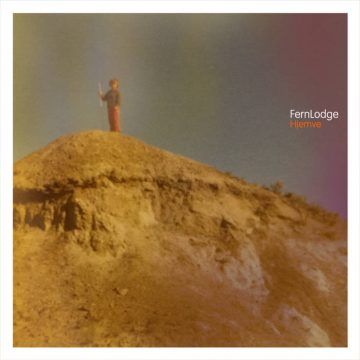 We’ve seen a couple of these artists before. FernLodge is this guy Joe from Canada, whose music is (as is all of this music actually; follow the links) available on Bandcamp. However, while most artists, even when giving their music away for free, allow you to “name your price” (which in turn allows you, if your price isn’t zero, to put that music into your Bandcamp “collection,” available to download whenever you want), Joe simply sets the price at “free” (which means you can’t put it into your online collection even if you want to). As you can tell by listening, Joe is being way too modest, as
 Someone else gets more quality time with your spouse, your kids, and your friends than you do. Like most people, you probably enjoy just about an hour, while your new rivals are taking a whopping 2 hours and 15 minutes each day. But save your jealousy. Your rivals are tremendously charming, and you have probably fallen for them as well.
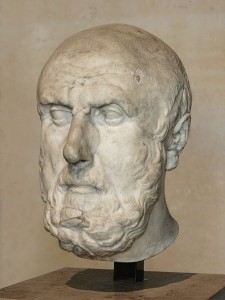



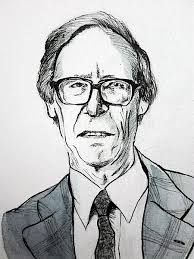
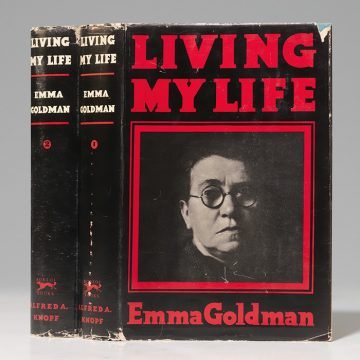 In a political era where many of the ‘isms’ in radical politics: Marxism, socialism, communism, anarchism, Trotskyism have either been discredited or have lost their appeal and force in western democracies, I found it refreshing to visit the life of one individual deeply involved in shaping those radical movements in the twentieth century: the anarchist, Emma Goldman, in her autobiography Living My Life.
 There is widespread concern about increasing or high economic inequality in many countries, both rich and poor. At a global level, according to the World Inequality Report 2018, the richest 1% in the world reaped 27% of the growth in world income between 1980 and 2016, while bottom 50% of the population got only 12%. Over roughly the same period, however, absolute poverty by standard measures has generally been on the decline in most countries. By the widely-used World Bank estimates, in 2015 only about 10 per cent of the world population lived below its common, admittedly rather austere, poverty line of $1.90 per capita per day (at 2011 purchasing power parity), compared to 36 per cent in 1990. This decline is by and large valid even if one uses broader measures of poverty that take into account some non-income indicators (like deprivations in health and education) for the countries for which such data are available.
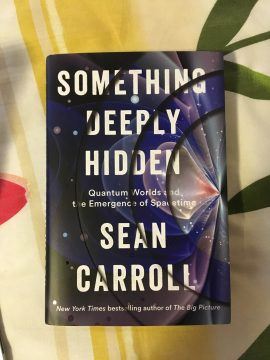 For me, a highlight of an otherwise ill-spent youth was reading mathematician John Casti’s fantastic book “