by Eric J. Weiner
 The terror of the unforeseen is what the science of history hides, turning a disaster into an epic. —Philip Roth, The Plot Against America
The only clue to what man can do is what man has done. The value of history, then, is that it teaches us what man has done and thus what man is. —R. G. Collingwood
When he was seventeen years-old, my late father-in-law, Mario Gartenkraut, escaped from Poland two days ahead of the Third Reich’s invasion of his town. His family did not believe him when he warned them of the terror that he saw coming. They sent him off to Bolivia in South America, but stayed behind. By the end of the war, all of his sisters and his parents had been exterminated by the Nazis in the death camps. A few of his brothers survived. Mario foresaw the terror of fascism and it saved his life. Most of his family did not and they were murdered. The memory of the kind of fascism that he survived is both a tool for resistance and, ironically, can blind us to things we must resist and overcome. As a tool for resistance, the mantra that we should “never forget” is a powerful way to keep the memories of those we lost alive as well as remember the conditions as they have been represented in official history that led to the systematic murder of millions. But the phrase also plants the seeds of our undoing. The representations of fascism that construct these memories become indelible and as such make it difficult to imagine what fascism might look like in our current times.
Peering at the horizon of our withering democracy for jack-booted soldiers, transport trains, and smoke rising from the ashes of crematoriums makes memory a liability. If we are looking out for one kind of threat based upon the science of historical memory, then we are sure to miss threats to our freedom from other forms of fascism that may be hiding in plain sight. As was true for Mario’s sisters and parents, what we don’t see, won’t see, can’t see, or refuse to see might be the most terrifying thing of all.
The Terror of the Unforeseen, Henry Giroux’s latest salvo against what he calls neoliberal fascism is, first and foremost, a history book. It is, of course, also a cogent critical analysis of current events, particularly as they unfold in the story of Donald Trump’s presidency. But at its core is a deep respect for History’s pedagogical power to teach us as Collingwood writes “what man has done and thus what man is.” Like Collingwood, Giroux sees in History shadows cast beyond the present that reveal in hazy and sometimes horrifying outline what humans might become by taking a complex account of what they have done. Hiding in these late afternoon shadows is the terror of unforeseen advances toward negative freedom, dehumanizing technologies, and state-sanctioned violence against those who have been classified as disposable. Read more »
 “What is hidden is for us Westerners more ‘true’ than what is visible,” Roland Barthes proposed, in Camera Lucida, his phenomenology of the photograph, almost forty years ago. In the decades since, the internet, nanotechnology, and viral marketing have challenged his privileging of the unseen over the seen by developing a culture of total exposure, heralding the death of interiority and celebrating the cult of instant celebrity. The icon of this movement, the selfie, is now produced and displayed, in endless daily iterations, in a ritual staging of eyewitness testimony to the festival of self-fashioning.
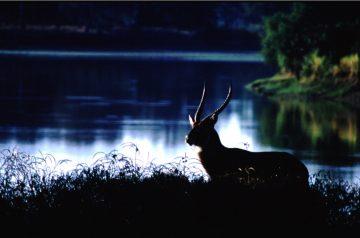 Late morning heat rises in waves over tall grass. It’s an hour and a half drive, sand flies buzzing, to Luwi bush camp, a seasonal camp with just four huts of thatch and grass on a still lagoon, far out into Zambia’s South Luangwa National Park, about 300 miles north of Lusaka.


 This morning I rode an Uber to JFK from my apartment in Queens. I do this regularly and normally don’t worry too much about it, but this morning, there was just something about the driver that concerned me, though I couldn’t put my finger on what. But every time his, very loud, GPS gave him a direction, in a language I couldn’t pin down, I just had this sense that he truly had no idea where he was going. And in case you’re not familiar with NYC, if you drive a car for a living, you’ve probably driven from the city to JFK more than a few times and do know where you’re going. Anyway, we arrived at JFK, I reminded him I wanted terminal 2 and I thought, “I guess my worries were for nothing”. And almost as soon as I thought that, he missed the sign for terminal 2. I mean, I guess it can happen, but it’s never happened to me before in all my many years of flying out of that airport. The signs don’t exactly creep up on you. I tell him he’s missed it; we start on a loop back around the airport and I say, “the green sign’s for terminal 2”, then he misses it again. And it turns out, the reason he kept missing it was because his GPS was telling him something contrary. I pointed out to him that I hadn’t put terminal 2 in Uber, so how would its GPS know that? The third time around the airport, I rather lost my temper and told him to stop listening to his phone and to listen to me. And third time lucky, we reached terminal 2.




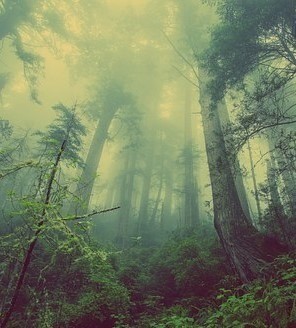 The Biophilia Effect: A Scientific and Spiritual Exploration of the Healing Bond Between Humans and Nature, by Austrian biologist Clemens G. Arvay, is a mind-expanding read. It is part of the relatively recent resurgence of interest in incorporating exposure to nature into physical and psychological healing regimens. Until recently, the notion of “taking the cure” by relaxing at a Swiss resort in a natural setting was seen as archaic, thought to have been prescribed only because medicine had not advanced to a point where a “real” treatment could be used. Not that everyone had abandoned the idea: Erich Fromm used the term “biophilia” in his 1973 work The Anatomy of Human Destructiveness to describe “the passionate love of life and of all that is alive.” American biologist Edward O. Wilson published Biophilia in 1984, positing genetic bases for humans’ tendency to gravitate to nature. Now scientists en masse are studying nature’s extraordinary healing effects. In Japan, shinrin-yoku–“taking in the forest atmosphere,” or as it is more often translated in the West, “forest bathing”– is officially recognized as a method of preventing disease as well as a supplement to treatment. In 2012, Japanese universities created an independent medical research department called Forest Medicine. Scientists around the world have begun to participate in this research.
 Two months ago I
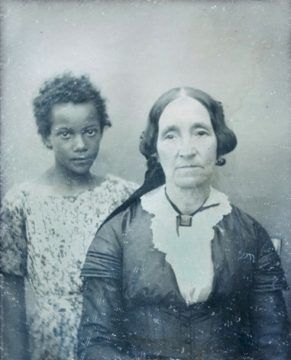 Many feminists, and indeed scholars more generally, frequently, and rightly, decry the writing of women out of history. Books such as Cathy Newman’s Bloody Brilliant Women, attempt to redress the historical omission and accord recognition to women who have made major contributions to the progress of humanity. However, while these developments are to be welcomed, it has to be acknowledged that women’s history has its darker side also: women have been complicit in the perpetration of historical wrongs. Sarah Helm’s If This Is A Woman documents the dehumanisation of female prisoners by female guards at the notorious all woman concentration camp at Ravensbrück during World War II; Laura Sjoberg and Caron E. Gentry’s Mothers, Monsters, Whores: Women’s Violence in Global Politics points out the potential of women to support and participate in acts of genocide. And, as Stephanie E. Jones-Rogers’s They Were Her Property: White Women as Slave Owners in the American South informs us, women were deeply involved in another historical wrong: slavery in the United States. Women were, as Jones-Rogers’ says, ‘co-conspirators’ in the institution of slavery in the US, and their involvement constitutes an aspect of the wider history of white supremacist organisations in the US.