by Scott F. Aikin and Robert B. Talisse

Constitutional democracy is a system for conducting politics under conditions where citizens, understood as free and equal persons, disagree profoundly about what is good. Naturally, such disagreements extend to politics itself. That is, we expect democratic citizens to disagree, sometimes even sharply, about the fundamental aims and aspirations of government and its policies. The moral claim underwriting democracy holds that each citizen’s status as a free and equal person is respected when collective political decisions are made by way of a system that affords to each an equal say.
Still, in a democracy, we also expect disagreements over politics to extend beyond Election Day. Even after the votes are counted, citizens are nonetheless entitled to continue arguing over the wisdom, prudence, and even the justice of democratic collective decisions. What’s more, ongoing democratic engagement in the form of continuing scrutiny of political affairs is expected of citizens. Participation in ongoing political discussion is among the democratic citizen’s duties.
If democracy calls citizens to engage regularly in political discussion, there will be among them ongoing political disagreements. Disagreements over things that matter often get heated, sometimes even hostile. And yet political disagreement in a democracy must be conducted in a way that manifests a fundamental respect for each citizen’s status as a free and equal person. In a democracy, no citizen is inherently another’s boss or subordinate; and all of our political interactions as citizens must reflect that basic moral commitment. Read more »
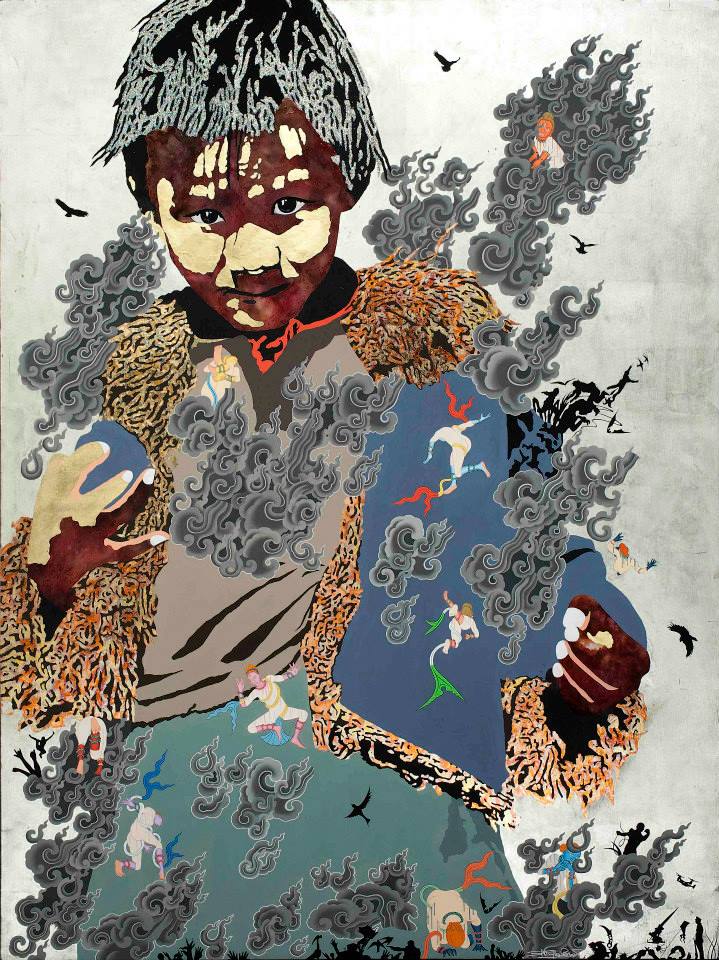

 How can we toggle the immune system’s “off switch”? How do we deactivate the cells and molecules which form an essential line of defense for our body and protect us against invading pathogens once their job is done? Persistent inflammation after pathogens are eliminated can be very harmful to the body because oxidants and other injurious molecules produced by immune cells end up attacking the body’s own tissues and organs instead of the pathogens.
 For someone who spent most of his life trying to get on Page Six, (the New York Post’s iconic gossip column), hitting Page One was pay dirt for Donald Trump. Now that he’s there, he means to stay there, devouring our attention for the foreseeable future. One could even argue that all his lies and deplorable actions are motivated by a single, sorry ambition, to be the center of attention at all times and in all places. Outrage sells.



 It turns out you learn a lot when you write a book. This may seem counterintuitive. Perhaps you think, “Well, that’s dumb. If you write a book about something you should already be an expert on it.”

 Why do people care about sport? With hundreds of millions of human beings (myself included) obsessively following the world cup that is being played out in Russia, it’s a good time to reflect once again on this perennially interesting question.