
by Abigail Akavia
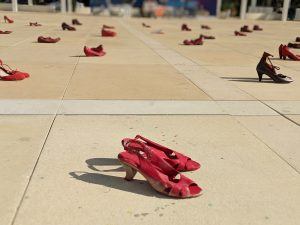
Tuesday, December 4th, was a day of widespread women’s protests against gender-based violence in Israel. A general women’s strike was declared, which garnered the support of governmental departments, municipalities, unions and major corporations. Demonstrations were held across the country: roads were blocked; water in public fountains was dyed red; at Habima Square in Tel Aviv, an installation of red shoes inspired by the work of Mexican artist Elina Chauvet commemorated victims of domestic violence. The principal event was a mass rally in Tel Aviv Rabin’s Square. The vigils, protests, and marches, organized by dozens of feminist groups led by the Red Flag Coalition, gained an all-encompassing female empowerment vibe à la worldwide women’s marches, pussy riots, and the MeToo movement. The demonstrations were aimed specifically against the government’s with regard to the prevention of domestic violence, and its neglect to finance a multi-departmental program to address the issue—a program it had already principally approved a year ago.
A mere week afterwards, an honorary prize for “contribution to Israeli song” was given at the Knesset, the seat of Israeli parliament, to Eyal Golan. Golan, an immensely popular singer and performer, was investigated four years ago for (allegedly) repeatedly prostituting minor girls, with the help of his father. The criminal case against both of them was closed for “lack of evidence.” Golan was not the sole recipient of the prize, but his presence at the Knesset was controversial and sparked a protest of its own. (Some of the other prize recipients chose to absent themselves.) Though the prize and the ceremony were the initiative of one Knesset member and not an official event of the parliament, the Knesset Chairman is authorized to prevent such a ceremony from taking place. The fact that he didn’t, and that the Knesset as an institution—if not officially then at least by proxy—celebrated a man who casually abused girls, sends a perverted, corrupt message to Israeli women and the public at large. It proves the necessity of women’s disruptive activism in Israel today and, at once, its limited pragmatic effect so far. Read more »

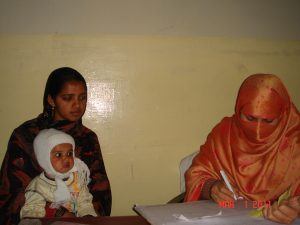 Mandra health center, outside Islamabad, on this spring morning, without the cacophony and confusion of health centers in the city, was the picture of serenity. An emaciated woman of indeterminate age sits coughing in the corridor, in a chair that bears the logo of the United States Agency for International Development, next to a little girl with dry shoulder length hair and yellow eyes, one bare foot resting upon the other. I make a provisional diagnosis—pulmonary tuberculosis for the woman, viral hepatitis for the girl, both diseases endemic in Pakistan.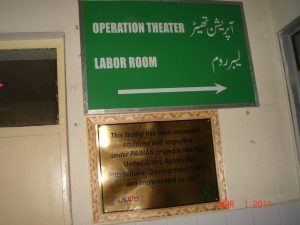
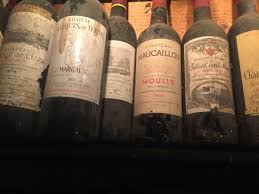 From its origins in Eurasia some 8,000 years ago, wine has spread to become a staple at dinner tables throughout the world. Yet wine is more than just a beverage. People devote a lifetime to its study, spend fortunes tracking down rare bottles, and give up respectable, lucrative careers to spend their days on a tractor or hosing out barrels, while incurring the risk of making a product utterly dependent on the uncertainties of nature. For them, wine is an object of love.
 Academics have a privileged epistemic position in society. They deserve to be listened to, their claims believed, and their recommendations considered seriously. What they say about their subject of expertise is more likely to be true than what anyone else has to say about it.
 The day before Thanksgiving I got this wonderfully understated text from a close friend:



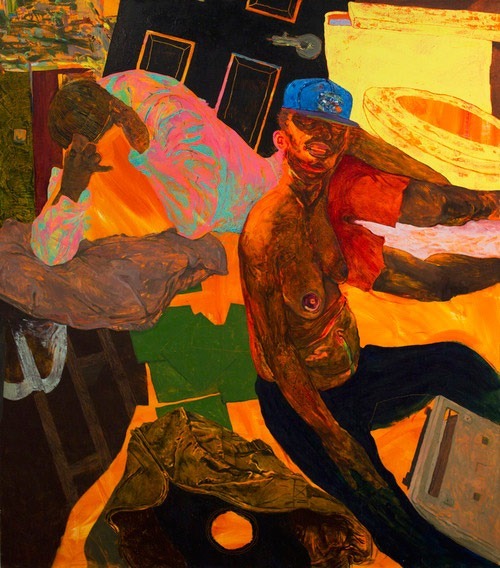
 Our uniform was a shirt tucked into jeans. Sandi stretched the smallest size over well-proportioned breasts, her black bra peeking through a run of buttons. Mine hung long in the sleeves and fell over my waist.


 In the middle of the night of March 24, 1992, a pressure seal failed in the number three unit of the Leningradskaya Nuclear Power Plant at Sosnoviy Bor, Russia, releasing radioactive gases. With a friend, I had train tickets from Tallinn, in newly independent Estonia, to St. Petersburg the next day. That would take us within twenty kilometers of the plant. The legacy of Soviet management at Chernobyl a few years before set up a fraught decision whether or not to take the train.
 It’s been a while since I posted on this issue, and I’ve already said most of what I intended to say about it, but things seem to be coming to a head in my own state, and I thought I’d report on that, including a couple of weird local wrinkles (the Garden State is a strange place). Three weeks ago, after months of missed deadlines, an adult-use marijuana legalization bill was approved by a joint (Assembly/Senate, that is, not … never mind) committee of the legislature, and may (note: may) be voted on later this year. If it is passed and signed into law by the governor – neither of which is a given – New Jersey would be the eleventh state to legalize adult use, and the second to do so by legislative action. (Washington and Colorado in 2012, Alaska and Oregon in 2014, California, Massachusetts, Maine, and Nevada in 2016, and Michigan in 2018 did so by voter referendum; Vermont did so by legislative action (in 2017, I think), although that state’s bill did not set up a legal market, which means that while it is legal to grow marijuana in one’s basement there, it remains illegal to buy seeds to do so.)