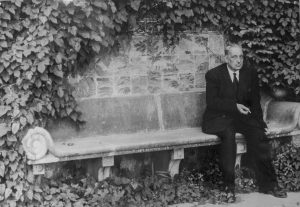
by Joshua Wilbur
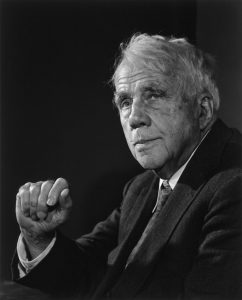
In college, I took a course on American poetry, but I missed the class on Robert Frost. To be honest, I slept straight through it. That particular winter was brutally cold. I lived in a worn-out house some fifteen minutes from campus, and the water heater in the basement was broken. So I skipped the ice-cold shower at 8AM, the wet walk through a foot of snow, and the monotone reading of a few representative poems by a long-tenured professor. I stayed in my warm bed, wrapped up in the comforter.
From that morning until only a few weeks ago, my mental image of Robert Frost was that of a grey-haired, folksy New Englander who wrote modest poems about country life. I knew “The Road Not Taken,” though I didn’t understand it. I was familiar with a handful of other titles— “Fire and Ice,” “Mending Wall,” “Stopping By Woods on a Snowy Evening”— but I can’t say if I had ever really read these poems. If so, they hardly made an impression on me. In short, I had Frost figured as a quaint poet of nature, a leftover from 19th Century America.
I now realize that I was wonderfully mistaken, that Robert Frost isn’t what he seems, and that the fundamental experience of reading Frost is discovering that the poems aren’t what they seem. Harold Bloom has called Frost a “trickster and a mischief maker.” In The New Yorker, Joshua Rothman describes Frost’s “poetic sleight of hand,” his characteristic tendency for deception. In his own words, Frost considered poetry “the one permissible way of saying one thing and meaning another.” For nearly fifty years, the poet hid ulterior meanings behind plain language. Read more »
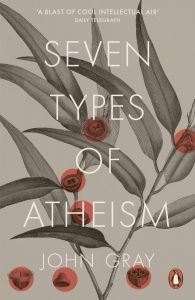 It is simultaneously awkward and exciting to read about your own consciously and responsibly adopted beliefs as something to be anatomized. It is also something atheists are not always much disposed to. On the contrary, perhaps: many forms of atheism present themselves as a consequence of free thought, of emancipation from tradition. The internal logic of their arguments prescribes that while religious beliefs, being non-rational, are in need of cultural or psychological explanation, atheism is really just what you will gravitate towards once you finally start thinking. One question here will be whether this is necessarily the case.
 Certain phrases choke us with their ubiquity at some point:
 As we approach the end of the year, it’s that time again. Not to flip the page to the next month, but to buy a new calendar. (Who am I kidding? It’s probably only me and your grandmother who still uses paper wall calendars…) And also to reflect.
 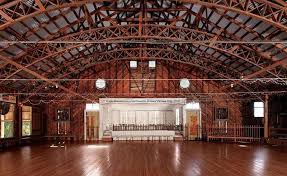 Guinea and Redhead were part of a large food chain. Beyond campus’ freshly-baked sidewalks, a Cowboy Mafia ferried contraband from the south. They landed small prop planes on ranch land outside of town, cut powder with dental anesthetics and broke up the bales. Their wares clumped on our cafeteria trays and glinted in tiny screw-top bottles. The capo, a local big-hat business man,who ran a palatial kicker-dance hall and owned the ranch. That legit business and his crew’s discipline kept them out of jail. Maybe a hat full of cash in the bargain.
 Philosophers are supposed to ask Big Questions. The Big Questions is the title of a popular introduction to philosophy and of a long-running BBC programme in which people discuss their ethical and religious perspectives. But since we philosophers, following in the footsteps of Socrates, claim to practice critical thinking, it behooves us to ask whether Big Questions are a good idea.
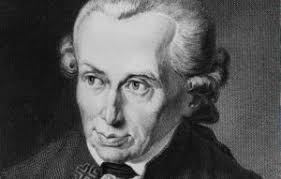 In his Critique of Pure Reason (1781) Kant claimed that in denying knowledge he was “making room for faith.” Inevitably, though, faith in God, the soul and the afterlife has declined dramatically since Kant’s time, especially among intellectuals. There are virtually no articles published in philosophy journals today that treat the existence of God or the immortality of the soul as live issues. Science does not explicitly teach us that there is no God and no heaven, any more than it teaches us that there are no fairies or vampires. But the default attitude of most professional philosophers today is that in such matters the absence of evidence amounts to evidence of absence.
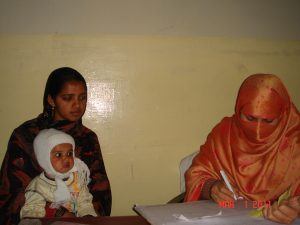 Mandra health center, outside Islamabad, on this spring morning, without the cacophony and confusion of health centers in the city, was the picture of serenity. An emaciated woman of indeterminate age sits coughing in the corridor, in a chair that bears the logo of the United States Agency for International Development, next to a little girl with dry shoulder length hair and yellow eyes, one bare foot resting upon the other. I make a provisional diagnosis—pulmonary tuberculosis for the woman, viral hepatitis for the girl, both diseases endemic in Pakistan.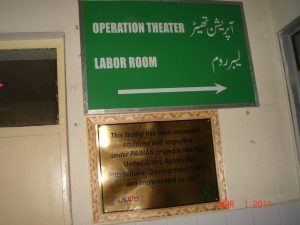
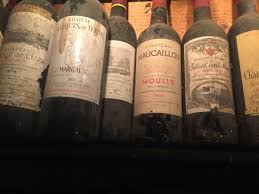 From its origins in Eurasia some 8,000 years ago, wine has spread to become a staple at dinner tables throughout the world. Yet wine is more than just a beverage. People devote a lifetime to its study, spend fortunes tracking down rare bottles, and give up respectable, lucrative careers to spend their days on a tractor or hosing out barrels, while incurring the risk of making a product utterly dependent on the uncertainties of nature. For them, wine is an object of love.
 Academics have a privileged epistemic position in society. They deserve to be listened to, their claims believed, and their recommendations considered seriously. What they say about their subject of expertise is more likely to be true than what anyone else has to say about it.
 The day before Thanksgiving I got this wonderfully understated text from a close friend: