
by Thomas O’Dwyer
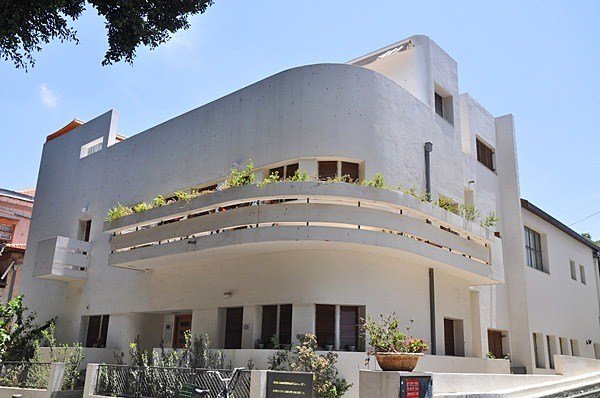
On April 1, one hundred years ago, Walter Gropius established the Bauhaus school of design in Weimar, central Germany. It lasted a mere 14 years — exactly the same time as the Weimar Republic. In 1933, the Nazis destroyed both. Short life or not, Bauhaus opened up a modern way of thinking about arts and crafts, the marriage of form and function, education, and the growth of cities. Its ideas have had an impact well beyond the school, its locations and its era. And there have been some resurrections. Sleepy Weimar has regained its pleasant obscurity and the recovery of Bauhaus has been a little uneven, but robust and international. Nazi thuggery was dealt a satisfying poke in the eye by one living monument to Bauhaus, the White City of Tel Aviv in Israel — a UNESCO World Heritage site.
Gropius’ revolutionary school of art and design was an achievement of modernism itself. It began as the Thuringian state Bauhaus in Weimar, moved as a school of design to Dessau, and finally as a private institute to Berlin. Its themes grew from an active arts and crafts movement and when the Nazis crushed it, these ideas flooded out of Germany with thousands of emigrants. The influence of Bauhaus has been immense, especially in the United States, where many artists moved before and during World War II. As well as Tel Aviv, built by Jewish German refugees, there are World Heritage Bauhaus sites in a dozen states around the world. The 100th anniversary this year is being marked by exhibitions, theatre, music and modern dance events. A flood of books has appeared, most destined to languish unread on post-Bauhaus bookshelves.
What the term Bauhaus means to the wider public today is hard to pin down. Read more »
 I was struck by a sentence in Susan Orlean’s The Library Book: “If nothing lasts, nothing matters.” This line was part of a discussion of memory, the fear of being forgotten, and the value of passing things on to future generations. I share a passion for the idea of continuity between generations (and I highly recommend Orlean’s book), but ultimately I don’t think that something has to last to matter. Alan Watts, in his book This Is It, says that “This—the immediate, everyday, and present experience—is IT, the entire and ultimate point for the existence of a universe.” It’s not about connecting with anything but what’s here in front of me now. (Easier said than done, of course.)
 I teach two kinds of group exercise classes, and part of the certification processes for both disciplines devoted no small amount of attention to how to speak to your minions, uh, students.
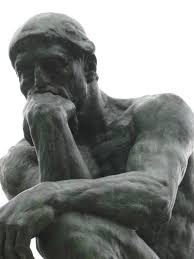 “…And now to introduce our second panelist: Martha. Martha does believe that academic philosophy is worth pursuing, and she has – of course – written a book about it. Martha, can you briefly summarize your argument?”

 My answering machine whirrs. From an echoing room, the chainsaw-voice shouts into a speaker phone:
 One of the philosophical tools that seems utterly obvious to me is the so-called “use/mention distinction”. Because it strikes me as so obvious, it is always baffling to me that people seem to have such trouble with it.
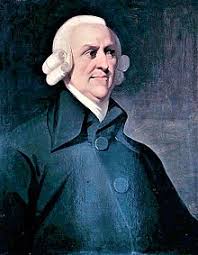 I just read Adam Smith’s The Wealth of Nations for the first time. Not every word. It’s over a thousand pages, and there are long “Digressions” (Smith’s term) on matters such as the history of the value of silver, or banking in Amsterdam, which I simply passed over. I was mainly interested in what Smith has to say about work, so I also merely skimmed some other sections that seemed to have little relevance to my research. Time and again, though, I found myself getting sucked into chapters unrelated to my concerns simply because the topics discussed are so interesting, and what Smith has to say is so thought-provoking. Reading the book is also made easier both by Smith’s admirably lucid writing and by the brief summaries of the main claims being made that he inserts throughout at the left-hand margin.


 It is fashionable to say that great wine is made in the vineyard. There is a lot of truth to that slogan but in fact wine is made by a complex assemblage with various factors influencing the final product. Last month